
Is White Rice Bad for Weight Loss? White rice does not cause weight gain on its own. You gain weight when you eat more calories than you burn, and rice is simply one source of those calories. The question is not whether white rice belongs in your diet. The question is how much, what you eat with it, and whether your overall eating pattern supports your goals.
White rice has been blamed for everything from belly fat to blood sugar crashes, mostly by diet culture rather than science. The actual research tells a more interesting story, one where rice is neither a superfood nor the reason your pants stopped fitting.
What White Rice Actually Contains
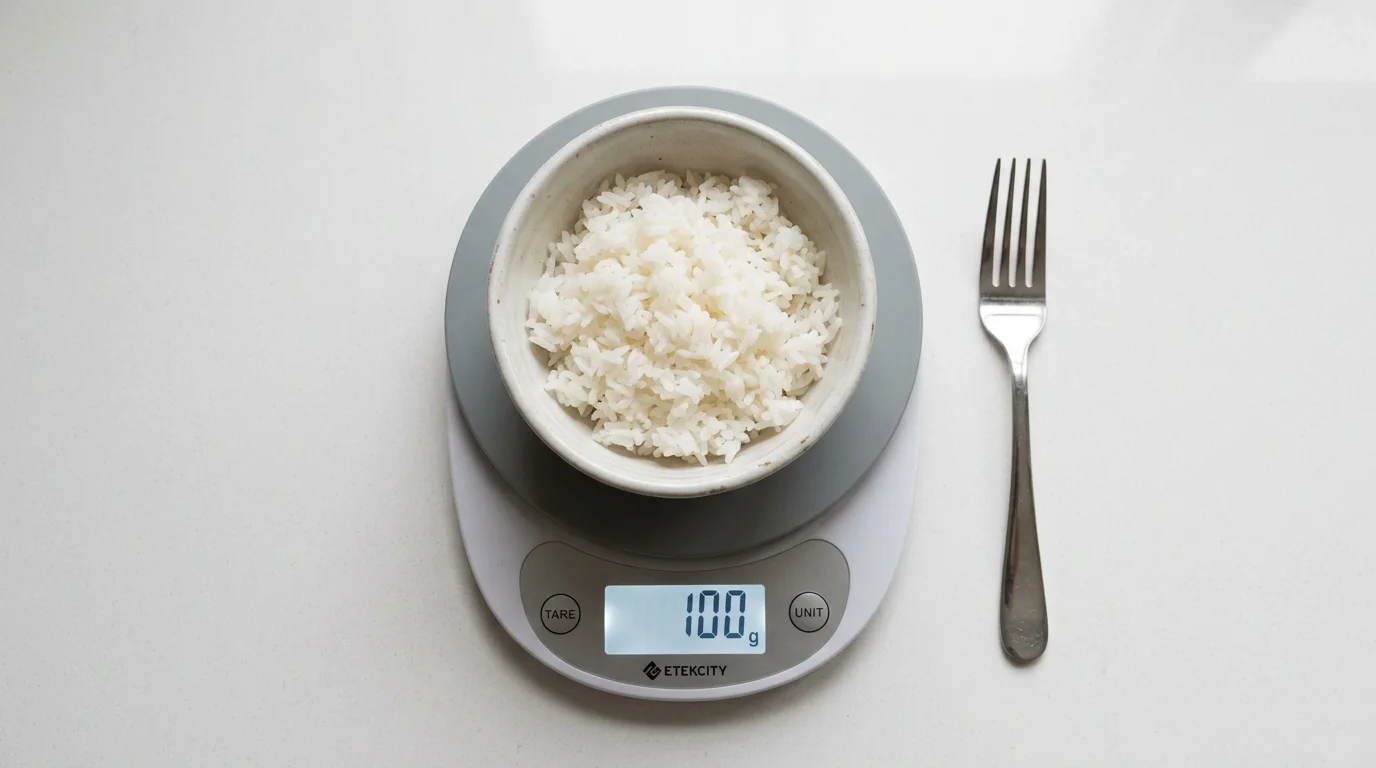
White rice is milled rice with the husk, bran, and germ removed. What remains is mostly starch, which digests quickly and provides fast energy. A standard half-cup serving of cooked white rice, about 100 grams, looks like this:
These numbers are not alarming. At 130 calories per half-cup serving, white rice is not a high-calorie food. The problem is not what is in the rice. The problem is that rice is easy to overeat, especially when it is the bulk of a meal with little protein or fiber alongside it.
You can gain weight from brown rice, quinoa, or sweet potatoes too. Any food eaten in excess beyond your calorie needs contributes to weight gain. White rice is not special in that regard.
The Glycemic Index: What It Means and What It Does Not
White rice has a glycemic index between 64 and 72, which puts it in the medium to high range. White rice digests quickly, so blood sugar tends to rise faster than with slower-digesting carbs like oats or lentils. This is the main reason white rice gets criticized in weight loss discussions, faster blood sugar spikes can trigger higher insulin output, which some argue promotes fat storage and increases hunger shortly after eating.
The concern is real but heavily context-dependent.
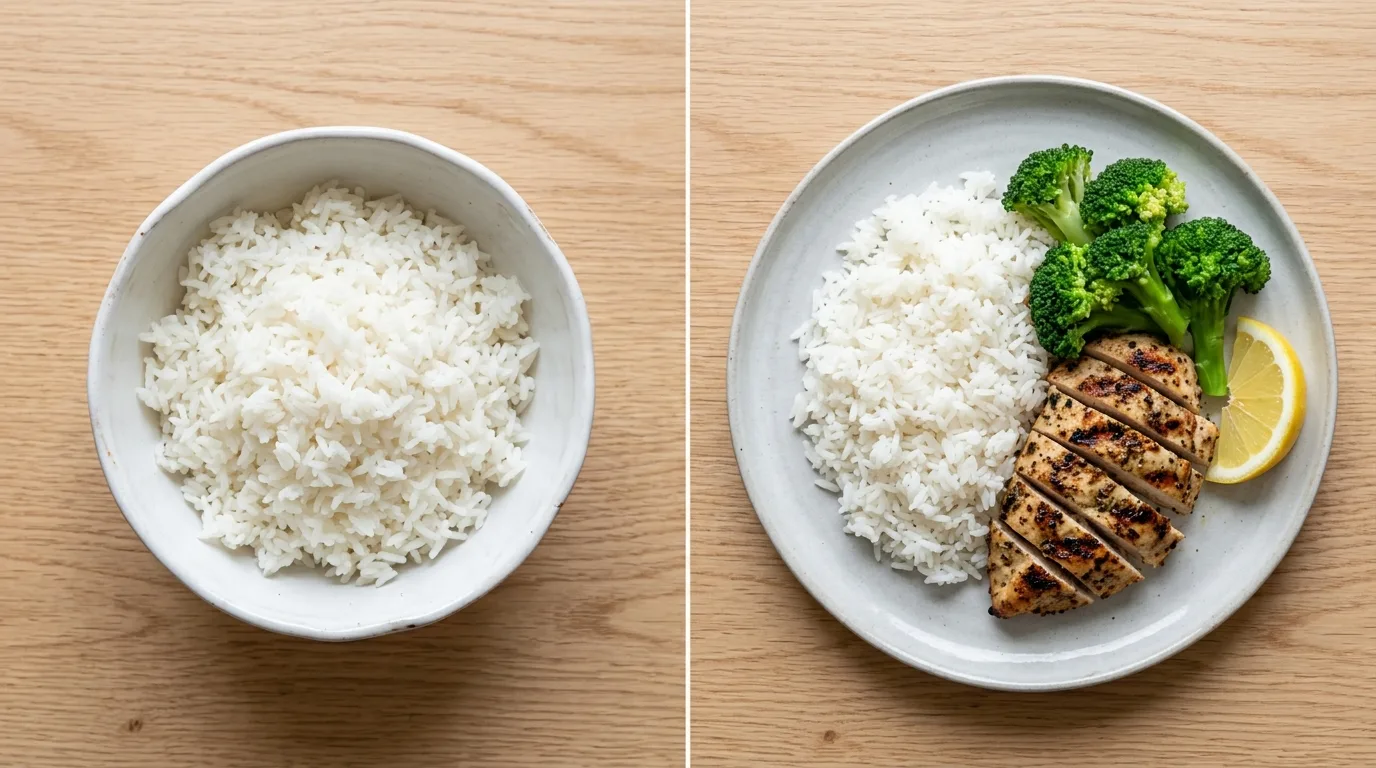
Eating plain white rice on an empty stomach does produce a sharper blood sugar response. But that is not how most people eat rice. When you pair rice with protein, fat, and vegetables, the glycemic response drops significantly.
The chicken, the broccoli, the olive oil, they all slow digestion and blunt the blood sugar curve. A bowl of white rice with grilled salmon and sauteed greens behaves very differently in your body than a bowl of plain white rice.
Glycemic index is a useful data point, not a verdict. It measures foods eaten in isolation, which is rarely how real meals work.
What the Research Actually Shows
Most diet content gets white rice wrong, and the science tells a different story.
A population-based study published in BMC Public Health found that rice-based dietary patterns were not independently linked to higher obesity risk once researchers accounted for overall dietary quality and lifestyle factors. In other words, rice was not the driver. What people ate alongside rice, how active they were, and their total calorie intake mattered far more.
The Harvard T.H. Chan School of Public Health states that long-term weight outcomes depend much more on overall calorie balance than on any specific carbohydrate source. This is consistent with what most registered dietitians observe clinically: people who manage portions and build balanced meals can lose weight while eating white rice regularly.
What the research does confirm is that white rice, eaten in large quantities as the dominant component of a meal with little protein or fiber, contributes to faster hunger return. The low fiber content, just 0.4g per serving, means it does not keep you full as long as higher-fiber carbohydrates. This is a practical limitation, not a metabolic curse.
Why Rice Gets Blamed So Often
This is worth addressing directly, because the anti-rice narrative has real gaps in it.
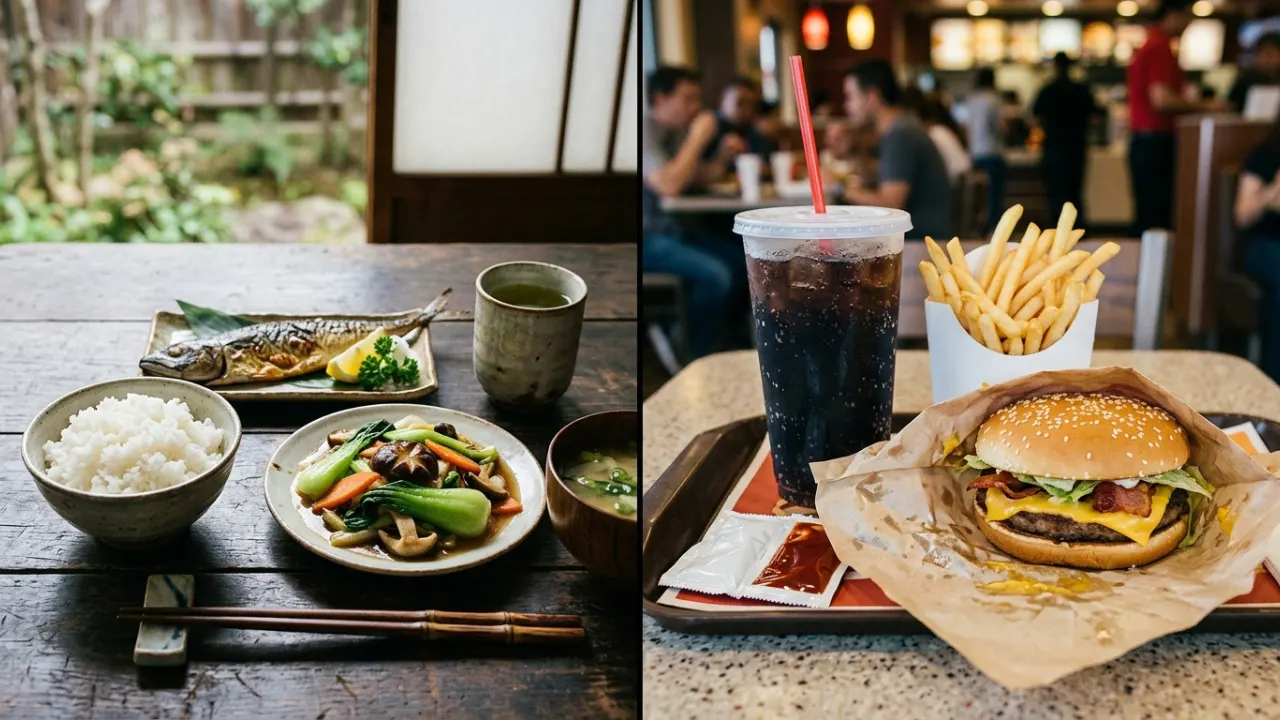
For centuries, white rice has been the dietary staple across Japan, South Korea, Thailand, Vietnam, and most of Southeast and East Asia. Historically, populations in these countries had some of the lowest obesity rates in the world, while eating rice at nearly every meal. That fact alone should give anyone pause before accepting the idea that rice is inherently fattening.
What changed was not the rice. What changed was everything around it.
Sedentary lifestyles replaced physically demanding work and daily movement. Ultra-processed foods, refined snacks, and fast food entered food cultures that previously relied on whole, minimally processed ingredients.
Sugary drinks became the default beverage where water and tea once dominated. Portion sizes grew, particularly in westernized eating environments. The overall dietary pattern shifted dramatically.
Rice did not cause rising obesity rates in populations that once thrived on it. The pattern surrounding the rice did.
This matters for how you think about your own diet. Removing rice while keeping processed snacks, liquid calories, and oversized portions does very little. The context of your entire eating pattern determines your results far more than whether rice is on your plate.
White Rice vs Brown Rice for Weight Loss
Brown rice keeps its bran and germ intact, which gives it more fiber, roughly 3.5g per serving compared to 0.4g in white rice. It also has a slightly lower glycemic index and marginally higher magnesium content. Because it digests more slowly, it tends to keep you fuller for longer.
Brown rice is nutritionally superior in a few specific ways. But the calorie difference is small, only 10 to 20 calories per serving, and that gap will not determine your results.
The more relevant factor is consistency. A diet you actually stick to for months works better than a theoretically superior diet you abandon after three weeks. If you genuinely prefer white rice and swapping to brown rice makes eating feel like a punishment, the swap is probably not worth it. Build the rest of your plate well and the type of rice becomes a minor detail.
Common Myths Worth Clearing Up
White rice causes belly fat.
No single food deposits fat in a specific location. Belly fat accumulates from a sustained calorie surplus over time, not from eating any one food. White rice can contribute to a surplus if portions are too large, but so can any other food.
You have to eliminate white rice to lose weight.
People lose weight every day while eating white rice. Japan has one of the lowest obesity rates among developed nations and white rice remains a daily staple. The elimination approach is not supported by evidence and is not necessary.
The glycemic index makes white rice a fat-promoting food.
Glycemic index measures foods in isolation. Real meals are never eaten in isolation. When rice sits alongside protein and vegetables, the glycemic impact drops substantially. The index is one piece of information, not the whole picture.
Low-carb diets always outperform diets that include rice.
Studies comparing low-carb and moderate-carb diets consistently show similar weight loss outcomes when total calorie intake is matched and adherence is sustained. The best diet approach is the one you can maintain consistently, not the one that looks best on paper.
How to Eat White Rice Without Derailing Your Goals
The goal is smarter consumption, not elimination.
Control your portion size. A reasonable serving for most people during weight loss is half to three-quarters of a cup of cooked rice per meal. Eyeballing cooked rice is surprisingly inaccurate. A kitchen scale removes the guesswork and takes about 10 seconds.
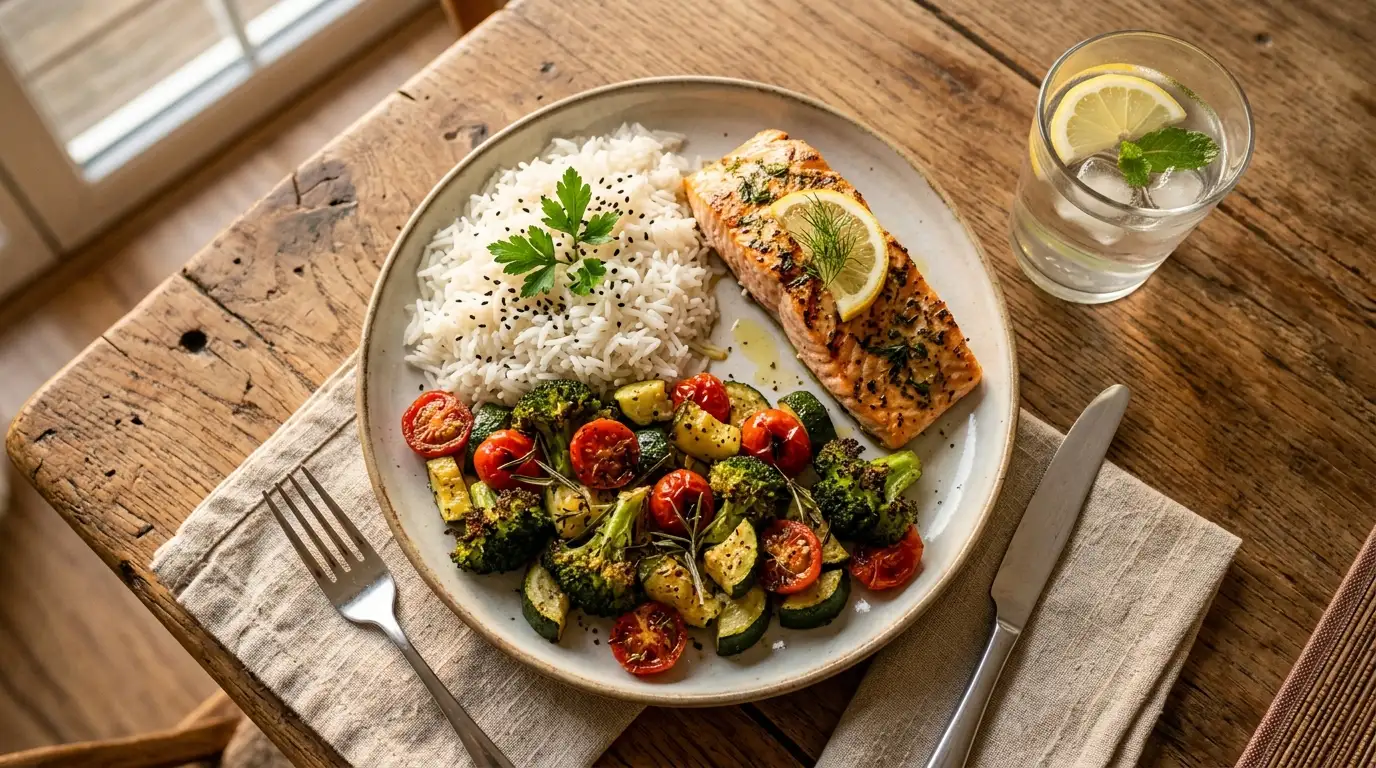
Build a complete plate. Fill half your plate with non-starchy vegetables. Add a lean protein source like chicken, fish, eggs, or tofu to a quarter of the plate. Let white rice take up the remaining quarter. This structure keeps calories in check while making the meal genuinely satisfying.
Time it around physical activity. White rice before a workout delivers fast-digesting carbohydrates that fuel muscle performance without sitting heavily in your stomach. For active individuals, this is one of the more practical uses of white rice in a diet.
Try cooling your rice. Cooking white rice and then refrigerating it overnight increases its resistant starch content. Resistant starch digests more slowly, produces a lower glycemic response, and feeds beneficial gut bacteria. Reheating the cooled rice preserves much of this effect. The benefit is modest but real.
Watch what goes on top. Heavy sauces, fried shallots, coconut cream, and cooking oils carry most of the extra calories in rice-based meals. The rice underneath is rarely the caloric problem. What gets poured over it usually is.
How Much White Rice Fits Into a Weight Loss Diet
The honest answer depends on your total daily calorie target.
If you eat between 1,600 and 1,800 calories per day, one to two half-cup servings of cooked white rice fit comfortably without crowding out more nutrient-dense foods. At 130 calories per serving, rice leaves plenty of room for protein, vegetables, and healthy fats within a reasonable calorie budget.
The question most people should be asking is not whether rice is allowed. It is whether the rest of their plate is built in a way that keeps hunger manageable and total calories in range. Rice that sits next to adequate protein and fiber causes far fewer problems than rice eaten alone or with high-calorie sauces.
Rice does not break diets. Untracked, oversized portions eaten repeatedly over time do.
Key Takeaways – Is White Rice Bad for Weight Loss?
- White rice does not cause weight gain. A sustained calorie surplus does.
- Pairing rice with protein, fat, and fiber significantly changes its effect on blood sugar and hunger.
- Rice-eating populations have historically maintained healthy weights. Lifestyle and overall diet pattern matter far more than any single food.
- Brown rice offers more fiber and slightly better satiety, but the calorie difference is small.
- Cooling and reheating white rice increases resistant starch, which offers modest blood sugar benefits.
- Portion size and plate composition determine whether white rice helps or hinders your goals.
Bellyzero Note: The research is consistent on this point. Overall dietary quality, calorie balance, and physical activity predict weight outcomes far more reliably than whether white rice appears on your plate. Focus your energy on the bigger picture.
Frequently Asked Questions:
For informational and educational purposes only. All content on BellyZero, including articles, calculators, health tools, templates, and recipes, is intended to provide general health information. It does not constitute medical advice, a clinical diagnosis, or a substitute for professional healthcare guidance.
Results generated by BellyZero calculators and tools are estimates based on population-level formulas and standard reference ranges. They do not account for your full medical history, individual physiology, existing health conditions, or medications. Results may not apply to pregnant women, children, competitive athletes, or individuals with chronic illness.
Always consult a qualified healthcare professional before making changes to your diet, exercise routine, or health regimen based on anything found on this website. If you have symptoms or concerns about your health, seek medical attention promptly. BellyZero does not accept liability for decisions made based on content published on this site.
Written By: Vikas Arora Updated: May 2026