
How to tighten loose skin after weight loss naturally is the question you never expected to be googling after achieving one of the hardest things you have ever done.
You hit your goal, pull up your shirt, and there it is. Loose skin, hanging where the fat used to live. You did everything right, and this is what you get. Here is what you need to know: your skin is not done yet.
This guide gives you the real science, the honest timelines, the methods that actually work, and the truth about what to expect. No false promises, no fluff, just everything you need to know.

Can you tighten loose skin after weight loss naturally?
Yes. For most people with moderate loose skin, consistent natural methods produce real, visible improvement over 6 to 18 months. The skin is a living organ that continues remodeling long after weight loss ends.
8 Steps to Tighten Loose Skin Naturally
- 1Build muscle through progressive resistance training to fill space beneath the skin
- 2Eat 0.7 to 1 gram of protein per pound of bodyweight daily to support collagen and tissue repair
- 3Drink 2 to 2.5 liters of water daily to maintain skin elasticity
- 4Take 5 to 10 grams of hydrolyzed collagen peptides daily with vitamin C
- 5Eat foods rich in vitamin C, vitamin E, and zinc to fuel natural collagen production
- 6Apply retinol or peptide-based firming creams consistently for at least 90 days
- 7Dry brush and massage affected areas 3 to 5 times per week for circulation support
- 8Protect skin with SPF 30 or higher every morning to prevent ongoing collagen loss
Why Loose Skin Happens After Weight Loss
Picture a rubber balloon inflated tightly for three years. Deflate it suddenly and the rubber does not snap back to its original shape. It sags, wrinkles, and holds the memory of the stretch. Your skin works on the same principle.
When you carry excess fat for extended periods, your skin expands to cover the added volume. During this process, it produces less collagen and elastin, the two structural proteins that give skin its firmness and bounce-back ability. The longer your skin was stretched and the larger the stretch, the more those fibers get damaged.
When fat cells shrink during weight loss, the skin envelope surrounding them does not automatically follow. You are left with a container that is now larger than its contents.
The good news is that collagen can rebuild, elastin can recover, and the dermal structure can remodel. It just needs the right biological conditions and enough time.
Quick takeaway:
- Loose skin happens because collagen and elastin fibers are damaged by prolonged stretching.
- Fat cell shrinkage does not automatically trigger skin retraction.
- Skin can and does remodel with the right consistent inputs over time.
Most people treat loose skin as a cosmetic problem with a cosmetic solution. It is actually a structural issue that needs structural answers.
How to Tighten Loose Skin After Weight Loss Naturally (8 Practical Ways)
This is the section that matters. Eight methods with the science behind each one, step-by-step instructions, and honest timelines.
1. Build Muscle to Fill Loose Skin
What it is: Using progressive resistance training to grow muscle tissue directly beneath areas of loose skin.
Why it works: When fat cells shrink, the space beneath your skin becomes partially empty. Muscle growth fills that space from the inside out, pushing skin outward and giving it a firm structural foundation. Muscle tissue is denser than fat and occupies the same anatomical space more effectively.
Research consistently shows that progressive resistance training improves body composition by increasing lean tissue while reducing fat mass, which directly changes the structural support beneath the skin.
How to do it:
- Train compound movements: squats, deadlifts, bench press, barbell rows, hip thrusts, overhead press
- Work each major muscle group 2 to 3 times per week
- Apply progressive overload by gradually increasing weight or reps every 1 to 2 weeks
- Follow a structured program rather than random workouts
Timeline: Early visual changes in 8 to 12 weeks. Meaningful muscle development that visibly tightens skin takes 6 to 18 months of consistent training.
Realistic expectation: This is the single most effective natural method for most people. It won’t eliminate severe sagging from massive weight loss, but for moderate loose skin, the improvement is dramatic and lasting.

This is where things fall apart for most people. They start training, don’t see results in four weeks, and switch back to cardio. Muscle development that meaningfully changes skin appearance takes months, not weeks.
2. Eat Enough Protein for Skin Repair
What it is: Consuming adequate dietary protein to support both muscle growth and collagen synthesis simultaneously.
Why it works: Collagen is a protein built from amino acids, including glycine, proline, and hydroxyproline. Without sufficient protein, your body cannot produce functional collagen regardless of how many supplements you take. Protein also supports muscle repair and growth, which ties directly to method one.
Research confirms that protein is essential for tissue repair throughout the body, including the dermal layers responsible for skin structure and firmness.
How to do it:
- Target 0.7 to 1 gram of protein per pound of bodyweight daily
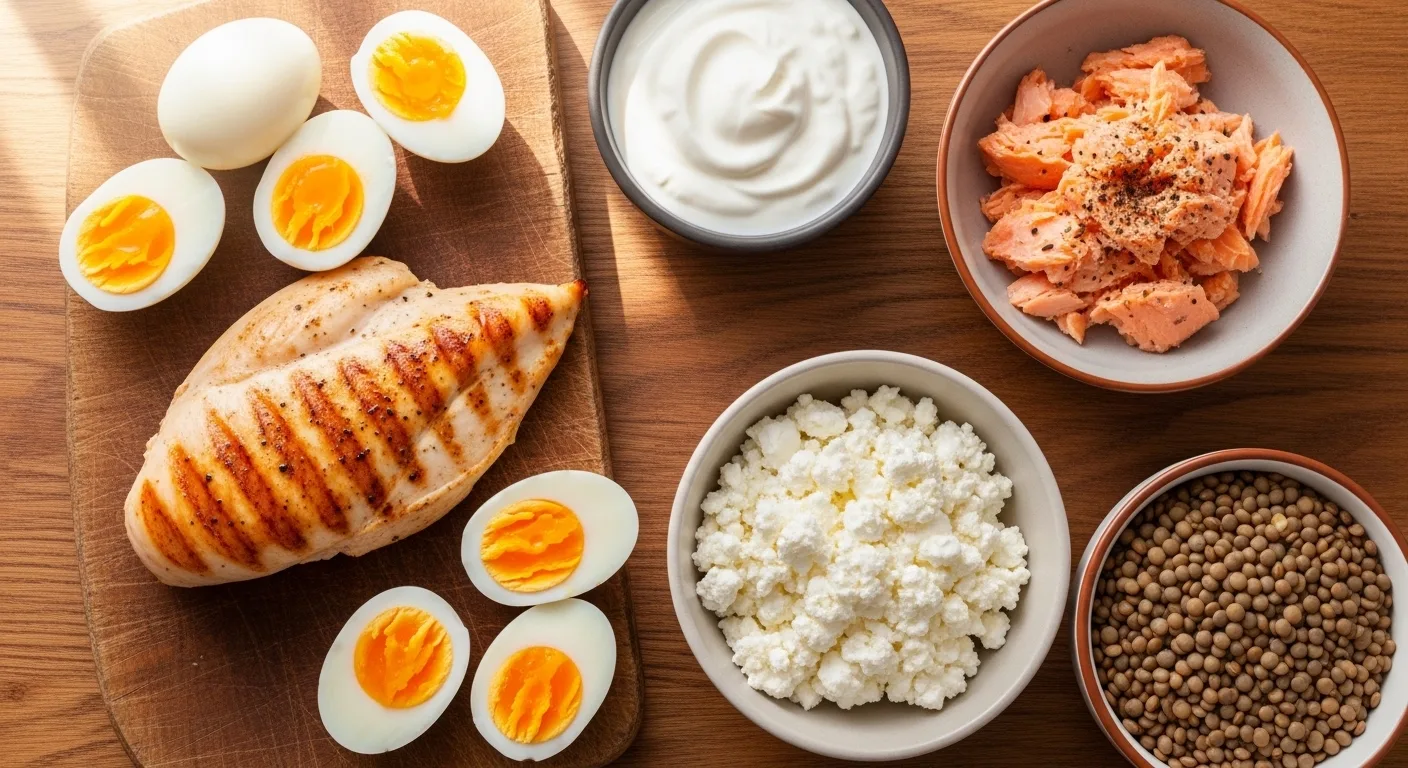
- Prioritize: eggs, chicken breast, salmon, Greek yogurt, cottage cheese, lentils, lean beef
- Spread intake across 3 to 4 meals throughout the day for better amino acid availability
- Prioritize protein at breakfast to hit daily targets more consistently
Timeline: Improved skin quality from sustained adequate protein intake becomes visible within 3 to 6 months.
Realistic expectation: Most people on weight loss diets chronically undereat protein. Fixing this single variable often produces noticeable improvements in both skin quality and muscle retention at the same time.
3. Stay Hydrated for Skin Elasticity
What it is: Maintaining consistent daily water intake to preserve skin moisture, plumpness, and elastic recovery.
Why it works: Your skin is approximately 64 percent water. Dehydrated skin loses its turgor, which is its ability to spring back after being pressed or stretched. Poorly hydrated skin appears thinner, loses elasticity, and creates an environment where collagen production is less efficient.
Clinical research published through the National Institutes of Health confirms that adequate hydration measurably improves skin elasticity and reduces transepidermal water loss in adults.
How to do it:
- Drink 2 to 2.5 liters of water daily as a baseline
- Increase intake on training days and in hot weather
- Add electrolytes on heavy training days for better cellular hydration
- Eat water-rich foods: cucumber, watermelon, celery, and citrus fruits
Timeline: Surface skin appearance improvements in 2 to 4 weeks. Deeper elasticity improvements take months.
Realistic expectation: Hydration alone won’t tighten structurally loose skin. Think of it as the biological foundation that makes every other method more effective. Skip it and you undermine everything else.
Many people try every supplement and cream while being chronically dehydrated. Dehydrated skin cannot respond to collagen support, retinol, or firming treatments the way well-hydrated skin can, so sort this out before anything else.
4. Boost Collagen Production Naturally
What it is: Using targeted foods and supplements to provide the raw materials your body needs for collagen synthesis.
Why it works: Collagen production requires specific cofactors, including vitamin C, zinc, and copper. Without vitamin C, the enzyme that stabilizes collagen’s structure can’t function. Zinc acts as a cofactor for collagen-regulating enzymes. The amino acids glycine and proline serve as the actual building blocks.
A systematic review and meta-analysis published on PubMed found statistically significant improvements in skin elasticity and hydration across multiple randomized controlled trials using hydrolyzed collagen supplementation at 5 to 10 grams daily over 8 to 24 weeks.
How to do it:
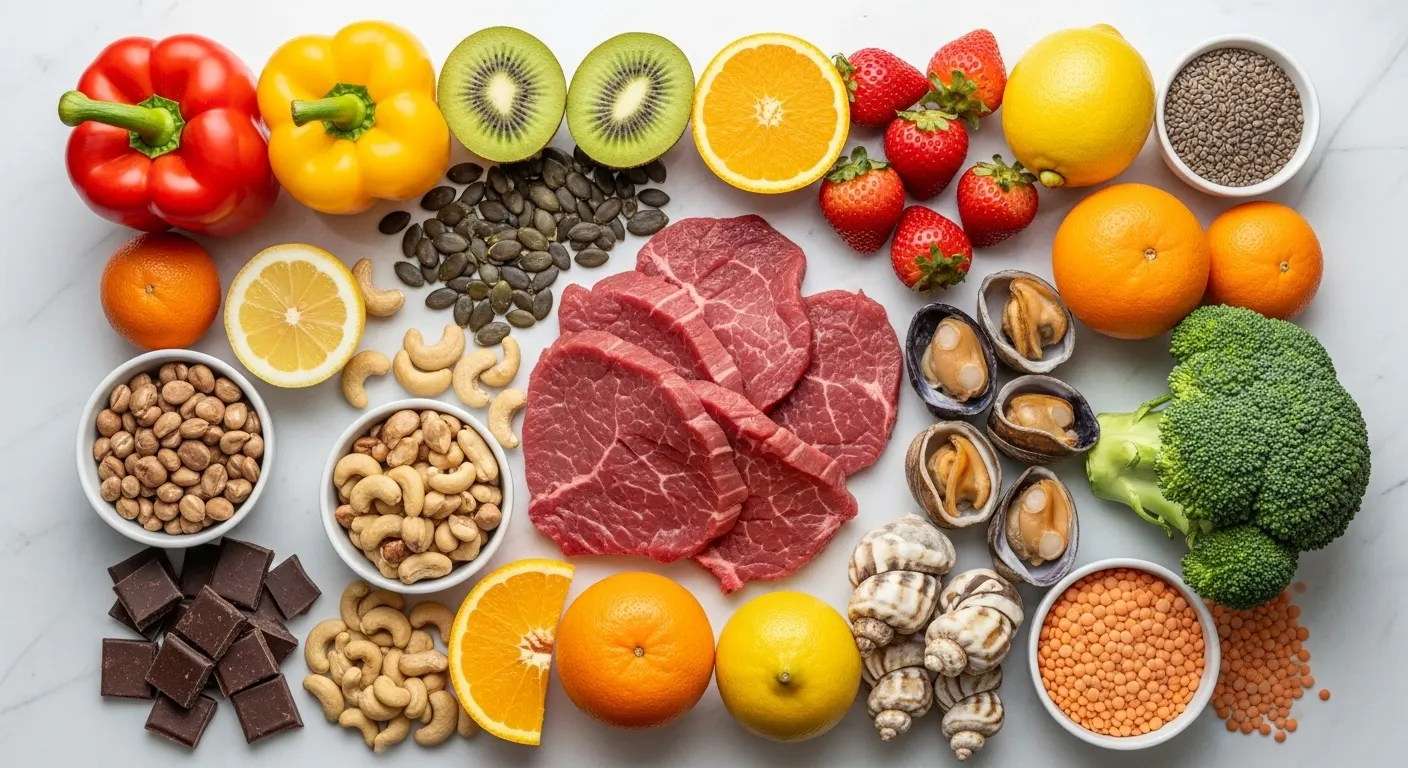
- Eat vitamin C-rich foods daily: bell peppers, kiwi, strawberries, citrus fruits, broccoli
- Add zinc from pumpkin seeds, beef, and shellfish
- Include copper from cashews, dark chocolate, and lentils
- Take 5 to 10 grams of hydrolyzed collagen peptides daily alongside a vitamin C source
Timeline: Measurable skin improvements from collagen-supportive habits and supplementation appear in 8 to 16 weeks.
Realistic expectation: Collagen supplementation is one of the better-researched natural methods available. It works slowly and works best combined with resistance training and protein, not as a standalone approach.
Quick takeaway:
- Vitamin C is non-negotiable for collagen synthesis to function.
- Hydrolyzed collagen peptides have the strongest research support of any supplement form.
- Collagen supplementation takes 8 to 16 weeks to show measurable skin improvements
5. Use Skin Firming Creams Strategically
What it is: Applying topical products containing evidence-supported active ingredients to improve skin texture and stimulate collagen at the surface level.
Why it works: Retinol stimulates fibroblasts, the skin cells responsible for collagen production, and accelerates cell turnover. Clinical studies show retinol measurably increases dermal collagen density with consistent long-term use. Hyaluronic acid draws moisture into the skin from the environment, creating a temporary but real plumping effect.
How to do it:
- Apply retinol-based cream to affected areas nightly, starting at 0.025 to 0.05% concentration
- Use hyaluronic acid serum every morning before sunscreen
- Look for products containing copper peptides, niacinamide, or vitamin C as additional actives
- Commit to at least 90 consecutive days before evaluating any product’s results
Timeline: Surface texture improvements in 4 to 8 weeks. Deeper collagen-stimulating effects take 3 to 6 months.
Realistic expectation: Creams can’t penetrate deeply enough to fix structural sagging. They complement other methods well and genuinely improve surface texture, tone, and firmness.
6. Dry Brushing and Body Massage
What it is: Using a natural bristle brush or hands to stimulate skin surface circulation and support lymphatic drainage.
Why it works: Increased blood flow delivers more oxygen and nutrients to skin cells, supporting collagen production and cell turnover. Massage reduces fluid retention that can exaggerate the appearance of loose skin. Research on skin massage documents real improvements in local circulation and lymphatic function.
How to do it:
- Use a natural bristle brush before showering
- Start at feet and work upward toward the heart using firm circular strokes
- Spend 3 to 5 minutes covering affected areas
- Follow with body oil massage using circular and upward motions post-shower
- Do this 3 to 5 times per week
Timeline: Skin texture and smoothness improvements within 4 to 6 weeks.
Realistic expectation: Dry brushing is a supportive habit, not a primary treatment. It works alongside other methods, not instead of them.
Think of circulation as the delivery system for every nutrient your skin needs to rebuild. Poor circulation means poor delivery, regardless of what you eat or supplement.
7. Protect Skin from Ongoing Damage
What it is: Actively reducing behaviors and exposures that accelerate collagen breakdown.
Why it works: UV radiation breaks down collagen fibers and impairs elastin through photoaging. The American Academy of Dermatology identifies UV exposure as the leading external cause of premature skin aging and collagen degradation. Smoking constricts blood vessels, reduces oxygen to skin cells, and introduces oxidative stress that directly destroys collagen. Both work directly against every natural skin tightening effort you make.
How to do it:
- Apply SPF 30 or higher sunscreen every morning, including cloudy days
- Wear protective clothing during prolonged sun exposure
- Quit smoking if applicable, as this is the single highest-impact action for skin health
- Reduce alcohol intake to support skin hydration and cellular repair
Timeline: Protective benefits are immediate. Every day you protect skin is a day of recovery you preserve.
Realistic expectation: You can’t reverse years of UV damage quickly, but stopping new damage from today forward changes your recovery trajectory starting right now.
8. Lose Remaining Weight at a Slower Rate
What it is: Reducing any remaining fat at a rate that gives skin time to adapt alongside the change.
Why it works: Gradual fat loss allows the skin to contract incrementally alongside the fat reduction. Rapid loss creates a larger and faster volume mismatch than skin can adapt to. Slowing down closes that gap.
How to do it:
- Target 0.5 to 1 pound of fat loss per week maximum
- Maintain a caloric deficit of 250 to 500 calories below your total daily energy expenditure
- Protect protein intake aggressively during any remaining deficit
Timeline: Benefits are cumulative throughout the active weight loss phase.
Realistic expectation: This does not undo existing loose skin. It prevents making the situation worse for people still losing weight.
Comparison Table : Natural methods vs Timeline vs Effectiveness vs Best For
Factors That Decide How Much Your Skin Tightens
Not everyone ends up with the same amount of loose skin, and not everyone gets the same results from the same natural methods. Here is what actually determines your individual outcome.
Age. Collagen production declines after your mid-30s. Younger skin has more elastin integrity and bounces back faster. Older adults can still see real improvement; it just takes more consistency and more time.
Speed of weight loss. Rapid loss from crash diets gives skin zero time to adapt as fat disappears. Gradual loss at 0.5 to 1 pound per week allows the skin to contract alongside the fat reduction.
How long you carried the weight. A decade of extra weight damages elastin fibers more severely than two years of carrying the same amount. Time matters as much as the amount itself.
Total pounds lost. Losing 30 pounds creates a manageable skin challenge for natural methods. Losing 150 pounds creates a volume difference that nature alone may not fully close.
Genetics. Some people naturally produce more collagen and have thicker, more elastic skin. You can’t change your genes, but you can optimize what your body is capable of producing.
Smoking and UV history. According to the research, both smoking and chronic sun exposure are among the fastest ways to degrade collagen and reduce skin elasticity, and both significantly slow natural recovery.
Nutrition and hydration history. Chronic nutrient deficiencies and dehydration impair the skin’s repair mechanisms before you even start trying to fix things.
Quick takeaway:
- Age, weight loss speed, and total pounds lost are the three biggest factors in your outcome.
- Smoking and sun history can significantly slow your skin’s recovery.
- Genetics play a role, but consistent habits can overcome a lot of it.
Best Vitamins and Nutrients for Skin Tightening
Your diet directly determines how much raw material your body has to rebuild dermal structure. Here is where things get specific.
Vitamin C
Vitamin C is non-negotiable for collagen synthesis. It acts as the cofactor for prolyl hydroxylase, the enzyme that stabilizes collagen’s triple helix structure. Without it, collagen production stalls regardless of how much protein you eat.
Research published in PubMed found that higher vitamin C intake correlates directly with better skin elasticity and fewer structural skin changes in aging adults.
Aim for 100 to 200 mg daily from whole foods. Bell peppers, guava, kiwi, strawberries, and citrus fruits are among the richest sources available.
Vitamin E
Vitamin E is a fat-soluble antioxidant that protects skin cell membranes from oxidative damage. It works synergistically with vitamin C, and the combination of both supports collagen preservation more effectively than either alone.
Sources: Almonds, sunflower seeds, avocado, spinach, olive oil.
Zinc
Zinc is a cofactor for metalloproteinase enzymes that regulate collagen production and tissue remodeling. Zinc deficiency directly impairs skin healing and slows collagen repair.
According to the Cleveland Clinic, zinc plays a key role in maintaining skin integrity and supporting wound healing processes throughout the body.
Sources: Oysters, beef, pumpkin seeds, chickpeas, cashews. Daily target: 8 to 11 mg.
Collagen peptides
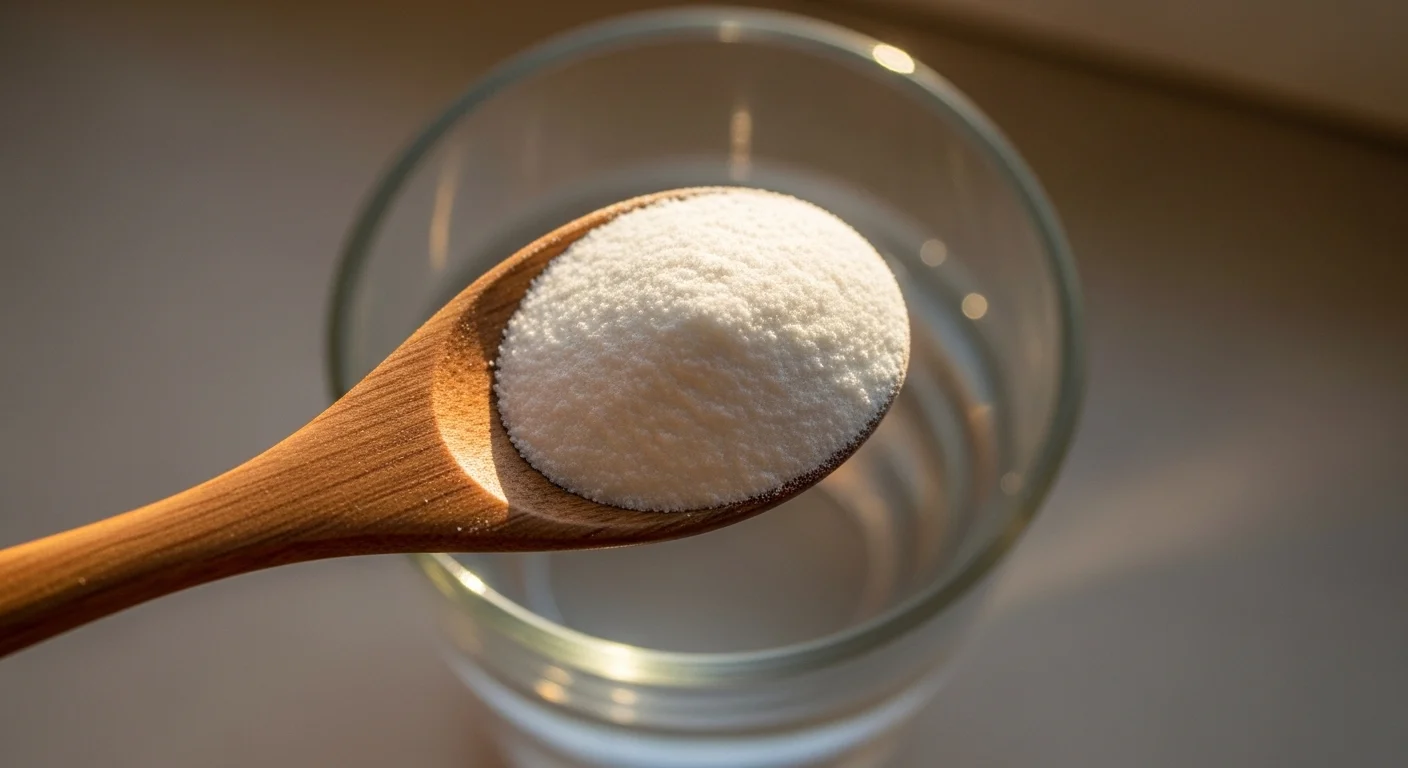
Hydrolyzed collagen peptides provide pre-digested amino acid sequences that research suggests are absorbed and transported directly to skin tissue. Multiple randomized controlled trials support their effectiveness at 5 to 10 grams daily over 8 to 16 weeks.
Look for third-party tested products and pair them with vitamin C at the time of consumption for optimal synthesis support.
One thing most people get wrong about vitamins: they take a supplement and expect it to do the work that diet, training, and hydration are supposed to do. Micronutrients support a system. They don’t replace one.
Exercises That Help Tighten Loose Skin
Here is what most people get wrong when they try to fix loose skin through exercise. They run, cycle, and use the elliptical for months and wonder why the loose skin is still there.
Cardio burns calories. It does not build the muscle that fills and firms loose skin. Resistance training does.
Gym-based compound lifts
These are your highest-return exercises for skin tightening. They recruit multiple large muscle groups simultaneously and produce the greatest stimulus for muscle growth throughout the body.
- Squats: target quadriceps, hamstrings, and glutes – directly addresses loose skin on thighs and lower abdomen
- Deadlifts: recruits the entire posterior chain and among the highest muscle-activation exercises available
- Bench press: builds chest, shoulder, and tricep mass and improves upper body structure
- Barbell or dumbbell rows: develops back thickness and improves overall torso structure
- Hip thrusts: among the most effective exercises for glute development, directly targeting loose skin around the buttocks and upper thighs
- Overhead press: builds shoulder mass and creates structure in the upper body
Home bodyweight routines
Gym access isn’t a requirement. Bodyweight training with progressive challenge produces real results. The key is making it progressively harder over time.
- Push-up variations progressed to archer push-ups or weighted vest push-ups
- Bodyweight squats progressed to Bulgarian split squats or pistol squats
- Glute bridges progressed to single-leg bridges with added resistance
- Inverted rows using a table edge or suspension trainer
- Pike push-ups for shoulder development
Train 3 to 5 days per week with a structured program. Add resistance bands as exercises become easier.
Where cardio belongs
Two to three cardio sessions per week supports cardiovascular health and caloric balance. If you have to choose between cardio and resistance training for time, choose resistance training every time when loose skin is the goal.
Do Collagen Supplements Really Work?
Let’s look at what the research actually says, not what the marketing says.
A systematic review and meta-analysis published on PubMed analyzed multiple randomized controlled trials studying hydrolyzed collagen supplementation’s effects on skin aging markers. Researchers found statistically significant improvements in skin elasticity, hydration, and collagen density compared to placebo groups. Studies used dosages of 5 to 10 grams of hydrolyzed collagen peptides daily over periods of 8 to 24 weeks.
Here is the important nuance: The quality of results varied based on the form of collagen used. Hydrolyzed collagen peptides – enzymatically broken down into small dipeptide and tripeptide fragments are absorbed far more efficiently than gelatin or undenatured collagen. When these peptides enter the bloodstream, research suggests they preferentially accumulate in skin tissue and stimulate local fibroblast activity, meaning they encourage the skin’s own collagen-producing cells to become more active.
What most articles won’t tell you: Collagen supplements work best in people who have lower baseline dietary protein intake. People already eating 150 grams or more of protein daily from whole food sources may see less additional benefit from supplementation, because their amino acid pool is already well supplied. For people eating lower protein diets, the targeted amino acid profile of collagen peptides provides a meaningful additional benefit.
The practical recommendation: Take 5 to 10 grams of hydrolyzed collagen peptides daily, ideally with a source of vitamin C. Give it at least 12 weeks before assessing results, and don’t expect it to work in isolation, pair it with resistance training and adequate dietary protein for the greatest combined effect.
Do You Need Supplements or Is Food Enough?
This is a fair question, and the honest answer is: it depends on your diet.
If you consistently eat high-quality protein sources throughout the day such as eggs, fish, poultry, legumes etc, your amino acid pool for collagen synthesis is already reasonably well supplied. Adding a collagen supplement on top of that may produce smaller incremental improvements than the marketing suggests.
That said, most people going through fat loss are eating in a caloric deficit, which often means lower overall protein intake, fewer micronutrients, and less dietary variety. In that context, hydrolyzed collagen peptides fill a specific gap by providing the exact amino acid sequences most relevant to skin tissue repair, particularly glycine and proline, which aren’t as concentrated in standard high-protein whole foods.
The Practical Takeaway: If your diet is already high in whole food protein, prioritize getting your micronutrients right, especially vitamin C and zinc. If your protein intake is inconsistent or lower than it should be, a collagen supplement adds real value. Food first, supplements second, and both together produce the best outcome.
Common Mistakes That Slow Everything Down
Most people trying to tighten loose skin naturally make at least one of these mistakes. Some make all five.
Mistake 1: Quitting after 3 to 4 weeks. Collagen remodeling is one of the slowest biological processes in the human body. Nothing visible happens in two weeks. The people who quit early never find out what months of consistency would have produced.
Mistake 2: Treating creams as the solution. Firming creams work at the skin’s surface. Loose skin is a structural issue. A topical product can’t reach the dermal layers responsible for significant sagging, and it can’t fill space beneath the skin the way muscle growth does.
Mistake 3: Doing only cardio. Running does not build the muscle that fills loose skin. This is the most common mistake and the most costly one in terms of wasted time and frustration.
Mistake 4: Staying in a deep calorie deficit. Very low calorie diets reduce protein intake, accelerate muscle loss, and slow collagen production and all three directly worsen loose skin. If you are still losing weight, slow down to 0.5 to 1 pound per week and protect your protein intake.
Mistake 5: Treating every body area the same. The belly responds differently from the inner thighs. The upper arms behave differently from the chest. Expecting uniform results across the whole body leads to premature discouragement when some areas improve faster than others.
30-Day Action Plan to Start Tightening Loose Skin
Week 1: Build the Foundation
- Start drinking 2 to 2.5 liters of water daily
- Calculate your protein target (0.7 to 1g per pound of bodyweight) and start hitting it every day
- Begin your resistance training program, 3 sessions this week on fixed days
- Start taking 5 to 10g hydrolyzed collagen peptides with vitamin C every morning
- Apply SPF 30 every morning without fail
- Buy a natural bristle dry brush and start using it before showers
Week 2: Lock In the Habits
- Hit your protein target every single day this week, no exceptions
- Complete all three resistance training sessions on your scheduled days
- Dry brush before every shower this week
- Add a retinol cream to your nightly routine starting tonight
Week 3: Intensify the Training
- Keep all nutrition, hydration, and supplement habits running daily
- Add progressive overload to at least one exercise this week
- Take your first progress photo in consistent lighting and save it
Week 4: Assess and Adjust
- Honestly review which habits are locked in and which are slipping
- Take your second progress photo and compare it with week 3
- Check your protein logs, are you actually hitting your target every day
- Add a fourth resistance training session this week if your recovery allows
- On day 30, commit to months 2 and 3. The compounding starts now.

Realistic Timeline
Months 1 to 3: No visible skin changes yet. Hydration and nutrition improvements make skin texture and tone noticeably better. Resistance training adaptation is happening under the surface.
Months 3 to 6: Early muscle development becomes visible. Some areas, especially arms and shoulders, start looking firmer. Collagen supplementation effects are accumulating.
Months 6 to 12: This is where most people with moderate loose skin see real improvement. The combination of muscle growth and collagen rebuilding produces changes that show clearly in progress photos.
Months 12 to 24: Deep structural remodeling continues. Areas that seemed stuck start improving. People who stayed consistent through the early invisible phase see their best results here.
Who Will and Will Not See Full Results
You will likely see strong improvement if you lost 30 to 80 pounds, you are under 45, you lost the weight gradually, and you are willing to commit to resistance training and proper nutrition for 12 to 18 months.
Natural methods have limits if you lost 100 or more pounds, you carried the weight for more than a decade, you are older with significantly reduced collagen production, or the weight came off very rapidly through surgery or crash dieting. In these cases, natural methods still improve your skin quality, body composition, and how you feel. But full structural tightening may not be achievable without clinical help.
When Natural Methods Are Not Enough
If you have done 12 to 18 months of consistent work and still have significant structural excess skin, it is worth having an honest conversation with a dermatologist or plastic surgeon.
Non-surgical options like radiofrequency therapy and Ultherapy use heat and ultrasound energy to stimulate collagen in deeper skin layers. Results develop over 2 to 6 months and multiple sessions are typically needed.
Surgical options like abdominoplasty, arm lift, and thigh lift physically remove excess skin. They produce permanent, dramatic results in the right candidates. They also carry real surgical risk, significant cost, and 2 to 6 weeks of recovery time.
Neither path is a shortcut. Natural methods first, clinical options if needed.
Comparison Table: Natural vs Non-surgical vs Surgical Treatment Comparison
| Factor | Natural Methods | Non-Surgical (RF/Laser) | Surgical Removal |
|---|---|---|---|
| Speed of Results | 6 to 18 months | 2 to 6 months | Immediate post-recovery |
| Cost | Low (food and gym) | Moderate to High (per session) | Very High (one-time) |
| Risk Level | None | Low (mild redness, swelling) | Significant (surgical risks) |
| Recovery Time | None | Hours to a few days | 2 to 6 weeks |
| Best Candidate | Everyone; mild to moderate loose skin | Moderate loose skin; people wanting faster results | Severe excess skin after massive weight loss |
| Permanence of Results | Long-lasting with maintained habits | Moderate; maintenance sessions needed | Permanent skin removal |
| Effectiveness for Severe Cases | Limited | Moderate | Very High |
Bottom Line:
Loose skin is not a failure. It is physical evidence of how much you changed your body.
Your skin is still remodeling right now. Collagen is being rebuilt. Muscle is growing. The changes that will be visible to you 12 months from now are already in motion. What they amount to depends entirely on what you do consistently between today and then.
Start with the basics. Hit your protein. Train with weights. Stay hydrated. Give it real time. That combination works for most people and it costs almost nothing.
Frequently Asked Questions
Click any question to read the answer.
Yes, for most people with moderate loose skin. Consistent resistance training, adequate protein, collagen support, and hydration produce real visible improvement over 6 to 18 months. Results depend on age, total weight lost, and how fast you lost it.
Surface texture improves in 6 to 8 weeks. Meaningful structural changes take 6 to 12 months. Deep collagen remodeling continues for up to 2 years.
Yes, and it is the most effective natural method available. Muscle physically fills the space beneath loose skin that fat previously occupied, pushing skin outward from the inside.
The evidence is solid. Multiple randomized controlled trials show hydrolyzed collagen at 5 to 10 grams daily improves skin elasticity and hydration over 8 to 24 weeks. Pair it with vitamin C and resistance training for best results.
Combining resistance training, high protein intake, and hydrolyzed collagen supplementation simultaneously. No single method works as quickly as all three together.
Not necessarily. Skin remodels for up to 2 years after weight loss. Moderate loose skin often improves significantly with consistent effort. Severe excess skin after massive weight loss may need surgical intervention to fully resolve.
Cardio supports your health and caloric balance but does not address loose skin structurally. Resistance training builds the muscle that fills and firms loose skin. Cardio alone will not produce the same result.
For informational and educational purposes only. All content on BellyZero, including articles, calculators, health tools, templates, and recipes, is intended to provide general health information. It does not constitute medical advice, a clinical diagnosis, or a substitute for professional healthcare guidance.
Results generated by BellyZero calculators and tools are estimates based on population-level formulas and standard reference ranges. They do not account for your full medical history, individual physiology, existing health conditions, or medications. Results may not apply to pregnant women, children, competitive athletes, or individuals with chronic illness.
Always consult a qualified healthcare professional before making changes to your diet, exercise routine, or health regimen based on anything found on this website. If you have symptoms or concerns about your health, seek medical attention promptly. BellyZero does not accept liability for decisions made based on content published on this site.