
Can Weight Loss Lower Blood Pressure? Nearly half of all adults in the United States live with high blood pressure. That is 119.9 million people, and only about 1 in 4 of them have it under control, according to the CDC. If you just got a high reading at the doctor’s office and someone mentioned your weight, you are probably wondering if dropping a few pounds will actually make a difference on the cuff.
The short answer is yes. Weight loss lowers blood pressure, and doctors have measured this effect for decades in controlled studies, not just guessed at it. But the amount of weight you need to lose, how fast the drop happens, and why it works in the first place are questions most articles skip over. This piece walks through the actual research, with the exact numbers from the studies behind them.
Why Carrying Extra Weight Pushes Blood Pressure Up
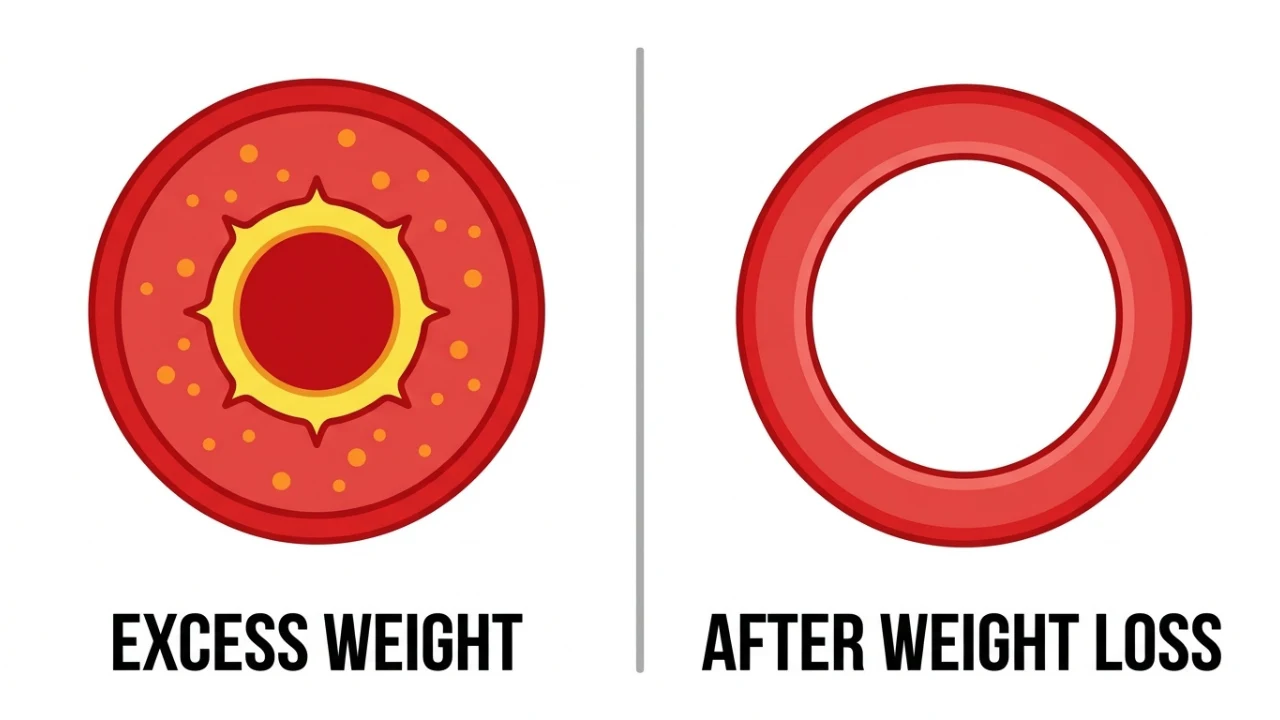
Your heart pumps blood through roughly 60,000 miles of blood vessels. When you gain weight, your body builds new tissue, and every pound of that tissue needs a blood supply. Your heart responds by pumping harder and pushing more fluid through your system, and that added volume raises the pressure inside your arteries.
There is more going on under the surface too. Extra body fat, especially around the belly, sets off a chain reaction:
- Your kidneys hold on to more sodium. This pulls in extra fluid and raises blood volume.
- Your nervous system fires more often. Researchers call this sympathetic activation, and it tightens blood vessels.
- Fat tissue releases hormones like aldosterone and leptin, which stiffen artery walls and raise pressure. A study in Hypertension Research tracking 376 patients found that as body weight dropped, so did levels of insulin, leptin, and aldosterone, right alongside blood pressure.
- Insulin resistance builds up, which makes blood vessels less flexible over time.
A 2021 scientific statement from the American Heart Association lays out these mechanisms in detail and confirms that weight loss reverses several of them at once, not just one.
What the Research Actually Shows
Here is where most articles get vague. The studies below give exact figures, not rough estimates.
| Study | Weight Lost | Blood Pressure Drop |
|---|---|---|
| Meta-analysis of 25 trials, 4,874 people (AHA Journals) | 5.1 kg (about 11 lbs) | Systolic down 4.44 mmHg, diastolic down 3.57 mmHg |
| Same meta-analysis, per kilogram lost | 1 kg (about 2.2 lbs) | Systolic down about 1.05 mmHg, diastolic down about 0.92 mmHg |
| Community weight-loss program study, 2,041 people (British Journal of General Practice) | 1 kg (about 2.2 lbs) | Systolic down 0.4 mmHg (0.5 mmHg in people already diagnosed with high blood pressure) |
| 12-month diet trial, 222 patients with stage 1 hypertension (Hypertension Research) | 8.1 kg (about 18 lbs) | Systolic down 4.2 mmHg, diastolic down 3.3 mmHg |
| Trial of Hypertension Prevention (TOHP) | 2 kg (about 4.4 lbs) over 6 months | Systolic down 3.7 mmHg, diastolic down 2.7 mmHg |
| One-week hospital weight program, 121 patients | 3 kg (about 6.6 lbs) in one week | Both systolic and diastolic numbers dropped significantly within days |
Notice a pattern? Every single study, run by different research teams, in different countries, on different groups of patients, points to the same conclusion. Weight and blood pressure move together, and the relationship holds up whether you look at short diet programs or long-term trials.
How Much Weight Loss Actually Moves the Needle
You do not need to hit your “goal weight” to see a benefit. The American Heart Association’s 2021 statement found that losing just 5% to 10% of your starting body weight can lower systolic pressure by more than 5 mmHg and diastolic pressure by more than 4 mmHg.
Lose closer to 10 kilograms (about 22 pounds), and systolic pressure can fall anywhere from 5 to 20 mmHg, depending on your starting weight and health history.
Here is what that looks like for a 200-pound adult:
| Starting Weight | 5% Weight Loss | 10% Weight Loss |
|---|---|---|
| 200 lbs | 10 lbs lost | 20 lbs lost |
| 250 lbs | 12.5 lbs lost | 25 lbs lost |
| 300 lbs | 15 lbs lost | 30 lbs lost |
This matters because it removes the excuse of “I need to lose 50 pounds before it counts.” You do not. A 10-pound drop for a 200-pound person already lands you in the range doctors flag as clinically meaningful.

The Food Side: What You Eat Matters as Much as the Scale
Weight loss and diet quality work as a team here, not as separate strategies. The DASH eating plan (Dietary Approaches to Stop Hypertension) was built by the National Heart, Lung, and Blood Institute specifically to lower blood pressure, and it does this even before any weight comes off.
The plan centers on fruits, vegetables, whole grains, fish, poultry, nuts, and low-fat dairy, while cutting back on red meat, added sugar, and salt. Sodium is the big lever here. The NHLBI-funded DASH-Sodium trial found that cutting sodium from 2,300 mg a day down to 1,500 mg a day drops blood pressure even further, and the effect is strongest in people who already have elevated readings.
Pair DASH eating with weight loss, and the two effects stack. You are not choosing between “eat better” or “lose weight.” Cutting back on processed food and added sodium usually drives the weight loss in the first place, so the two goals point in the same direction.
Quick sodium math that helps: 1,500 mg is about two-thirds of a teaspoon of table salt for the entire day. Most packaged soups, deli meats, and fast food meals blow past that in a single serving, so reading labels does more work than most people expect.
Moving More Without Needing a Gym Membership
Exercise lowers blood pressure through a separate path than diet alone, and it also drives weight loss when you keep at it. The AHA statement breaks this down by minutes per week:
- Under 150 minutes of activity a week produces little to no weight loss.
- 150 to 225 minutes a week produces roughly 2 to 3 kg (4.4 to 6.6 lbs) of weight loss.
- 225 to 420 minutes a week produces roughly 5 to 7.5 kg (11 to 16.5 lbs) of weight loss.
- Keeping weight off long term generally takes 200 to 300 minutes a week.
Separately, just cutting down on sitting time, standing more, walking during phone calls, taking stairs, has been linked to blood pressure drops ranging from 1 to 16 mmHg across multiple studies, independent of any weight change at all.
None of this requires a personal trainer. A 30-minute brisk walk five days a week already puts you at 150 minutes, the starting line where studies begin to show results.

When Diet and Exercise Alone Are Not Enough
Some people do everything right and still cannot drop enough weight through lifestyle changes to control their blood pressure. This is common, and it is not a personal failure. For people with more severe obesity and hypertension that resists multiple medications, bariatric surgery has the strongest track record on record.
The GATEWAY trial randomly assigned 100 patients with obesity and hypertension to either gastric bypass surgery plus medical care, or medical care alone. At 12 months, 83.7% of the surgery group cut their blood pressure medications by at least 30% while keeping their pressure controlled, compared to only 12.8% in the medication-only group.
The follow-up got even more convincing. At the 5-year mark, 86.5% of the surgery group had cut their medication load by 30% or more, compared to 12.5% of the medical-therapy group, and the chance of their hypertension going into full remission was nearly 20 times higher than in the group that did not have surgery.
Surgery is not the right call for most people, and it comes with its own risks that need a real conversation with a doctor. But for the group it fits, the data shows it beats medication alone at getting blood pressure under control long term.
How Fast Can You Expect to See a Change?
This is the part people want most, and the honest answer is that it depends on how you lose the weight.
In one hospital-based study, patients lost about 3 kg (6.6 lbs) over a single week on a supervised low-calorie diet, and their blood pressure dropped in that same week, both systolic and diastolic numbers moved. That tells you the body responds fast once fluid and sodium levels shift.
Longer trials, like the 12-month study of 222 patients with stage 1 hypertension, show that the benefit builds and holds over months, particularly once someone reaches a normal BMI. In that study, people who got their BMI into the normal range saw even larger drops, 5 mmHg systolic and 4.5 mmHg diastolic, than those who lost weight but stayed overweight.
The takeaway: you can expect some movement in the first couple of weeks, with the bigger, more lasting drop showing up over three to twelve months as the weight loss holds.
The Catch: Weight Regain Brings Blood Pressure Back Up
Here is the part most weight-loss articles leave out. Every major review on this topic flags the same problem: when the weight comes back, so does the blood pressure. The Trials of Hypertension Prevention Phase II study found this directly, participants who regained weight after their initial loss saw their blood pressure numbers climb back toward where they started.
This is not a reason to skip trying. It is a reason to build habits you can actually keep for years, not a 30-day plan you abandon in week five. Sustainable changes, a diet you can eat forever, an activity you enjoy enough to repeat, beat a strict short-term plan almost every time when it comes to long-term blood pressure control.
A Simple Starting Checklist
| Step | What To Do |
|---|---|
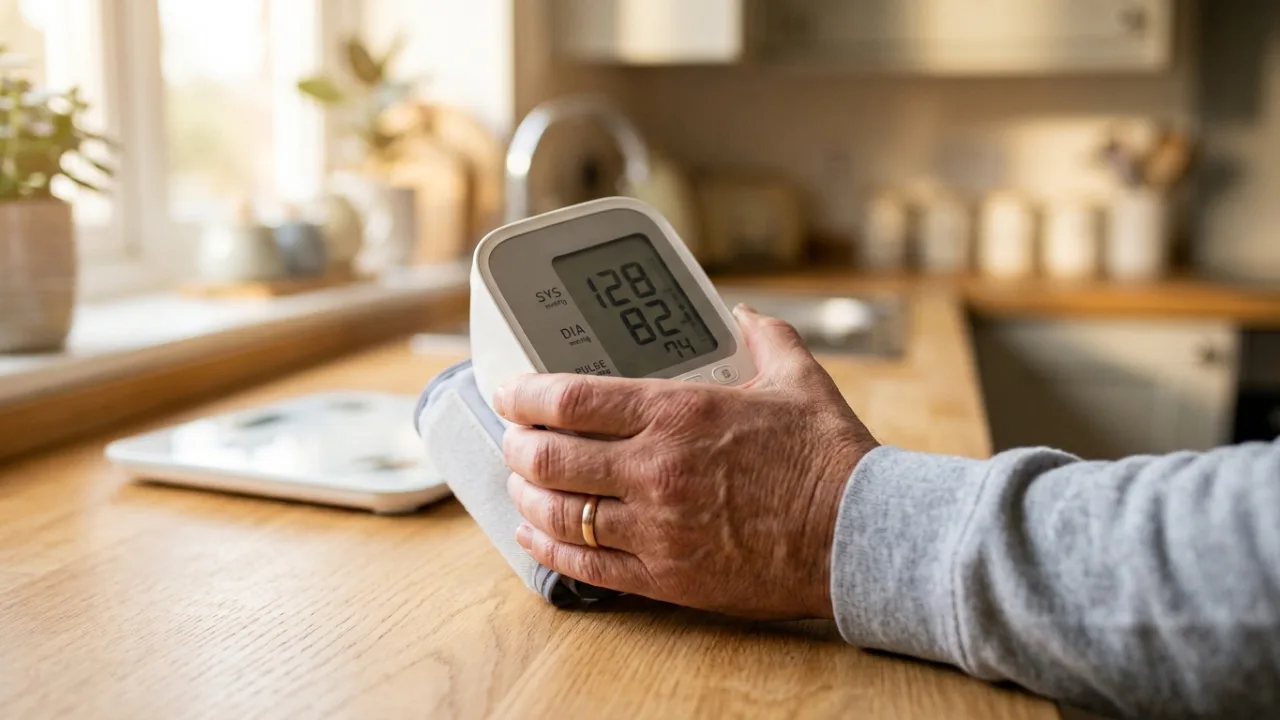
| 1 | Track your blood pressure at home with a validated cuff, same time each day, before caffeine. |
| 2 | Set a target of 5% weight loss first, not a huge number. It already moves your numbers. |
| 3 | Cut daily sodium toward 1,500 mg by checking labels on soups, sauces, and deli meat. |
| 4 | Add movement most days of the week, aiming for 150 minutes to start. |
| 5 | Talk to your doctor before changing or stopping any blood pressure medication. |
The Bottom Line On Can Weight Loss Lower Blood Pressure?
Weight loss lowers blood pressure. You do not need to lose a dramatic amount of weight to see it happen. Five to ten percent of your body weight, paired with less sodium and more movement, already puts you in the range where doctors expect measurable results.
The number on the scale is not the only thing that matters, though. How you lose the weight, and whether you can keep it off, decides whether the drop in blood pressure sticks around for years or bounces back in a few months. Start with changes you can actually repeat next year, not just next week.
Frequently Asked Questions
How many pounds do I need to lose to lower my blood pressure?
Losing 5% to 10% of your body weight is enough to see a real drop, often more than 5 mmHg systolic and 4 mmHg diastolic. For a 200-pound adult, that means losing 10 to 20 pounds.
How fast does blood pressure drop after losing weight?
Some change can show up within one to two weeks on a supervised diet. The larger, longer-lasting drop usually builds over three to twelve months as weight loss holds steady.
Does losing 1 kg (2.2 lbs) actually change blood pressure?
Yes. A large meta-analysis of 25 trials found that each kilogram lost lowers systolic pressure by about 1 mmHg and diastolic pressure by about 0.9 mmHg on average.
Can I stop my blood pressure medication once I lose weight?
Never stop or lower a blood pressure medication on your own. Weight loss can reduce how much medication you need, and some people reach remission, but that decision has to be made with your doctor based on your actual readings.
Is diet or exercise more important for lowering blood pressure?
Both matter, and they work through different paths in the body. Cutting sodium and following an eating plan like DASH lowers pressure directly, while regular activity lowers it and also drives the weight loss that adds a second layer of benefit.
Does blood pressure go back up if I regain the weight?
Yes, studies including the Trials of Hypertension Prevention found that blood pressure climbs back up when lost weight is regained. Keeping the weight off matters as much as losing it in the first place.
Is weight loss surgery a good option for high blood pressure?
For people with obesity and hypertension that resists multiple medications, the GATEWAY trial found gastric bypass surgery cut medication needs in over 80% of patients at both 1 and 5 years, far more than medical therapy alone. It carries surgical risks and is not right for everyone, so it requires a full discussion with a doctor.
Why You Can Trust This Information
Every figure in this article comes from named, peer-reviewed research or federal health data, linked directly at the source rather than summarized secondhand. Sources include the Centers for Disease Control and Prevention, the National Heart, Lung, and Blood Institute (a division of the NIH), the American Heart Association’s journal Hypertension, the British Journal of General Practice, Hypertension Research, and the peer-reviewed GATEWAY surgical trial. No claim in this article is based on opinion, marketing material, or unverified sources.
For informational and educational purposes only. All content on BellyZero, including articles, calculators, health tools, templates, and recipes, is intended to provide general health information. It does not constitute medical advice, a clinical diagnosis, or a substitute for professional healthcare guidance.
Results generated by BellyZero calculators and tools are estimates based on population-level formulas and standard reference ranges. They do not account for your full medical history, individual physiology, existing health conditions, or medications. Results may not apply to pregnant women, children, competitive athletes, or individuals with chronic illness.
Always consult a qualified healthcare professional before making changes to your diet, exercise routine, or health regimen based on anything found on this website. If you have symptoms or concerns about your health, seek medical attention promptly. BellyZero does not accept liability for decisions made based on content published on this site.
Written By: Vikas Arora Updated: July, 2026