
How to lose weight naturally means creating a consistent calorie deficit through real food, daily movement, and better sleep habits. No supplements, no starvation, no gym required. This guide gives you the science, the system, and a step-by-step plan you can start today.

How Weight Loss Actually Works
Before you change a single thing about your diet or routine, you need to understand the one mechanism that drives all fat loss. Everything else in this guide builds on this foundation.
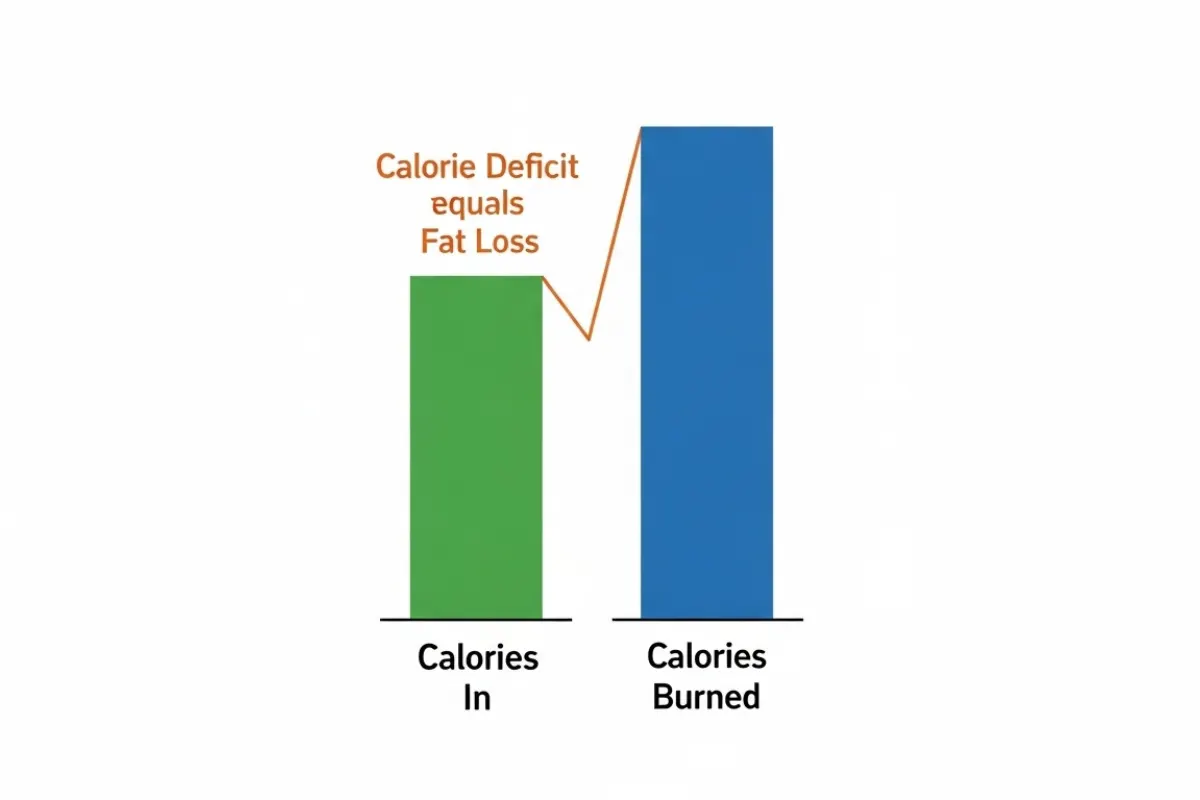
Your body runs on energy measured in calories. Every breath, heartbeat, and muscle contraction burns calories. When you consume more calories than your body needs, it stores the excess as fat. When you consume fewer calories than your body needs, it burns stored fat to fill the gap. That process is called a calorie deficit, and it is the only mechanism proven to produce fat loss consistently across every credible study in nutritional science.
Harvard Medical School, the CDC, and the NIH all agree on this point. The disagreements in nutrition science are about strategy, not this core principle.
The Calorie Deficit Explained With a Real-Life Analogy
Imagine your body as a bank account, where your maintenance calories represent your paycheck for the month. Every calorie you consume is a credit, while every calorie you expend is a debit. Your account balance decreases if you are in a spending mode more than earning. Fat is the balance. A deficit will gradually deplete it.
On average, an adult requires about 2,000 to 2,500 calories daily to keep up with their existing body weight. Creating a shortfall of 500 calories a day will lead to the loss of one pound of fat weekly. The calculation doesn’t work out absolutely linearly in reality due to hormones, water retention, and sleep quality affecting the figures; however, the direction never changes.
A 500-calorie daily deficit does not require starving yourself. In most cases, it requires awareness, not suffering.
What Metabolism Actually Means
Metabolism is the total number of calories your body burns in a day. Most people treat it like a personality trait, something you either got lucky with or did not. The reality is more practical and more useful.
Your total daily calorie burn has four parts. Your basal metabolic rate covers everything your body does at rest, breathing, circulating blood, and maintaining organ function. This accounts for 60 to 70 percent of total burn. Physical activity adds 15 to 30 percent. Digesting food burns roughly 10 percent. Non-exercise movement like walking, standing, and fidgeting covers the rest.
That means most of your calorie burn happens before you put on a sneaker. Diet changes produce faster results than exercise alone for most beginners because the diet side of the equation is simply larger.
| Approach | Typical Deficit Created | Difficulty | Sustainability |
|---|---|---|---|
| Diet change alone (portion control) | 300 to 600 cal/day | Low to Moderate | High |
| Exercise alone (30 min walk daily) | 150 to 250 cal/day | Low | High |
| Diet plus exercise combined | 500 to 800 cal/day | Moderate | High |
| Crash diet (under 1,000 cal/day) | 1,000+ cal/day short-term | Very High | Very Low |
| Juice cleanse or detox program | Variable (mostly water loss) | Moderate | Very Low |
What Actually Works: Science-Based Methods
These natural weight loss methods are backed by research. None of them require expensive products, extreme restriction, or a gym membership. They work because they address the actual mechanisms of hunger, calorie intake, and energy output.
Eat more protein at every meal.
Protein suppresses ghrelin, the hormone that triggers hunger, more effectively than carbohydrates or fat. It also preserves muscle tissue during a calorie deficit, which keeps your metabolic rate from dropping as fast as it would on a low-protein diet. Aim for 25 to 35 grams of protein per meal. Eggs, chicken, Greek yogurt, canned fish, lentils, and cottage cheese all qualify. None of them require complicated preparation.
Cut liquid calories before anything else.
A large sweetened coffee drink delivers 350 to 500 calories with essentially zero effect on hunger. Fruit juice, energy drinks, and flavored sodas behave the same way. Replacing these with water, black coffee, or unsweetened tea creates a 200 to 400 calorie daily deficit before you touch a single solid food. This is the single easiest change most people can make and one of the most effective natural weight loss tips available.
Walk every day without exception.
Thirty minutes of brisk walking burns 150 to 200 calories, requires no equipment, costs nothing, and carries a near-zero injury risk. NIH research on long-term weight maintenance consistently identifies daily walking as the one behavior shared by people who keep weight off for five or more years. It is boring. It works.
Use smaller plates at every meal.
Plate your food in the kitchen before sitting at the table, put away any remaining food before you eat, and never eat directly from a bag or container. When the food in front of you is finite and the rest is out of sight, you naturally stop at the portion you served rather than continuing past the point of fullness.
Sleep seven to eight hours every night.
Sleeping fewer than seven hours increases daily calorie intake by an average of 385 calories compared to sleeping eight or more hours. Short sleep raises ghrelin and lowers leptin, the hormone that signals fullness. You wake up hungrier, stay hungry longer, and crave higher-calorie foods. Sleep is not a lifestyle bonus. It is a fat loss variable that most people ignore entirely.
Eat slowly and stop before you feel full.
Your brain requires 15 to 20 minutes to receive satiety signals from your stomach. Eating fast means you consistently overshoot your actual fullness point before your brain registers it. Putting your fork down between bites and aiming to finish a meal in 20 minutes rather than eight closes that gap and reduces intake naturally.
Track your food for at least three to four weeks.
Studies consistently show that people who track their food lose significantly more weight than those who do not, and dietary self-monitoring is considered the single most effective behavioral tool in weight loss research. A splash of olive oil in a pan is 120 calories. Two tablespoons of ranch dressing add 145 more. Tracking builds calibrated awareness that changes food decisions permanently, even after you stop counting.
Manage stress deliberately.
Chronic stress elevates cortisol, which increases appetite and directs fat storage toward the abdominal area. Ten to fifteen minutes of daily stillness, walking, or breathing exercises lowers cortisol measurably. This is not meditation advice dressed up as a fat loss strategy. It is endocrinology.
What Does Not Work: Common Myths
These myths keep people stuck for years while doing everything except what actually works.

Myth: Fat-burning supplements speed up your metabolism enough to matter.
Reality: The FDA does not test supplements for efficacy before they go on sale. The ones that show any effect at all typically contain high doses of stimulants that raise heart rate rather than meaningfully increase fat oxidation. Save the money.
Myth: Detox teas and juice cleanses flush toxins and restart fat loss.
Reality: Your liver and kidneys filter toxins continuously, around the clock, without any help from a beverage that costs forty dollars. The weight lost during a cleanse is water. It returns within two to three days of eating normally.
Myth: Eating after 8pm causes fat gain.
Reality: Your body does not operate on a schedule. A calorie consumed at 10pm is metabolized the same way as one consumed at noon. Late-night eating correlates with weight gain because it tends to be impulsive, high-calorie, and on top of an already complete day of food. The timing is not the problem. The extra calories are.
Myth: You must do ab exercises to lose belly fat.
Reality: Spot reduction is not physiologically possible. Crunches build muscle underneath abdominal fat. They do not burn the fat sitting on top of it. A calorie deficit reduces fat across the entire body, and the abdomen responds along with everything else.
Myth: Natural drinks and teas can mimic GLP-1 drugs like Ozempic.
Reality: GLP-1 receptor agonists work through a specific pharmaceutical mechanism that no food, tea, or drink replicates. Some ingredients like berberine show mild blood sugar effects in early research but nothing close to the clinical outcomes of prescribed medication. If a product claims to be a natural Ozempic alternative, close the tab.
Myth: No pain, no gain. If you are not sore, the workout did not count.
Reality: Delayed muscle soreness results from tissue micro-damage, not calorie burn. A 45-minute walk produces essentially zero soreness and burns more total calories than a 15-minute high-intensity session that leaves you walking sideways for three days. Soreness tracks discomfort, not results. Consistency tracks results.
Simple Daily System: Morning to Night
Systems outperform willpower every single time. Willpower depletes throughout the day. A well-built routine eliminates the daily decisions that drain it and replaces them with automatic behaviors that run without effort.
This is what losing weight without a gym actually looks like in practice. No dramatic overhaul. Just a structured sequence of small decisions made at the right times.
Add one element per week rather than implementing everything at once. This is how habits actually form.
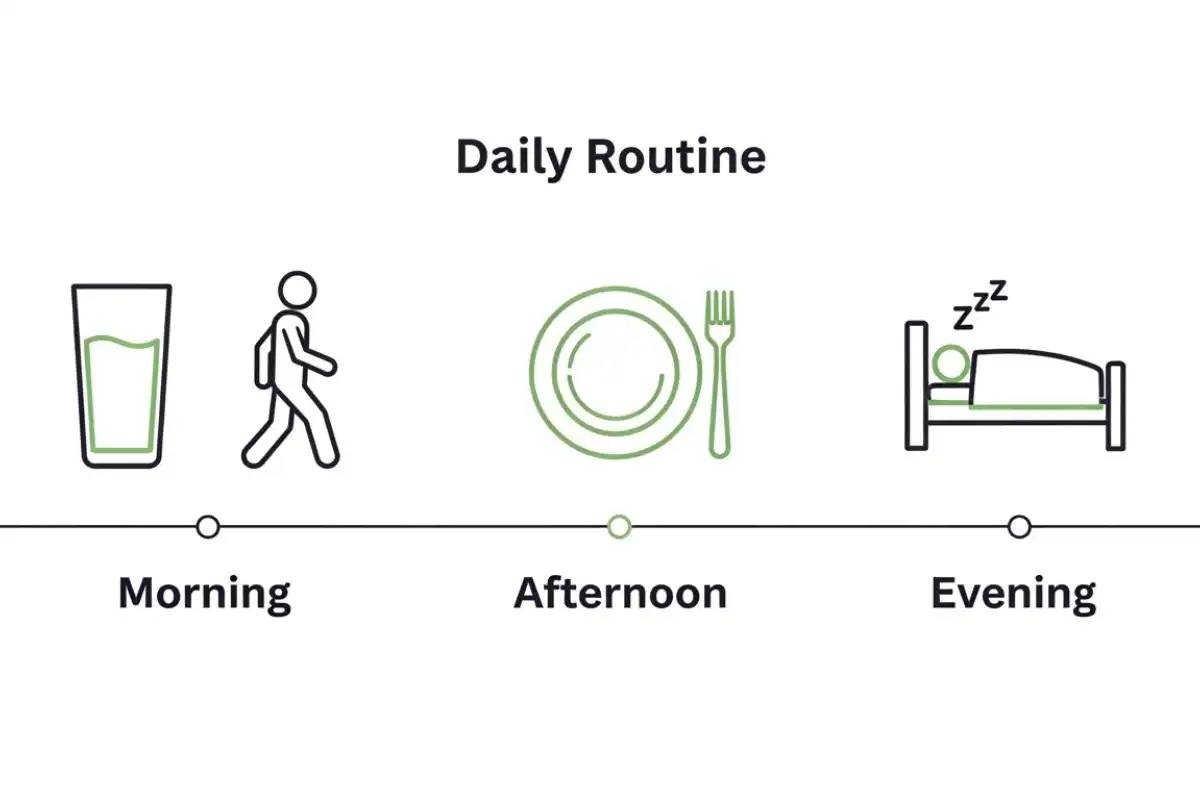
| Time | Action | Why It Works |
|---|---|---|
| Morning | Drink 16 oz of water immediately on waking | Clears overnight dehydration and reduces false hunger |
| Morning | Eat a protein-first breakfast within one hour of waking | Controls hunger hormones through the first half of the day |
| Morning | Walk for 20 to 30 minutes before or after breakfast | Burns calories, improves insulin sensitivity, lowers cortisol |
| Afternoon | Eat lunch using the half-plate vegetable rule | Reduces calorie density without tracking a single number |
| Afternoon | Replace any sugary afternoon drink with water or plain tea | Eliminates 200 to 400 liquid calories per day |
| Afternoon | Take a 10-minute walk after eating | Lowers post-meal blood sugar by up to 30 percent |
| Evening | Eat dinner slowly over at least 20 minutes | Allows satiety signals to register before you overshoot |
| Evening | Stop eating two to three hours before bed | Improves sleep quality and removes impulse late-night calories |
| Evening | Protect seven to eight hours of sleep with a fixed bedtime | Regulates ghrelin and leptin for the following day |
Download the free BellyZero Weight Loss Tracker to record your daily habits, weekly weight, and waist measurements in one place. Tracking creates the feedback loop that turns this checklist from a good intention into a measurable record. Use this tracker to stay consistent when motivation drops, because it will.
Food Strategy That Actually Works
Food strategy is the foundation of how to lose weight naturally without extreme dieting. You do not need to eliminate food groups, count every gram, or eat food you hate. You need to understand which foods keep you full per calorie and which ones quietly empty your budget without satisfying you.
That concept is called calorie density, and it is the most practical idea in weight management that almost nobody explains properly.
What Calorie Density Means
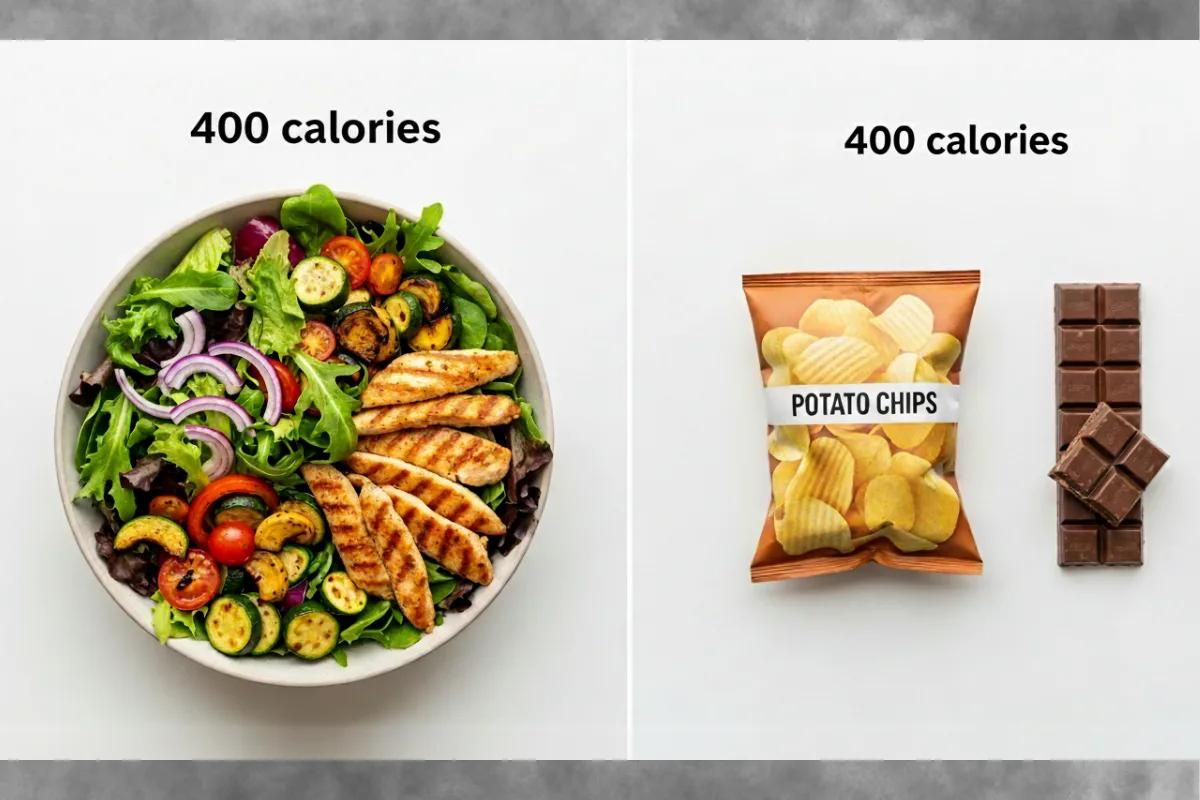
Calorie density is the number of calories per gram of food. Low-density foods let you eat a large physical volume for very few calories. Your stomach fills before your calorie count climbs. High-density foods deliver significant calories in a small physical volume. Your stomach stays empty while your calorie count rises fast.
Understanding this one concept makes it possible to eat satisfying portions every meal while running a consistent deficit. This is what separates sustainable weight loss from hunger-based dieting.
| Food | Serving | Calories | Keeps You Full | Category |
|---|---|---|---|---|
| Boiled potatoes | 300g | 230 kcal | Very well | Low density |
| Cooked oatmeal | 250g | 160 kcal | Well | Low density |
| Grilled chicken breast | 150g | 248 kcal | Very well | Low density |
| Plain Greek yogurt | 200g | 118 kcal | Well | Low density |
| Almonds | 30g | 174 kcal | Moderately | High density |
| Potato chips | 30g | 155 kcal | Poorly | Very high density |
| Milk chocolate bar | 45g | 235 kcal | Poorly | Very high density |
| Large sweetened latte | 480ml | 380 kcal | Not at all | Liquid calories |
Protein and Fiber: The Two Variables That Matter Most
Protein preserves muscle during a deficit and reduces hunger more effectively than any other macronutrient. The NIH recommends 0.7 to 1 gram of protein per pound of body weight per day for people actively trying to lose fat without losing muscle.
Fiber slows nutrient absorption, extends the feeling of fullness, and feeds gut bacteria that influence hunger hormones. The Dietary Guidelines for Americans recommend 25 to 38 grams of fiber per day for adults (depending on age and sex). Most Americans eat fewer than 16 grams. Closing that gap through vegetables, legumes, oats, and fruit addresses a large portion of unexplained hunger in otherwise disciplined people.
Simple Plate Formula
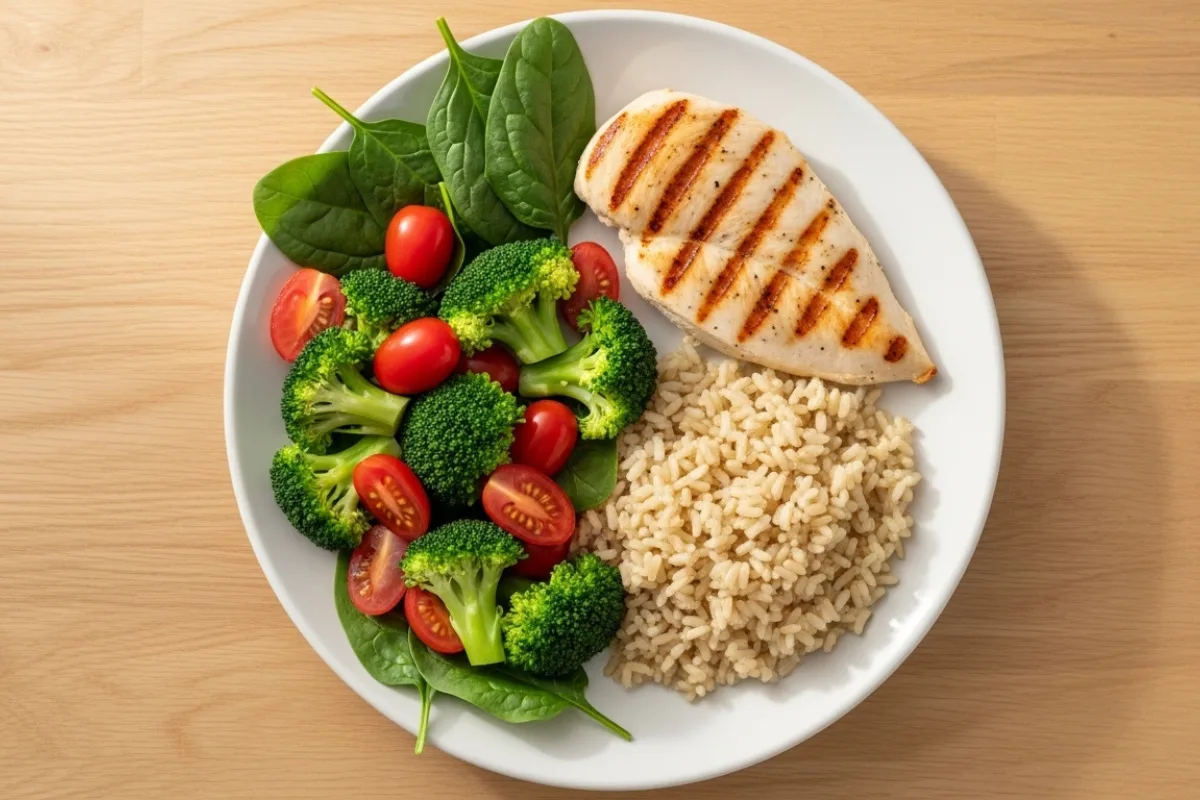
Fill half the plate with non-starchy vegetables. Fill one quarter with lean protein. Fill the remaining quarter with a whole food carbohydrate like potatoes, rice, oats, or beans. This formula manages calorie density, protein, and fiber simultaneously without counting a single number.
For meals that apply this formula directly, explore our high-protein recipe collection. Every recipe is built around real ingredients with no elaborate techniques required.
Beginner Plan: Day 1 Through Week 3
Most plans fail because they demand too much too soon. Someone who has never consistently tracked food, never walked daily, and never prioritized sleep cannot sustainably adopt a six-day training program, a strict meal plan, and a supplement protocol simultaneously. The whole structure collapses within two weeks and reinforces the belief that losing weight safely is impossible.
This plan adds one layer per week. Each new habit has a stable foundation underneath it before the next one arrives.
Day 1: Establish Your Baseline
Calculate your maintenance calories using the BellyZero Calorie Calculator. Set a target deficit of 300 to 500 calories per day. Record your starting weight and waist measurement in your tracker. Write the date. These numbers are your before. You cannot measure progress without a starting point, and progress is what keeps people going when motivation runs thin.
Week 1: Two Changes Only
Replace every sugary or calorie-containing drink with water, black coffee, or unsweetened tea. Add a 20-minute walk every morning. Track both habits each evening. Do not change your food yet. For most people these two changes alone create a 300 to 500 calorie daily deficit and cost zero additional effort or money. Seven days of this establishes the behavioral foundation everything else sits on.
Week 2: Add Protein and Restructure Plates
Add a clear protein source to every meal. Apply the half-plate vegetable rule at lunch and dinner. Extend your morning walk to 30 minutes if Week 1 felt manageable. Begin paying attention to sleep duration without forcing a dramatic change yet. Simply observe how your hunger differs on days when you sleep six hours versus seven and a half. That observation becomes self-reinforcing motivation faster than any article you will read.
Week 3: Build the Evening Routine and Check Progress
Set a consistent bedtime and stop eating two to three hours before it. At the end of Week 3, record your weight and waist in your tracker and compare to Day 1. Most people following this sequence see a waist reduction and a scale drop of two to four pounds by this point.
What to Expect Realistically Week by Week
Most people starting out want to know what normal progress actually looks like. Here it is without the optimistic spin.
Week 1 and 2: Scale drops noticeably, mostly water weight and glycogen loss. Encouraging but not fully representative of fat loss yet. Do not celebrate too hard or panic when it slows.
Week 3 and 4: Scale movement slows down. Waist starts shrinking. Energy improves noticeably. This is genuine fat loss beginning and it feels slower than Week 1 even though the process is working correctly.
Week 5 to 8: The habit feels boring and automatic. This is the most important phase. Boring means the system is running. Most people quit here by misreading stability as stagnation.
Week 9 to 12: Visible body composition changes appear. Clothes fit differently before the scale fully reflects it. Waist reduction becomes obvious to people around you before you see it yourself.
The results at this stage are encouraging but they are not the point yet. The habits are the point. Results sustained past 90 days come from habits sustained past 30.
Start the BellyZero 30-Day Challenge here to add a structured morning ritual that supports the habit system you built across Weeks 1 through 3. It works as an accelerant on top of a functioning foundation, not as a replacement for one.
Tools and Resources
The right tools reduce friction between intention and action. Everything listed here serves a specific function at a specific stage of this process. None of it requires a subscription or purchase.
BellyZero Calorie Deficit Calculator
Use this on Day 1 before anything else. Enter your age, height, weight, sex, and activity level. You get your maintenance calories and a personalized daily target in under 60 seconds. Without this number, every other strategy in this guide is a guess. Use this tool to establish your starting point.
BellyZero Free Weight Loss Tracker
A printable 3-page system that tracks weight, waist measurements, weekly habits, and progress observations in one place. The research is clear on this: people who record a starting measurement before they feel ready consistently outperform people who wait for motivation to arrive first. The act of measuring creates the motivation. Print it today and fill in the baseline row immediately.
BellyZero 30-Day Pink Salt Morning Drink Challenge
A structured 30-day morning ritual tracker that builds a consistent pre-breakfast hydration habit with daily accountability. Designed to layer on top of the Week 1 through 3 foundation. Use it in Week 3 or Week 4 when the basic habits feel stable and automatic.
Recipe Section
High-protein, high-fiber meals built around the plate formula from Section 5. No complicated techniques, no expensive specialty ingredients, no meals that require an hour of preparation on a Tuesday night. Practical food designed for people building a real system, not performing one for social media.
Final Summary:
If you want to lose weight naturally, this system gives you a clear path that does not rely on willpower, expensive products, or unsustainable restriction.
The mechanism is a calorie deficit. The strategy is protein, fiber, and calorie density. The system is a structured daily routine built on sleep, walking, and food quality. The tools are a tracker, a calculator, a 30-day challenge, and practical recipes. The timeline is realistic: two to four weeks to build the habits, eight to twelve weeks to see meaningful physical change, six months to build a system that runs on its own without constant effort.
The best way to lose weight safely is not the fastest one. It is the one you can sustain past the point where motivation runs out, because motivation always runs out. Systems do not.
Start today with one habit. Track it. Build from there. That is how real fat loss happens.
Frequently Asked Questions
2. Metabolic adaptation happens when you cut calories significantly. Your body responds by reducing its own energy output. Non-exercise movement drops, and the deficit you created on paper becomes smaller in practice. Breaking this plateau requires either a small further reduction in intake, more daily movement, or a brief two-week return to maintenance calories to reset hormones.
3. Water retention masking real fat loss. Poor sleep and high stress raise cortisol, which causes the body to hold water. You can lose a pound of fat while the scale stays exactly the same. Measure your waist circumference every two weeks. It will show progress the scale conceals.
Use the BellyZero Calorie Calculator to find your Total Daily Energy Expenditure, then subtract 300 to 500 calories from that number.
A 300-calorie deficit produces roughly half a pound of fat loss per week. A 500-calorie deficit produces around one pound per week. Going beyond 500 calories increases hunger sharply, accelerates muscle loss, and almost always leads to rebound eating within four to eight weeks.
From week two onward, a consistent 500-calorie daily deficit produces roughly one pound of actual fat loss per week. That is 4 pounds per month through diet and movement alone, without a gym or supplements.
People who lose faster than 2 pounds per week are almost always losing muscle alongside fat, which slows their metabolism and makes regain more likely. Slow and steady is not a cliche. It is what the research consistently shows produces the best results at six and twelve months.
A 30-minute daily walk burns 150 to 200 calories, requires no equipment, costs nothing, and is one of the most consistent habits shared by people who keep weight off long term. Build daily movement into your routine first. Add the gym later if you want to, not because you feel forced to.
Most people following this combined method see measurable waist reduction within four to six weeks and visible body composition change by eight to twelve weeks. Spot reduction is not possible. Crunches and ab workouts build muscle but do not burn the fat sitting on top of it. A calorie deficit reduces fat across the whole body, including the belly.
Every glass of water you drink instead of juice, a sweetened coffee, or a soda is a direct calorie saving. Across 30 days, that adds up to something genuinely measurable.
Water does not meaningfully boost metabolism. The thermogenic effect of drinking cold water exists but is too small to matter in practice. Satiety and calorie displacement are the two mechanisms that produce results.
Protein: Eggs, chicken breast, Greek yogurt, canned fish, lentils, and cottage cheese. Aim for 25 to 35 grams per meal. Protein suppresses hunger hormones and preserves muscle during a deficit.
Fiber: Non-starchy vegetables, oats, beans, apples, and broccoli. Fiber slows digestion, extends fullness, and reduces total calorie intake without any counting.
Low calorie density foods: Boiled potatoes, cooked oats, soups, and salads fill your stomach with very few calories. Contrast this with chips or chocolate, which deliver hundreds of calories in a tiny volume without reducing hunger at all.
A simple plate formula: half vegetables, one quarter lean protein, one quarter whole food carbohydrates. No tracking required.
That said, tracking food for three to four weeks at least once produces permanent benefits. People who have tracked food at any point make measurably better food decisions years later, even after they stop tracking entirely. You do not need to do it forever. Doing it once builds an awareness that never fully goes away.
The mechanism runs through two hormones: ghrelin and leptin. Short sleep raises ghrelin, which triggers hunger, and lowers leptin, which signals fullness. You wake up hungrier, stay hungry longer, and crave higher-calorie foods throughout the day.
Mayo Clinic data shows this translates to an average of 385 extra calories consumed on short-sleep days. Protect seven to eight hours of sleep as seriously as you protect your diet.
A plan you can follow for six months without suffering produces better results at the one-year mark than the most aggressive approach you can tolerate for three weeks. That is not an opinion. It is what adherence research shows repeatedly across every dietary approach studied.
For informational and educational purposes only. All content on BellyZero, including articles, calculators, health tools, templates, and recipes, is intended to provide general health information. It does not constitute medical advice, a clinical diagnosis, or a substitute for professional healthcare guidance.
Results generated by BellyZero calculators and tools are estimates based on population-level formulas and standard reference ranges. They do not account for your full medical history, individual physiology, existing health conditions, or medications. Results may not apply to pregnant women, children, competitive athletes, or individuals with chronic illness.
Always consult a qualified healthcare professional before making changes to your diet, exercise routine, or health regimen based on anything found on this website. If you have symptoms or concerns about your health, seek medical attention promptly. BellyZero does not accept liability for decisions made based on content published on this site.