
This seared tuna cucumber noodle bowl for waist slimming delivers 42 grams of protein, a near-zero glycemic load, and a meal that genuinely satisfies without bloating you or spiking your blood sugar.
Jump to Recipe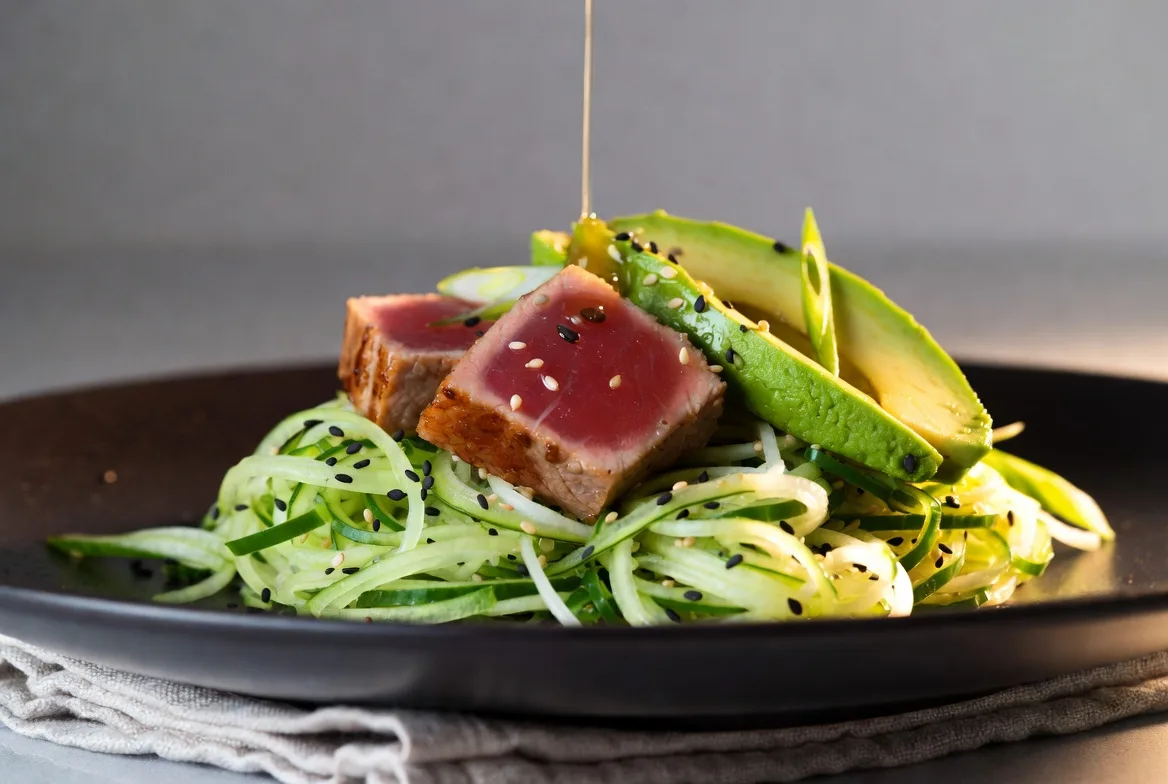
Fresh seared tuna sits on a bed of spiralized cucumber noodles dressed in a sesame ginger vinaigrette, finished with avocado, scallions, and a sesame crunch. It looks like a restaurant dish. It takes 20 minutes. And every single ingredient in it pulls its weight nutritionally.
No pasta. No rice. No heavy sauce. Just clean, high-protein fuel that keeps your waistline moving in the right direction.
⏱️ Recipe Details
- Prep Time: 10 minutes
- Cook Time: 10 minutes
- Total Time: 20 minutes
🥗 Nutrition (Per Serving)
- Calories: 320 Kcal
- Protein: 42g
- Carbs: 11g
- Fiber: 4g
🥑 What Goes in This Bowl
The Star
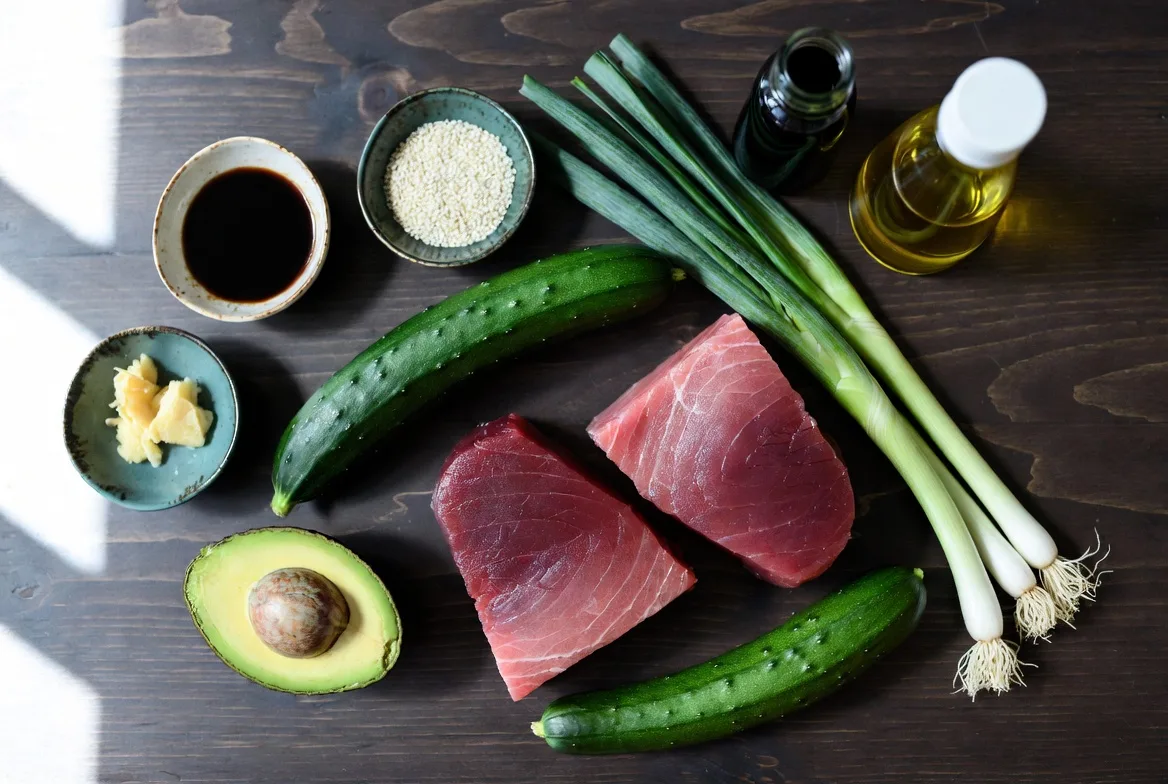
- 2 fresh tuna steaks, roughly 150g each. Sushi-grade if you can find it. The quality of the tuna is the single biggest factor in how good this bowl tastes. Do not use a canned one here.
The Noodle Base
- 2 large English cucumbers, spiralized. English cucumbers have thinner skin and fewer seeds than regular ones, which makes them spiralize more evenly and hold up better as a noodle substitute.
The Dressing
- 2 tablespoons low-sodium soy sauce or tamari
- 1 tablespoon rice vinegar
- 1 teaspoon sesame oil
- 1 teaspoon freshly grated ginger
- 1 teaspoon honey
The Finish
- 1 ripe avocado, sliced thin
- 3 scallions, sliced on the diagonal
- 1 tablespoon black and white sesame seeds
- 1 teaspoon avocado oil for searing
- Pinch of sea salt and cracked black pepper
👨🍳 How to Make It
Mix the dressing first
Whisk soy sauce, rice vinegar, sesame oil, grated ginger, and honey together in a small bowl. Set it aside. Making the dressing before anything else gives the flavors time to combine while you prep everything else. Taste it. You want a balance of salty, tangy, and slightly sweet. Adjust with a drop more rice vinegar or honey, depending on your preference.
Spiralize and dress the cucumber noodles
Spiralize the cucumbers directly into a wide bowl. Toss with half the dressing and let them sit for 5 minutes. That short marinating time softens the cucumber slightly and pulls the dressing into the noodles so every bite carries flavor rather than just the pieces that happen to hit the dressing at the bottom of the bowl.
Do not salt the cucumber before this step. Salt draws water out aggressively, and you end up with a watery pool at the bottom of the bowl and limp noodles by the time you sit down to eat.
Sear the tuna
Pat the tuna steaks completely dry with paper towels. Season both sides with sea salt and cracked black pepper. Heat avocado oil in a cast iron or heavy stainless pan over high heat until it just starts to shimmer.
Place the tuna in the pan and do not touch it. Sear for 60 to 90 seconds per side for a rare to medium-rare center. The outside should form a deep golden-brown crust while the interior stays pink. If you prefer it cooked through, add 30 seconds per side, but the texture and flavor are significantly better slightly rare.
Remove from the pan and rest for 2 minutes before slicing. Slice against the grain into thick pieces.
Build the bowl
Lift the marinated cucumber noodles into your serving bowl, leaving any excess liquid behind. Arrange the sliced tuna across the top. Fan avocado slices along one side. Drizzle the remaining dressing over everything. Scatter scallions and sesame seeds across the top and serve immediately.
You May Also Like: Baked Sardine and White Bean Salad
🔄 Smart Swaps
No fresh tuna: High-quality sashimi-grade tuna from a Japanese grocery is your best alternative to a fish counter. If fresh tuna is genuinely unavailable, seared salmon works with the same timing and the same dressing. The bowl changes flavor profile but keeps the same nutritional structure.
Make it spicy: Add a teaspoon of sriracha or a pinch of chili flakes to the dressing. The heat pairs naturally with the sesame ginger base and adds a mild thermogenic effect.
Add crunch: A handful of shelled edamame or thinly sliced radish tossed in with the cucumber noodles adds texture and additional protein without changing the calorie count meaningfully.
🔥The BellyZero Secret
Sear the tuna on the highest heat your pan can hold and keep the center rare.
Overcooked tuna turns chalky, dry, and genuinely unpleasant. The entire appeal of a seared tuna dish is the contrast between the deeply flavored, caramelized crust and the silky, barely cooked interior. That contrast is also where the omega-3 fatty acids stay most intact. High heat applied briefly to the outside does far less damage to the heat-sensitive fats inside than cooking it all the way through.
Sixty seconds per side on a screaming hot pan. That is all it needs. Pull it early, and it rewards you. Leave it too long and it becomes a different, much less impressive dish.
💡 Why This Bowl Works for Your Waist
Three ingredients in this bowl do specific, research-backed work on the conditions that drive waistline fat accumulation.
Tuna and inflammation-driven fat storage. A comprehensive review published in PMC found that omega-3 fatty acids from fatty fish like tuna selectively limit the hypertrophy of abdominal fat depots and promote a metabolically healthier adipose tissue phenotype by activating fat metabolism pathways and reducing inflammatory signaling in visceral fat tissue.
Cucumber noodles and calorie displacement. Replacing pasta or rice with cucumber noodles removes the glycemic spike that sends blood sugar crashing and triggers hunger an hour after eating. Cucumbers carry roughly 96 percent water content and very low energy density, making them ideal for promoting fluid balance and managing calorie intake without compromising the volume or satisfaction of a meal.
According to USDA FoodData Central, raw cucumber contains over 95 percent water by weight with a caloric density of just 15 calories per 100 grams, making it one of the most effective high-volume, low-calorie base ingredients available.
Sesame seeds and waist circumference. The sesame seeds in this bowl are not just texture. A review published in PMC confirmed that sesame consumption fights obesity and helps reduce weight, BMI, and waist circumference, with the active lignans in sesame also lowering fasting blood sugar and improving insulin function.
A 2023 review published in Food Science and Nutrition found that sesame and its active lignan compounds show anti-obesity properties and are associated with reductions in BMI and waist circumference alongside improved fasting blood sugar and insulin function.
⏰ Timing and Who Should Know Before Making It
Eat this bowl at lunch or early dinner for the best results. The high protein content supports sustained energy through the afternoon, and the low glycemic load means your blood sugar stays flat rather than spiking and crashing before your next meal.
Post-workout is an excellent window as well. Forty-two grams of protein eaten within 90 minutes of training directly supports muscle repair and recovery.
A note on raw fish: If you are pregnant, immunocompromised, or feeding this to young children, cook the tuna all the way through rather than serving it rare. Sushi-grade fish carries minimal risk for healthy adults, but full cooking eliminates that risk entirely for anyone in a higher-risk group.
Soy sensitivity: Swap the soy sauce for coconut aminos. It is slightly sweeter and lower in sodium but works identically in the dressing.
🚀 Three Habits That Make This Bowl Better Every Time
Buy the best tuna you can afford. The quality gap between good and mediocre fresh tuna is larger than almost any other ingredient in this bowl. Spend the extra few dollars. It shows in the finished dish.
Make a double batch of dressing and refrigerate it. The sesame ginger dressing keeps well for five days and works on salads, grain bowls, and grilled chicken throughout the week. Having it ready removes any prep friction on busy days.
Eat this bowl consistently rather than occasionally. The omega-3 benefits from tuna build up with regular intake. Two to three servings per week over a month produces measurably different results than eating it once and moving on.
Our Other Recipes You Must Try:
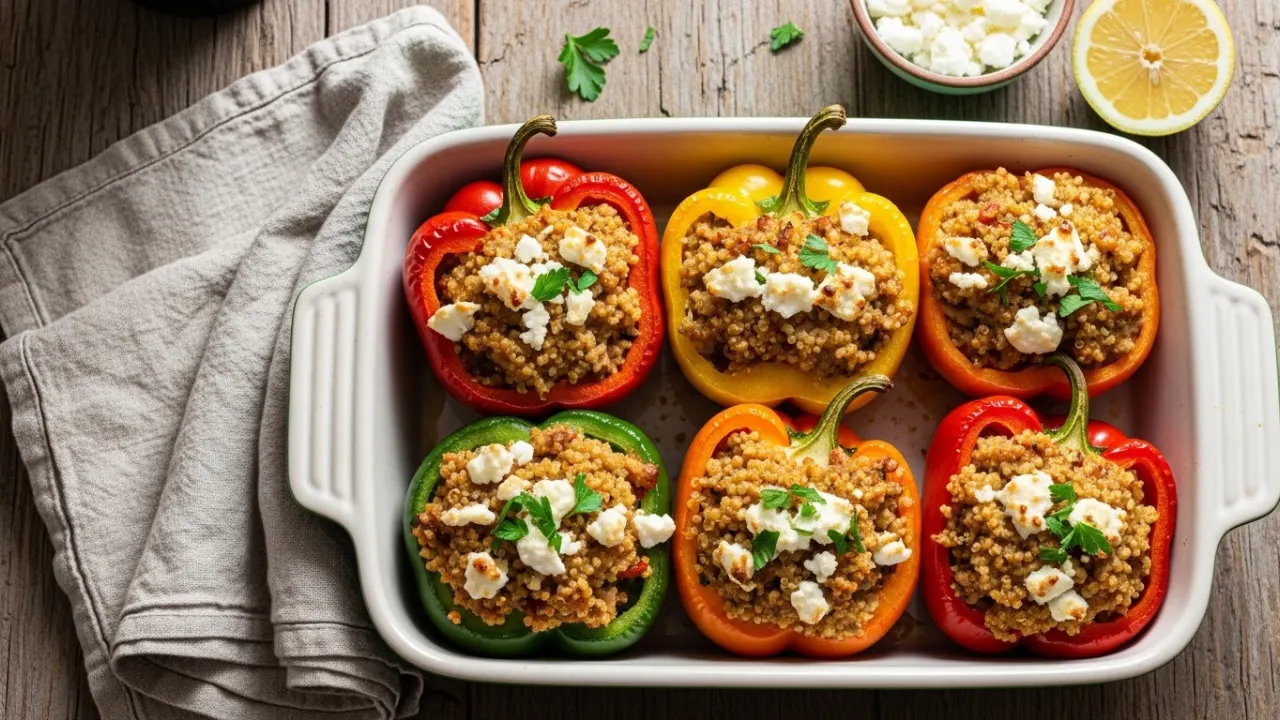
Greek Stuffed Bell Peppers
A Mediterranean-style stuffed pepper loaded with fresh vegetables, herbs, and balanced protein. Perfect for a light yet filling meal.
View Recipe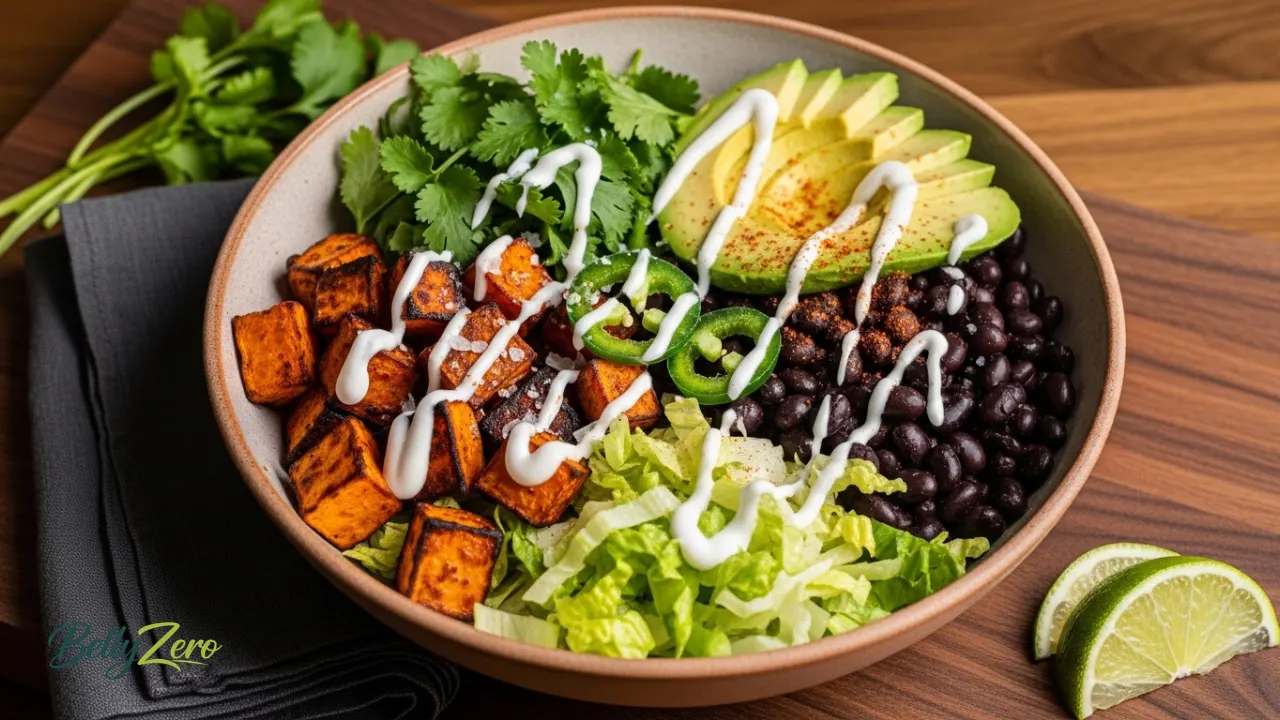
Black Bean Sweet Potato Bowl
A powerhouse bowl combining sweet potatoes and black beans for sustained energy, fiber, and weight-friendly nutrition.
View Recipe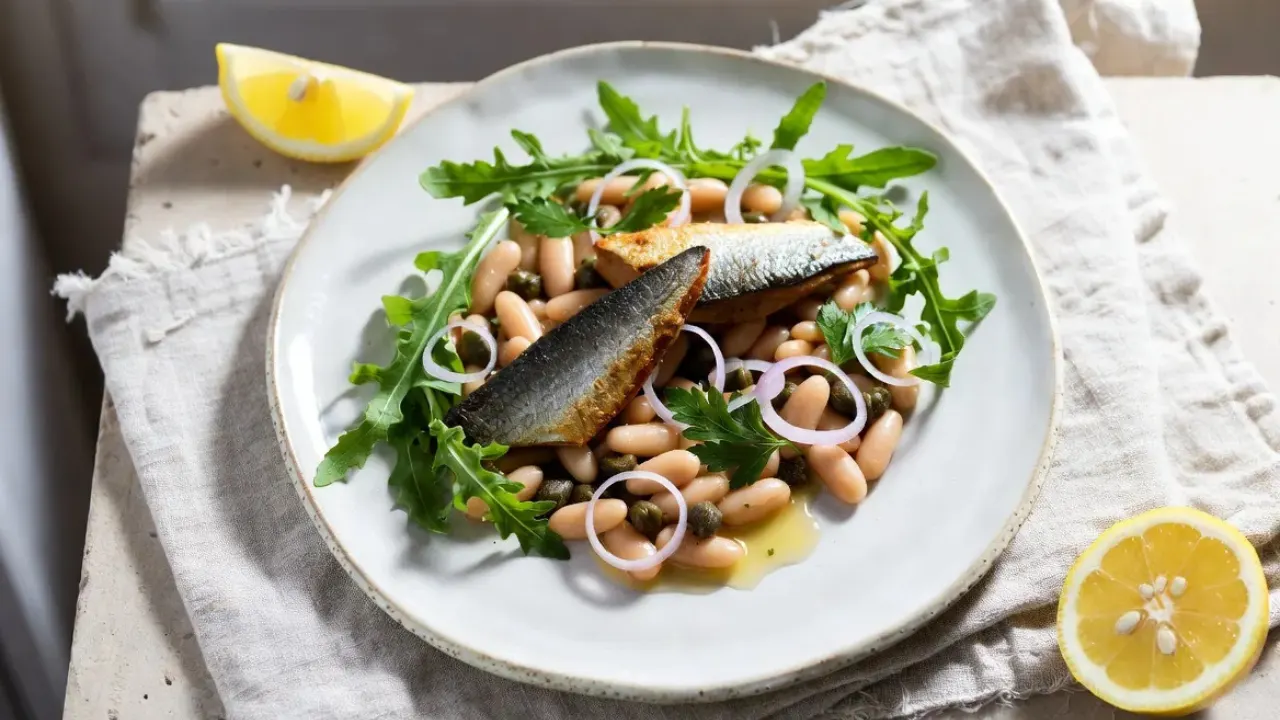
Baked Sardine & White Bean Salad
Rich in omega-3 and protein, this salad is a heart-healthy, low-carb Mediterranean dish that supports fat loss.
View RecipeFrequently Asked Questions
For informational and educational purposes only. All content on BellyZero, including articles, calculators, health tools, templates, and recipes, is intended to provide general health information. It does not constitute medical advice, a clinical diagnosis, or a substitute for professional healthcare guidance.
Results generated by BellyZero calculators and tools are estimates based on population-level formulas and standard reference ranges. They do not account for your full medical history, individual physiology, existing health conditions, or medications. Results may not apply to pregnant women, children, competitive athletes, or individuals with chronic illness.
Always consult a qualified healthcare professional before making changes to your diet, exercise routine, or health regimen based on anything found on this website. If you have symptoms or concerns about your health, seek medical attention promptly. BellyZero does not accept liability for decisions made based on content published on this site.