
Does vitamin B12 speed up your metabolism, or is it just another supplement claim that sounds good but does not really change anything? People keep asking this question because the marketing has been loud and convincing for years. Walk into a health food store or a med spa and you will see B12 positioned as a metabolism booster, an energy accelerator, and sometimes even a weight loss shortcut. So it makes sense that Google is full of people typing: does vitamin b12 speed up your metabolism?
The honest answer is more specific than a simple yes or no, and it depends almost entirely on one factor that most of the marketing conveniently skips over.
This article covers what B12 actually does inside your metabolism, what happens when levels drop too low, what three well-designed studies found when researchers dug into this, and what you should realistically expect if you are thinking about supplementing.
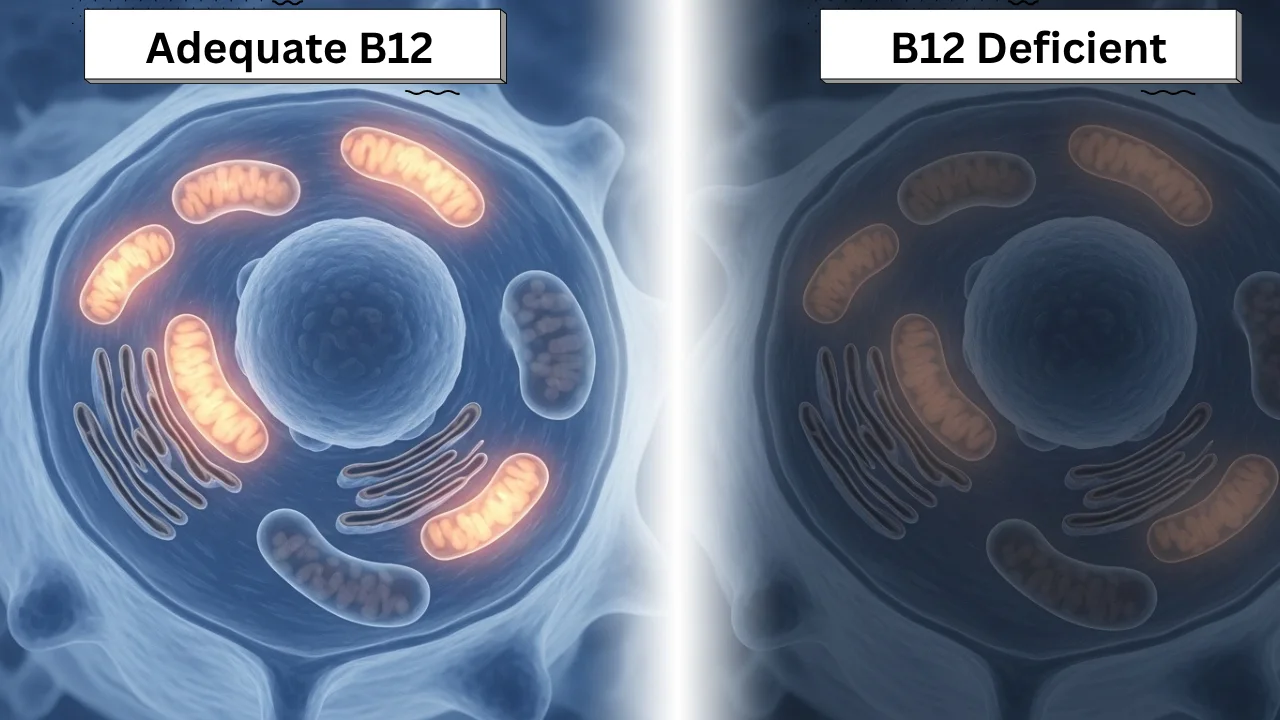
What Does Vitamin B12 Actually Do Inside Your Metabolism?
Before answering whether B12 speeds up metabolism, it helps to understand what metabolism actually means in a biological sense, because most people picture it as a single dial you can turn up or down.
Metabolism is the total sum of every chemical reaction your body runs to keep you alive. That includes breaking down food, building new cells, repairing tissue, regulating hormones, and producing heat. Your resting metabolic rate, which is the number of calories you burn just existing, is driven largely by your lean muscle mass, thyroid function, age, and genetics. B12 does not directly control any of those primary drivers.
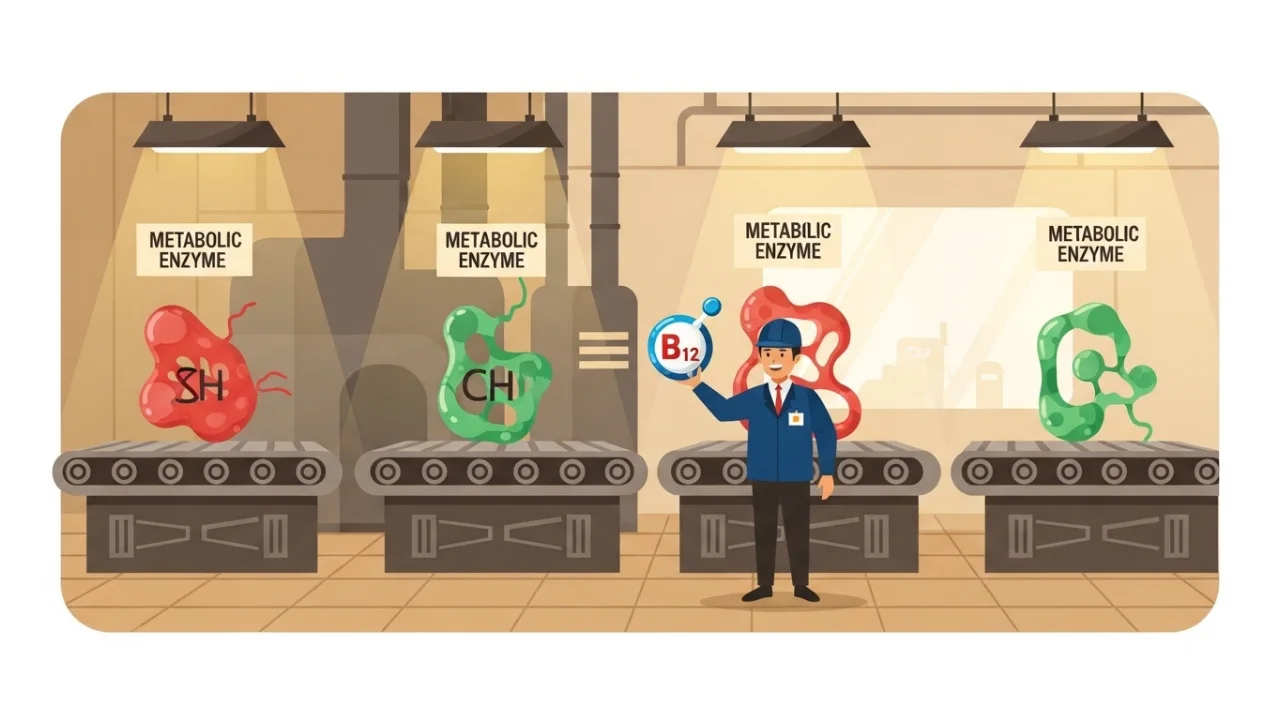
What B12 does is act as a cofactor for two specific enzymes that sit inside a process called one-carbon metabolism. The first enzyme, methionine synthase, converts homocysteine back into methionine. The second, methylmalonyl-CoA mutase, helps break down certain fatty acids and amino acids inside your mitochondria so your cells can extract energy from them. These two reactions are not optional. Without adequate B12, both slow down or stall.
Think of B12 as one of the maintenance crew inside a factory. The factory does not run faster because the crew showed up. The factory runs at its normal capacity. But if the crew is absent or short-staffed, things start backing up, machines overheat, and output drops. That is the relationship. B12 keeps the metabolic machinery in working order. It does not add extra shifts.
The One-Carbon Cycle and Why It Matters for Weight
Most people have never heard of one-carbon metabolism, but researchers have spent decades studying it because disruptions in this cycle affect body composition, fat storage, and even how genes get expressed. B12 sits right in the middle of it.
Here is how the cycle connects to weight at a basic level. When B12 is adequate, homocysteine gets converted into methionine efficiently. Methionine donates methyl groups that are used in a process called DNA methylation, which influences which genes get switched on or off in fat cells. When B12 is low, homocysteine builds up, methionine production drops, and methylation patterns in fat-related genes shift in ways that may promote fat accumulation.
A 2023 study published in Nature Metabolism found that vitamin B12 plays a pivotal role in one-carbon metabolism and cellular processes at the mitochondrial level, with B12 availability influencing how efficiently cells carry out energy-related reprogramming. While this research was conducted in a cellular and animal model context rather than a direct weight loss trial, it adds meaningful biological evidence to the idea that B12 status affects metabolic efficiency at the cellular level.
So Does B12 Directly Speed Up Your Metabolism?
No, not in the way the question usually implies.
For people with normal B12 levels, taking extra B12 does not raise resting metabolic rate above its natural baseline. The body regulates B12 absorption tightly, and once tissues are saturated, the excess is excreted through urine.
You cannot stack this vitamin like a stimulant. There is no dose-response relationship between B12 and metabolic rate in people who are already replete.
The NIH Office of Dietary Supplements has consistently stated in its professional fact sheets that there is no evidence supplementation in adequate individuals boosts metabolism or promotes fat loss.
For people with a genuine B12 deficiency, the story is different. When B12 is low enough to impair those two key enzymes, mitochondrial energy production slows, red blood cell formation becomes less efficient (which means less oxygen delivery to muscles and organs), and fatigue accumulates.
That fatigue has real consequences for body weight over time.
| Physiological Effect of Low B12 | What Happens to Your Metabolism | Weight Consequence |
|---|---|---|
| Reduced mitochondrial energy output | Fatty acids and amino acids not converted efficiently | Sluggish energy, reduced calorie burn from activity |
| Impaired red blood cell formation | Less oxygen delivered to working muscles | Stamina drops, exercise becomes harder to sustain |
| Homocysteine accumulation | Disrupted methylation in fat-regulating genes | Possible increase in fat cell development |
| Low mood and brain fog | Reduced motivation, poor planning, worse food choices | Higher risk of emotional eating and sedentary patterns |
| Insulin signaling disruption | Less efficient blood sugar regulation | Higher fat storage risk in insulin-resistant states |
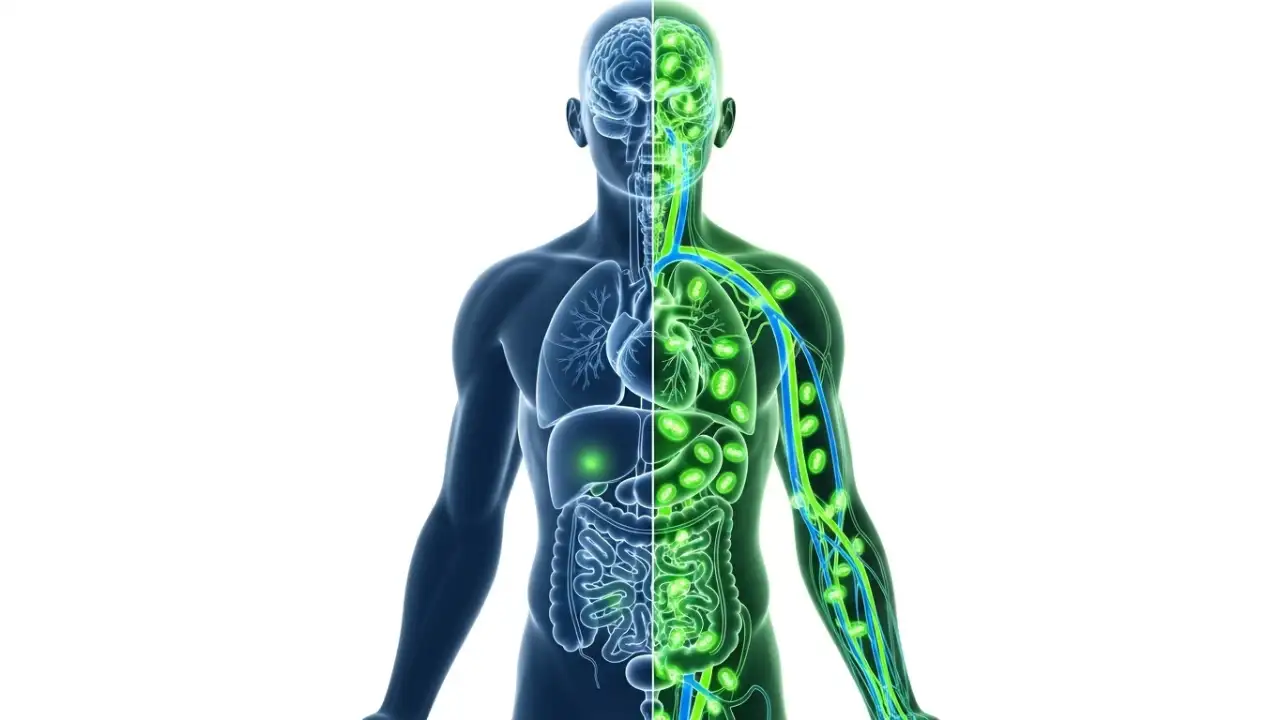
What the Research Says: Three Studies Worth Knowing
Study 1: The US Population Data
A large-scale analysis using NHANES data published in PMC found a clear inverse association between serum vitamin B12 concentration and obesity among adults in the United States.
The research showed that people with lower circulating B12 levels had statistically higher BMI values. Importantly, the researchers explored multiple possible explanations, including the idea that adipose tissue may sequester B12, meaning larger fat deposits could be trapping the vitamin away from the bloodstream and making measured levels appear lower.
This is a key finding because it complicates the direction of causality. Low B12 may promote fat gain, or fat gain may suppress circulating B12, or both processes may reinforce each other.
Study 2: Metabolic Syndrome Connection
A 2023 systematic review and meta-analysis published in Frontiers in Endocrinology examined the relationship between B12 levels, folate, homocysteine, and metabolic syndrome.
The meta-analysis, which pooled data across multiple studies using a random-effects model, found that lower B12 was significantly associated with metabolic syndrome markers including elevated blood pressure, elevated fasting glucose, and abnormal lipid profiles.
Since metabolic syndrome directly impairs the body’s ability to burn fat efficiently and regulate weight, this provides another indirect but scientifically grounded link between B12 status and body composition.
Study 3: The Nature Metabolism Cellular Research
As mentioned earlier, the 2023 Nature Metabolism paper from IRB Barcelona showed that B12 is a limiting factor in cellular energy reprogramming and mitochondrial function.
Cells depleted of B12 showed impaired ability to carry out efficient energy conversion at the mitochondrial level. While this is mechanistic and cellular rather than a human weight loss trial, it provides the biological plausibility for why correcting deficiency in real people produces improvements in how energized and metabolically active they feel.
Who Actually Has Low B12, and Who Should Pay Attention
This is one of the most important practical sections in this article, because the group most likely to read about B12 metabolism and weight loss is also the group most likely to assume their levels are fine without ever checking.
| Risk Group | Why B12 May Be Low | Estimated US Prevalence |
|---|---|---|
| Adults over 50 | Stomach acid declines, reducing intrinsic factor and B12 absorption from food | Up to 30% have reduced absorption |
| Vegans and strict vegetarians | B12 is found almost exclusively in animal products | Very high without supplementation |
| Metformin users (type 2 diabetes) | Long-term metformin use impairs B12 absorption in the gut | Up to 30% of long-term users |
| Post-bariatric surgery patients | Altered GI anatomy reduces intrinsic factor and absorption surface | Very common without supplementation |
| People with Crohn’s or celiac disease | Damaged intestinal lining impairs nutrient absorption broadly | Significant risk, routine monitoring recommended |
| Pernicious anemia patients | Autoimmune destruction of intrinsic factor-producing cells | Roughly 1 in 1,000 adults |
| People with obesity (BMI 30+) | Adipose tissue may sequester circulating B12, lowering bioavailable levels | Lower adequacy rates than normal-weight adults |
That last row in the table is particularly relevant for anyone reading about B12 and weight loss, because if you carry significant excess weight, your circulating B12 may already be lower than you realize.
The B12 and Metabolism Mistake Most People Make
Here is a mistake that does not get talked about enough, and it is not covered in either of our earlier articles on B12 and weight loss or B12 injections.
Most people who take B12 supplements for metabolism or weight loss never get their levels tested first. They buy a 1,000 mcg sublingual tablet based on something they read, take it for a few weeks, feel roughly the same, and either conclude it worked or conclude it was a waste. Both conclusions are drawn from no baseline data.
Without a serum B12 test before you start, you have no idea whether you were deficient to begin with. If you were not deficient, the supplement was always going to have minimal metabolic impact.
If you were mildly deficient, the supplement may have helped but you have no way to know how much or whether you have now corrected the problem. And if you had the MTHFR gene variant (which affects how your body processes B12 and folate, present in roughly 10-15% of the population), taking the wrong form of B12 may not address the underlying issue efficiently anyway.
The fix is simple. Ask your doctor to include serum B12 and ideally methylmalonic acid (MMA) in your next blood panel. MMA is actually a more sensitive marker of functional B12 status than serum B12 alone.
A serum level can appear normal while MMA is elevated, indicating that B12-dependent reactions are not running properly at the cellular level. That is the test that actually tells you what is happening in the tissue where metabolism occurs.

B12 Forms and What Each One Does for Metabolism
We covered B12 forms briefly in our article on whether B12 will help with weight loss, but it is worth adding new context here specifically around metabolic function, because the form matters more than most supplement labels admit.
| Form | Primary Metabolic Role | Best Used For | Absorption Notes |
|---|---|---|---|
| Methylcobalamin | Drives the methionine synthase reaction; supports methylation cycle directly | Neurological support, methylation, MTHFR variants | Already active; body uses it immediately without conversion |
| Adenosylcobalamin | Powers the methylmalonyl-CoA mutase reaction; directly supports mitochondrial fat and amino acid processing | Energy metabolism at the cellular level, mitochondrial function | Active form; stored in mitochondria, not in serum |
| Hydroxocobalamin | Converted to both active forms in the body; broadest coverage | Clinical injections, severe deficiency, longest retention time | Stays in bloodstream longest; preferred for medical injection use |
| Cyanocobalamin | Synthetic form; must be converted before use | Standard oral supplements; cost-effective for most people | Works well for most; slightly less efficient for MTHFR variants |
If your interest is specifically in how B12 supports fat and amino acid breakdown at the mitochondrial level, adenosylcobalamin is the form most directly involved in that process. Most off-the-shelf B12 supplements use cyanocobalamin or methylcobalamin.
A combination product containing both methyl and adenosyl forms gives you coverage for both key enzymatic reactions. That said, for the majority of people without a deficiency, the form is mostly irrelevant because your tissues are already saturated.
B12 and Thyroid: The Metabolism Connection Nobody Talks About
This is something both of our earlier BellyZero articles on B12 injections and B12 for weight loss did not cover, and it is worth bringing up here.
Your thyroid gland is the primary regulator of resting metabolic rate. Hypothyroidism, which affects roughly 5% of the US adult population (mostly women), significantly slows metabolism and causes weight gain. Research has identified a meaningful association between B12 deficiency and hypothyroidism.
One of the reasons is that thyroid hormone synthesis and the healthy function of thyroid cells depend on adequate B12 status. Some researchers have pointed to autoimmune overlap, where people with autoimmune thyroid conditions like Hashimoto’s thyroiditis are also more likely to have pernicious anemia or low B12 due to shared autoimmune mechanisms.
This does not mean B12 treats hypothyroidism. It means that if you have undiagnosed or poorly managed low thyroid function alongside low B12, correcting the B12 piece removes one more obstacle to metabolic health. The two issues can coexist and reinforce each other. Your doctor can check both with a standard blood panel.
Common Mistakes People Make With B12 and Metabolism
Since neither of our previous articles focused specifically on this angle, here are the most common errors people make when using B12 with the goal of supporting metabolic health.
Taking high-dose B12 without testing levels first. As covered above, if levels are normal you will not see metabolic benefit. A test costs very little and gives you actual data to work with.
Expecting B12 to replace calorie deficit or exercise. Even in genuinely deficient people, B12 does not burn fat directly. It removes a barrier, which is fatigue and reduced physical capacity. The fat loss still comes from the resulting increase in activity and better dietary choices, not from the B12 itself.
Using the wrong form for their specific biology. Someone with the MTHFR variant who takes cyanocobalamin may not convert it efficiently. Someone focused on mitochondrial function who only takes methylcobalamin may be missing adenosylcobalamin’s role in fatty acid processing.
Ignoring dietary sources and relying entirely on supplements. Whole food sources of B12 come packaged with cofactors and proteins that support absorption in ways isolated supplements may not fully replicate. Beef liver, salmon, clams, eggs, and dairy products all provide B12 in forms your body recognizes well.
Combining B12 supplementation with medications that deplete it without monitoring. Metformin, proton pump inhibitors, and certain anticonvulsants all reduce B12 absorption over time. People on these medications often do not realize their B12 is being quietly depleted until deficiency symptoms show up months or years later.
What You Can Realistically Expect From Optimizing B12
If you are deficient and bring levels back to normal, here is what you can reasonably expect:
- Improved energy and stamina within two to four weeks of supplementation
- Reduced exercise-related fatigue, which supports more consistent physical activity
- Better mood and cognitive clarity, which supports better food decision-making
- Normalization of homocysteine levels, which supports healthier fat metabolism and cardiovascular function
- In people with very low B12, meaningful improvement in red blood cell quality and oxygen delivery to working muscle
What you should not expect is a measurable increase in resting metabolic rate, accelerated fat burning in the absence of a calorie deficit, or any effect that resembles what a stimulant or thermogenic supplement produces.
B12 is not a fat burner. It is a foundation nutrient that keeps your metabolic machinery running at full capacity rather than partial capacity.

Quick Summary: Does Vitamin B12 Speed Up Your Metabolism? The Real Answer
For people with normal B12 levels: No. Extra B12 does not accelerate resting metabolic rate, burn more fat, or produce weight loss. The body simply excretes the excess.
For people with B12 deficiency: Yes, indirectly. Correcting deficiency restores the mitochondrial energy reactions that B12 supports, removes the fatigue barrier that was suppressing physical activity, and normalizes the methylation and homocysteine pathways that influence fat cell behavior. The metabolic restoration is real. The mechanism is restoration to baseline, not elevation above it.
The single most useful thing you can do if you are curious about your own situation is get tested. Everything after that is just noise.
Frequently Asked Questions
Vitamin B12 does not speed up metabolism in people who already have adequate levels. It supports two specific enzyme reactions inside your cells that help process fats and amino acids for energy. If your B12 is low, correcting it can restore normal metabolic function and energy levels. For people with normal B12, taking more does not accelerate fat burning or raise resting metabolic rate.
B12 can indirectly support weight loss if you have a deficiency. Deficiency causes fatigue, reduced stamina, brain fog, and low mood, all of which make it harder to exercise and make healthy food choices. Correcting the deficiency restores energy and physical capacity, which supports a more active lifestyle and weight loss over time. B12 does not burn fat directly.
When B12 levels fall too low, two key enzymes slow down. The first converts homocysteine into methionine, which is used in fat-related gene regulation. The second breaks down fatty acids and amino acids inside mitochondria to produce usable energy. When these reactions run inefficiently, cells produce less energy, oxygen delivery to muscles drops, and the body becomes less effective at processing fuel. This is what people mean when they say B12 deficiency can slow metabolism.
There is no clinically established dose of B12 that boosts metabolism in non-deficient individuals, because extra B12 does not produce that effect. For correcting a deficiency, doctors typically recommend 1,000 mcg daily for oral supplements using high-dose passive absorption, or injections for people with absorption-related causes. You should always test your levels before deciding on any dose.
B12 deficiency does not directly cause weight gain the way a hormone imbalance might. However, research shows that people with low B12 tend to have higher BMI, reduced physical activity, disrupted fat cell gene expression, and elevated homocysteine, all of which can contribute to gradual weight gain over time. Multiple studies have found an inverse relationship between serum B12 levels and body weight in US adults.
For metabolic function specifically, adenosylcobalamin is the form most directly involved in mitochondrial fatty acid and amino acid processing. Methylcobalamin supports the methylation cycle and nerve function. A combination product containing both forms provides the most complete coverage for metabolic support. For most healthy people, any form of B12 will maintain adequate levels if deficiency is not present.
For informational and educational purposes only. All content on BellyZero, including articles, calculators, health tools, templates, and recipes, is intended to provide general health information. It does not constitute medical advice, a clinical diagnosis, or a substitute for professional healthcare guidance.
Results generated by BellyZero calculators and tools are estimates based on population-level formulas and standard reference ranges. They do not account for your full medical history, individual physiology, existing health conditions, or medications. Results may not apply to pregnant women, children, competitive athletes, or individuals with chronic illness.
Always consult a qualified healthcare professional before making changes to your diet, exercise routine, or health regimen based on anything found on this website. If you have symptoms or concerns about your health, seek medical attention promptly. BellyZero does not accept liability for decisions made based on content published on this site.