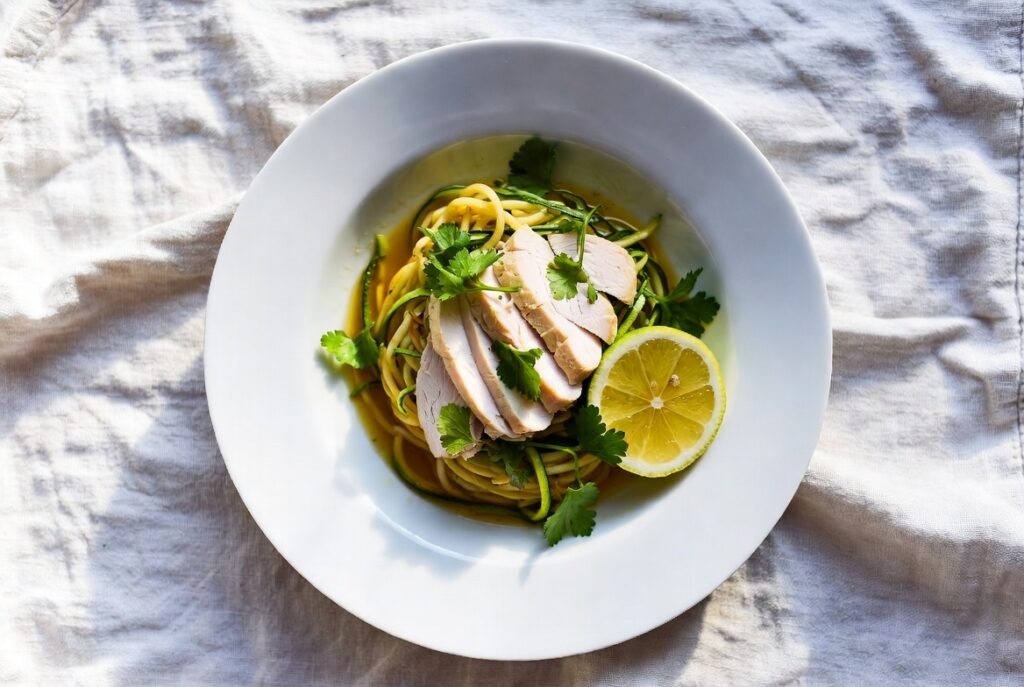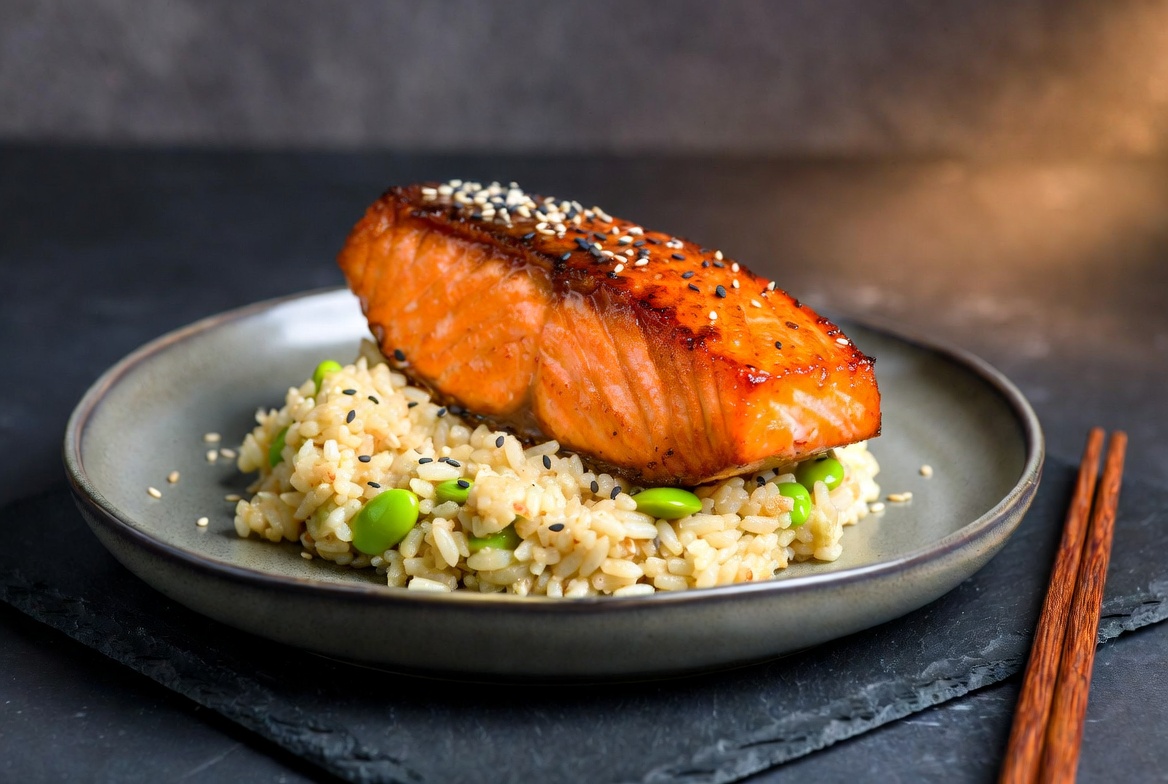
Miso glazed salmon cauliflower rice belly fat meal with 380 calories and 42g protein. A gut-friendly, high-protein recipe that supports fat loss and keeps you full longer.
Most belly fat meals get it wrong from the start. They cut calories but ignore the two things that actually drive fat loss: gut health and hormone balance.
This miso-glazed salmon cauliflower rice belly fat meal fixes that. It does not just slash carbs and call it a day. It combines probiotic-rich miso, omega-3-packed salmon, and fiber-dense cauliflower rice to change how your body actually processes food at a deeper level.
That combination does something most “healthy” meals never manage to do. It calms internal inflammation, supports your digestive system, and helps your body regulate fat storage without making you feel like you are on a diet.
You get 380 calories and 42 grams of protein in one bowl. That means you stay full, you stay consistent, and you stop fighting your own hunger every time you try to eat clean.
This is not a meal that asks you to suffer your way to a flatter stomach. It is a meal that makes fat loss feel like something you can actually stick to.
This is a complete miso glazed salmon cauliflower rice belly fat meal designed for fat loss and satiety.
⏱️ Recipe Details
- Prep Time: 10 minutes
- Cook Time: 15 minutes
- Total Time: 25 minutes
🥗 Nutrition (Per Serving)
- Calories: 380 Kcal
- Protein: 42g
- Carbs: 18g
- Fiber: 7g
🥑 Ingredients for This Belly Fat Friendly Meal
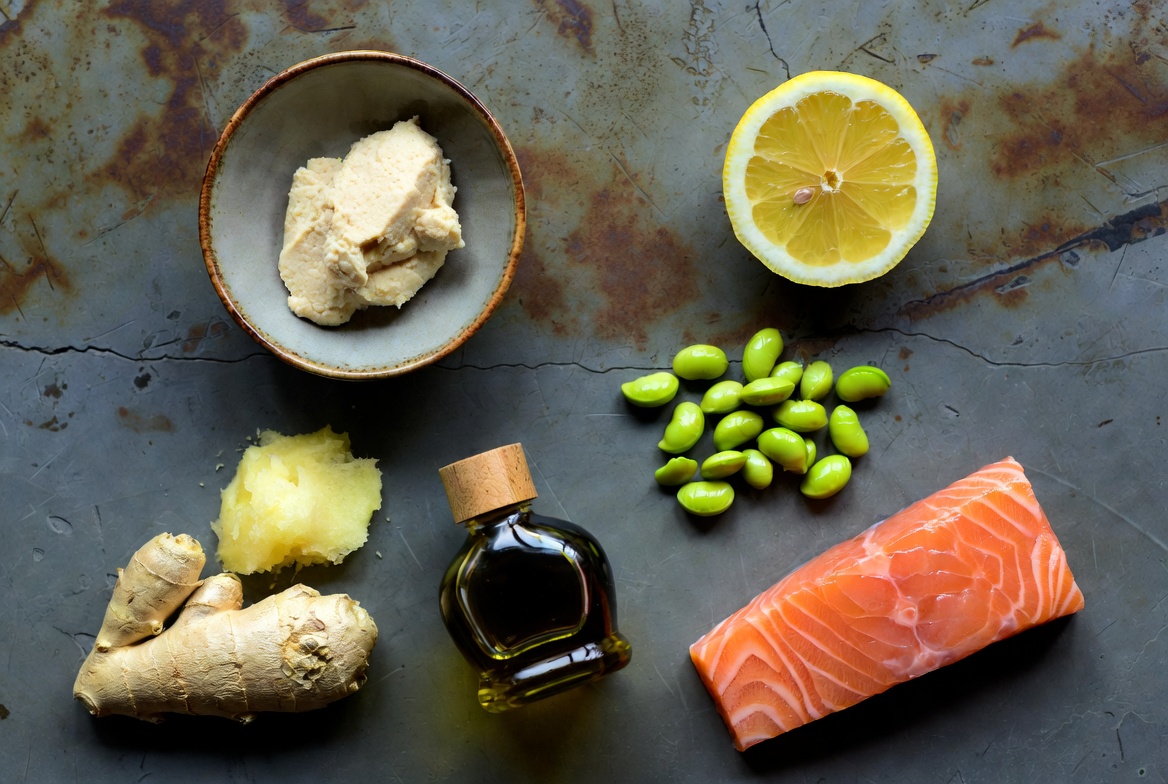
Getting the ingredients right is half the battle. Every single item in this bowl was chosen for a reason. Nothing is filler. Everything pulls its weight.
This miso glazed salmon cauliflower rice belly fat meal uses simple ingredients that each serve a specific fat-loss purpose.
The Protein Base
- 2 salmon fillets, skin-on, roughly 150g each. Skin-on keeps the fat layer intact during baking, which bastes the fish naturally and locks in moisture.
The Glaze
- 2 tablespoons white miso paste. White miso is milder and slightly sweet, which caramelizes better under oven heat than darker varieties.
- 1 tablespoon rice vinegar. This cuts through the richness of the salmon and balances the saltiness of the miso.
- 1 teaspoon sesame oil. Just one teaspoon is enough. It adds a nutty, toasted depth that makes the glaze smell and taste restaurant-level.
The Base
- 1 small head of cauliflower, riced fresh. Pre-packaged cauliflower rice works, but fresh gives you better texture and less moisture in the pan.
- 1 cup shelled edamame, thawed. These add plant protein, fiber, and a satisfying chew that makes the bowl feel genuinely filling.
The Flavor Builders
- 1 teaspoon freshly grated ginger. Pre-ground ginger will not give you the same result. Fresh ginger has active compounds that support digestion and add a clean heat.
- 1 tablespoon low-sodium soy sauce or tamari. Tamari is the better choice if you want a gluten-free option with a slightly richer, rounder flavor.
- 2 spring onions, finely sliced. Add half during cooking and save the rest for garnish to get two different flavor layers from the same ingredient.
The Finish
- Black and white sesame seeds to garnish. More than decoration. Sesame seeds add a tiny crunch, healthy fats, and a visual contrast that makes the bowl look intentional and polished.
👨🍳 Step-by-Step Instructions
Step 1: Build the Miso Glaze and Let the Salmon Absorb It
Add your miso paste, rice vinegar, and sesame oil into a small bowl. Whisk them together until the mixture is completely smooth with no lumps. Miso paste can be stubborn, so take an extra thirty seconds here to really work it.
Pat your salmon fillets dry with a paper towel before you apply the glaze. This step matters more than most people realize. Dry fish holds the glaze better, browns faster in the oven, and does not steam itself into a soggy texture.
Deeper, coat both sides of each fillet generously. Place them in a shallow dish or on a lined baking tray and let them marinate for a minimum of 10 minutes at room temperature. If you have 20 to 30 minutes, use it. The miso penetrates deeper, and the final flavor payoff is noticeably stronger.
Step 2: Bake the Salmon the Right Way
Preheat your oven to 400 degrees Fahrenheit. Place the salmon fillets skin-side down on a parchment-lined baking sheet. Do not use foil if you want crispy edges. Foil traps moisture and steams the fish instead of roasting it.
Bake for 12 to 14 minutes depending on the thickness of your fillets. You are looking for the flesh to turn opaque and flake easily when pressed with a fork. The edges of the miso glaze should show light caramelization with slightly darker patches at the thickest parts.
Do not flip the salmon. Skin-side down the entire time allows the skin to act as a natural heat barrier, keeping the flesh tender while the top gets that golden, slightly charred finish.
Pull it out at 12 minutes and check. Overcooked salmon loses its silky texture fast. When it flakes cleanly with zero resistance, it is ready.
Step 3: Rice the Cauliflower Correctly
Cut your cauliflower into florets and add them to a food processor in two batches. Pulse in short two-second bursts, around six to eight pulses per batch. You are aiming for small, rice-sized granules, not a paste.
If you do not own a food processor, a box grater works well. Use the medium-sized holes and grate directly into a bowl. It takes an extra five minutes but delivers the same result.
Spread the riced cauliflower onto a clean kitchen towel and press gently to remove excess moisture before it hits the pan. Wet cauliflower steams instead of sauting, and you will end up with a mushy, waterlogged base instead of a fluffy, restaurant-quality one.
Step 4: Cook the Base With Intention
Heat a wide skillet or wok over medium-high heat. Add a light drizzle of sesame oil or avocado oil and let it get hot before adding anything. A hot pan gives you a slight sear on the cauliflower rice instead of just softening it.
Add your cauliflower rice in an even layer. Let it sit undisturbed for about 90 seconds before stirring. That brief contact with the hot pan gives you a little color and a much better texture.
Stir and cook for a total of 4 minutes. Add the edamame, freshly grated ginger, and soy sauce. Toss everything together and cook for another 2 minutes. Add half your spring onions now and save the rest for the top of the finished bowl.
Taste and adjust. A few extra drops of soy sauce or a small squeeze of lime can completely change the final flavor if it needs brightness.
Step 5: Build the Bowl Like You Mean It
Spoon the cauliflower rice mixture into your bowl first, pressing it slightly so it sits as a stable base. Place the salmon fillet directly on top, skin-side down.
Scatter the reserved spring onions across the top. Finish with a generous pinch of both black and white sesame seeds. If you have a small drizzle of sesame oil left, run it around the edge of the bowl. It adds aroma and a glossy finish that makes the whole thing look like it came out of a kitchen that knows what it is doing.
Serve immediately. Cauliflower rice loses its texture fast once it sits.
🔄 Variations and Smart Substitutions
Add Nori for Extra Mineral Support. Tear two sheets of roasted nori into rough strips and lay them across the finished bowl right before serving. Nori provides iodine, which supports healthy thyroid function. A well-functioning thyroid plays a direct role in how efficiently your body burns fat. This is a small addition with a meaningful nutritional payoff.
Swap the Salmon for chicken thighs. Use boneless, skinless chicken thighs with the exact same miso glaze. Coat them the same way and bake at 400 degrees Fahrenheit for 22 to 24 minutes. Chicken thighs stay juicier than breasts under oven heat, and they hold the miso glaze just as well. The bowl changes flavor profile entirely but keeps the same fat-loss structure.
Make It Fully Plant-Based Replace the salmon with extra-firm tofu. Press the tofu for 20 minutes to remove water, then slice into thick slabs, coat with the miso glaze, and bake at 400 degrees Fahrenheit for 20 minutes, flipping once halfway through. Add an extra half cup of edamame to keep the protein content strong.
Turn Up the Heat Add a small spoon of gochujang or a pinch of chili flakes to the miso glaze before marinating. Capsaicin has a mild thermogenic effect, and the heat adds a completely different dimension to the flavor without adding meaningful calories.
🔥The BellyZero Secret
Do not wipe away or cut around the caramelized edges of your miso glaze. That slightly dark, sticky crust that forms along the edges of the salmon during baking is where the real flavor lives.
When miso is exposed to high heat, the natural sugars in the paste go through a browning reaction that builds complex, savory, slightly sweet flavor compounds. This is the same process that makes a good sear on a steak taste dramatically better than a pale, steamed piece of meat.
That caramelization adds zero calories. What it does add is a deep, layered umami quality that makes this dish taste like it took an hour to prepare. People will assume you spent real time on it. The actual active work is under 20 minutes.
Leave the char. It is the best part.
💡 Why This Recipe Actually Works for Belly Fat
This is not a meal that works because it is low in calories. It works because it targets the specific biological reasons most people struggle to lose belly fat in the first place.
Miso and Your Gut White miso is a fermented food. Fermented foods feed beneficial gut bacteria, and a healthy gut microbiome has a direct connection to how your body stores and releases fat. Research increasingly points to gut health as one of the most underestimated factors in body composition. A better gut means less bloating, better nutrient absorption, and a more efficient metabolism.
Research published on PubMed confirms that miso carries proven antiobesity and gut-supportive properties tied to its fermented microbial activity.
Salmon and Inflammation Omega-3 fatty acids in salmon work against cortisol-driven fat storage. Chronic stress raises cortisol levels and cortisol tells your body to store fat specifically around the midsection. Omega-3s help regulate that inflammatory response, which gives your body a better environment for releasing stored fat rather than holding onto it.
A clinical study published on PubMed found that omega-3 supplementation significantly reduced abdominal fat mass in overweight individuals on a weight loss diet.
Edamame and Staying Full Edamame brings plant-based protein and soluble fiber to the bowl. Soluble fiber slows digestion, keeps blood sugar stable after eating, and helps you stay full for longer without needing to eat more. That combination directly reduces the likelihood of overeating at your next meal.
Cauliflower Rice and Blood Sugar Swapping regular rice for cauliflower rice dramatically reduces the glycemic load of the meal. High-glycemic carbs cause blood sugar to spike and then crash, which triggers hunger and promotes fat storage through elevated insulin. Cauliflower rice gives you the volume and satisfaction of a carb-heavy base without the blood sugar consequences.
A systematic review and meta-analysis published in PMC confirmed that low-glycemic index diets produce measurable reductions in body weight and blood sugar markers.
All four of these things working together in one bowl is what makes this meal different from most recipes that simply label themselves healthy.
⏰ When to Eat This Meal for Best Results
Lunch is the strongest option for most people. Your metabolism runs faster during the middle of the day and your body is better positioned to use the protein and healthy fats for fuel rather than storing them.
Early dinner, ideally before 7pm, also works very well. Eating a high-protein, fiber-rich meal earlier in the evening gives your digestive system time to process it fully before your body shifts into its overnight recovery mode.
Post-workout is another excellent window. After training, your muscles are primed to absorb protein quickly. The 42 grams of protein in this bowl supports muscle repair and recovery, which matters for fat loss because more lean muscle means a higher resting metabolic rate.
What to avoid: eating this late at night as your final meal right before bed is the one situation where the benefits are slightly reduced, simply because your body is winding down and less metabolically active.
⚠️ Who Should Check Before Making This Recipe
Soy allergies: Miso paste, edamame, and tamari all contain soy. If you have a known soy sensitivity or allergy, this recipe in its standard form is not safe. You can substitute coconut aminos for the tamari and replace the edamame with shelled peas or chickpeas, but the miso component would need a full replacement such as a tahini and lemon glaze.
Thyroid conditions: Miso is high in iodine, which is beneficial for most people but should be monitored by those with existing thyroid conditions who are already supplementing or managing iodine levels medically.
High blood pressure: Even low-sodium versions of miso and soy sauce carry meaningful sodium content. If you are managing hypertension, speak with your doctor about how this fits into your daily sodium target.
🚀 Pro Tips for Getting Faster Results With This Meal
Prep the cauliflower rice in advance. Rice a full head of cauliflower and store it in an airtight container in the refrigerator for up to three days. Having it ready removes the biggest time barrier to cooking this meal on a busy day.
Marinate the salmon the night before. Coat the fillets with the miso glaze, cover the dish, and refrigerate overnight. The flavor improvement is significant. This also cuts your active cooking time down to under 15 minutes the next day.
Eat this meal consistently, not occasionally. One bowl will not move the needle. Eating this three to four times per week as part of a calorie-appropriate diet creates the conditions where real fat loss happens. Consistency beats perfection every time.
Pair it with daily movement, not just intense exercise. A 20-minute walk after this meal improves insulin sensitivity and helps your body use the meal’s nutrients more efficiently. You do not need to run. You just need to move.
Track your meals for the first two weeks. Not forever. Just long enough to understand your actual intake. Most people are surprised by how much they eat without realizing it. Two weeks of awareness creates habits that stick without the need to track indefinitely.
If you want a meal that actually supports fat loss without making your diet feel restrictive, this miso glazed salmon cauliflower rice belly fat meal is one of the easiest ways to stay consistent.