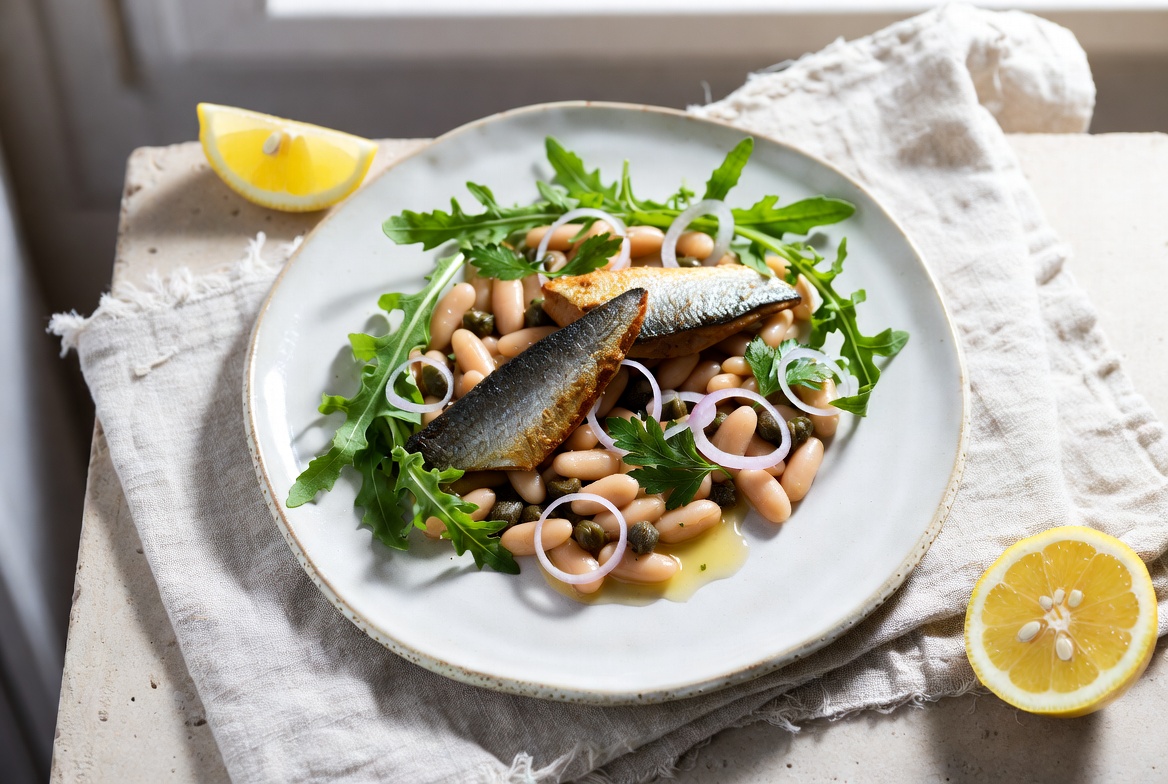
This baked sardine and white bean salad for a waistline-friendly meal is the recipe most people scroll past and the one they should have been making all along.
Sardines have a reputation problem. They smell a little funky straight out of the can; they come packed in oil like they are hiding from something, and somewhere along the way they got labeled as the fish you eat only when nothing else is available. That reputation is completely undeserved, and nutritionally speaking, it is costing people one of the most powerful waistline-supporting ingredients on the planet.
This salad changes that. Baked sardines over lemon herb white beans with fresh parsley, capers, shaved red onion, and a sharp lemon vinaigrette. It takes 25 minutes. It costs less than most takeout lunches. And every single ingredient in it works toward the same goal: reducing the chronic inflammation and blood sugar instability that drive fat storage around your midsection.
No sad desk lunch energy. Just a genuinely good meal that happens to be brilliant for your waistline.
🥗 The Problem With Most Waistline Salads
They are built for appearance, not function. Iceberg lettuce, a few cherry tomatoes, grilled chicken, and fat-free dressing. Low calorie on paper. Genuinely unsatisfying in practice. You finish one and you are hungry again in ninety minutes, which leads to snacking, which quietly erases the calorie deficit you just created.
The issue is not the calories. It is the fiber. And the protein quality. And the complete absence of the anti-inflammatory fatty acids your body needs to stop holding onto visceral fat in the first place.
This salad solves all three problems simultaneously, which is a rare thing for a recipe that fits on one plate.
⏱️ Quick Stats for Baked Sardine and White Bean Salad
- Prep Time: 10 min
- Cook Time: 15 min
- Total Time: 25 min
- Calories: 360 Kcal
- Protein: 34g
- Fiber: 11g
🥑 Ingredients
The Protein
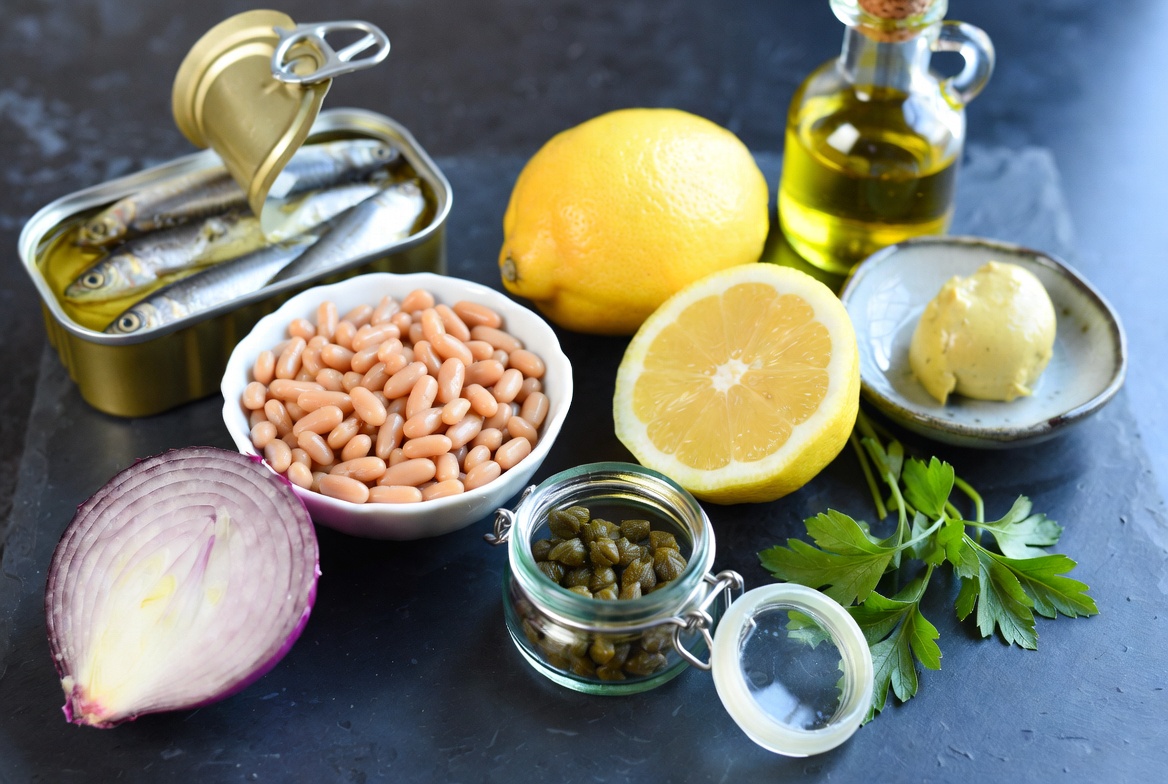
- 2 cans of sardines in olive oil (about 240g drained). Sardines packed in olive oil taste significantly better when baked than those packed in water. The oil bastes the fish as it heats and keeps the texture from drying out.
- 1 can of white beans (400g), drained and rinsed well. Cannellini beans work best here. They are buttery, hold their shape, and absorb the lemon dressing without going mushy.
The Salad Base
- 3 cups of mixed greens or arugula. Arugula adds a peppery bite that cuts through the richness of the sardines beautifully. If arugula is too sharp for you, baby spinach is a milder substitute.
- Half a red onion, very thinly sliced. Thin matters here. Thick chunks of red onion overpower everything else. Use a mandoline or take your time with a sharp knife.
- 2 tablespoons of capers, drained. These add a briny, salty pop that does what salt alone cannot. Do not skip them.
- Large handful of flat leaf parsley, roughly chopped.
The Lemon Herb Vinaigrette
- 3 tablespoons of good quality extra virgin olive oil
- Juice of 1 and a half lemons
- 1 teaspoon of Dijon mustard
- 1 small garlic clove, finely minced or grated
- Pinch of sea salt and cracked black pepper
👨🍳 How to Make It
Make the vinaigrette first
Whisk together the olive oil, lemon juice, Dijon mustard, minced garlic, salt, and black pepper in a small bowl or jar. Taste it. It should be sharp, bright, and slightly punchy. If it needs more acid, add a few more drops of lemon. If it is too sharp, a small drizzle more of olive oil balances it. Set it aside. Making it first gives the garlic a few minutes to mellow in the acid, which softens its raw edge before it hits the beans.
Prepare the white beans
Drain and rinse the beans thoroughly. Add them to a bowl and toss them with about two thirds of the vinaigrette while they are still at room temperature. Warm beans absorb dressing faster and more evenly than cold ones. If your beans came straight from the fridge, let them sit for five minutes at room temperature before dressing them. The difference in flavor is noticeable.
Season lightly with salt and pepper. Taste again. Well-seasoned beans are the foundation of this salad. Under-seasoned beans make the whole bowl taste flat regardless of what else you add.
Bake the sardines
Preheat your oven to 400 degrees Fahrenheit. Line a small baking tray with parchment. Remove the sardines from the can and lay them in a single layer on the tray. Drizzle a small amount of the oil from the can over the top. This is the one time you want that oil. It is already infused with the flavor of the sardines, and it bastes the fish as it heats.
Bake for 10 to 12 minutes. You are not trying to cook them through since they are already cooked. You are heating them, crisping the edges slightly, and concentrating their flavor. The skin should look matte and lightly golden at the edges when they are ready. Pull them at 10 minutes and check them. Overheating sardines makes them dry and intensifies their fishiness in a way that is not pleasant.
Build the salad
Lay your greens or arugula across the base of a wide plate. Spoon the dressed white beans over the top, leaving some of the greens visible around the edges. Arrange the baked sardines across the beans. Scatter the capers, red onion slices, and chopped parsley across everything. Drizzle the remaining vinaigrette over the top and finish with a final crack of black pepper and a squeeze of fresh lemon.
Serve immediately while the sardines are still warm. The contrast between the warm fish, the room-temperature beans, and the cool crisp greens is what makes this salad feel like more than the sum of its parts.
You May Also Like: Miso Glazed Salmon Cauliflower Rice Belly Fat Meal
🔄 Smart Swaps Worth Knowing
Add a soft-boiled egg per serving for an extra six grams of protein and a richer texture. Six minutes in boiling water, straight into an ice bath, then peeled and halved. It takes four minutes and meaningfully upgrades the satiety level of the bowl.
If arugula is too sharp for your taste, baby spinach works as a milder base. It will not hold up as long once dressed, so eat it quickly.
No capers in the pantry? Eight finely sliced green olives per serving deliver the same briny quality and work just as well in the vinaigrette.
🔥 The BellyZero Secret
Do not drain the sardine oil down the sink.
That oil sitting in the can is cold-pressed olive oil that has been slowly infusing with the omega-3-rich fats released by the sardines during the canning process. It is genuinely good oil. Using it to baste the sardines during baking adds flavor depth that plain olive oil cannot replicate. A small drizzle over the fish before they go into the oven is all you need.
It also means you are using every part of what you paid for, which for a budget-friendly protein source like sardines is a satisfying bonus. The people who discard it are leaving the best part behind.
💡 Why the Baked Sardine and White Bean Salad Genuinely Supports Your Waistline
This is the section most recipe sites skip. They tell you something is healthy and move on. Here is what is actually happening nutritionally when you eat this bowl regularly.
Sardines work as a whole food, not just a fish oil capsule. A 2023 review published in Frontiers in Nutrition concluded that due to their full nutritional composition, sardines may be considered a functional food and an effective adjuvant in managing cardiometabolic conditions linked to chronic low-grade inflammation.
The distinction matters. Whole sardines deliver calcium, vitamin D, selenium, and CoQ10 alongside EPA and DHA, and that complete nutrient matrix produces a different biological response than isolated omega-3 supplementation alone. Chronic low-grade inflammation is one of the primary conditions that makes visceral fat accumulation worse over time. Addressing it through whole food sources like sardines is a practical and well-supported dietary approach, though researchers note that large-scale clinical trials are still needed to fully confirm the magnitude of benefit.
White beans directly support waistline reduction. A cross-sectional study published in PMC examining 246 women found that bean consumption accounted for significantly lower levels of body fat and smaller waist circumferences, with women who consumed the most beans showing nearly 4 percentage points less body fat and more than 4 centimeters smaller waist circumference compared to women who ate the fewest.
Researchers attributed the effect to beans’ unique combination of low glycemic index, high fiber, plant protein, and positive impact on the gut microbiome. Note that the study was conducted on women only and used a cross-sectional design, meaning it shows a strong association rather than direct causation. One serving of this salad delivers cannellini beans as a meaningful contributor toward that daily intake.
Legume intake and long-term weight outcomes. The white bean finding above is not an outlier. A large study published in PMC tracking over 15,000 US adults found that regular legume intake was significantly associated with lower BMI, reduced abdominal adiposity, and better waist circumference outcomes, with dietary fiber identified as a key mechanism driving the relationship.
Eating this salad two to three times a week is a straightforward way to build consistent legume intake into your routine without requiring any significant dietary overhaul.
Fiber does the work most people underestimate. A systematic review and meta-analysis published in PubMed found that dietary viscous fiber modestly but significantly improved body weight and parameters of adiposity independently of calorie restriction.
That last part is worth reading twice. The fiber in this salad supports waistline improvement even without a strict calorie-counting approach. White beans deliver both soluble and insoluble fiber in the same serving, which slows digestion, stabilizes blood sugar after eating, and keeps you full long enough to avoid the mid-afternoon snacking that quietly undoes most waistline progress.
⏰ When This Salad Works Best
Lunch is the strongest window. The combination of protein, fiber, and healthy fat from the olive oil and sardines creates sustained fullness that carries you cleanly through the afternoon.
Early dinner before 7pm also works well. The moderate calorie count and high protein support overnight recovery without loading your digestive system before sleep.
If you train at high intensity, add a slice of whole grain bread or half a cup of cooked quinoa on the side. The salad as written is lower in carbohydrates and may not fully replenish glycogen after a demanding session.
💡 A Few Things to Know Before Making It
People managing gout or following a low-purine diet should note that sardines are high in purines. Occasional consumption is generally considered acceptable but speak with your doctor about regular intake if this applies to you.
If you follow a low-sodium diet, rinse the sardines as well as the beans, use salt-free capers, and replace the Dijon with lemon zest for sharpness. The flavor adjusts but the salad still works.
Anyone with a fish allergy should not make this recipe as written. There is no meaningful substitute that replicates the nutritional profile of sardines in a cold salad format.
🚀 Make This Salad a Habit and Here Is What Happens
Buy sardines in bulk when they are on sale. The shelf life is long and the cost per serving is lower than almost any other quality protein source available. Keeping eight cans in the pantry means this meal is always available with zero planning required.
Make the vinaigrette in a jar and keep it in the fridge. It stays good for five days and works on any salad or grain bowl during the week. The dressing is the highest friction point in this recipe. Eliminate it once and the salad becomes a five-minute assembly job on any weeknight.
Eat this twice a week rather than occasionally. The anti-inflammatory effects of sardines and the fiber benefits from white beans build meaningfully with consistent intake. One bowl is a good meal. Eight bowls a month is a habit your waistline will actually respond to.
Also Check Out: Seared Tuna Cucumber Noodle Bowl for Waist Slimming