

Belly Fat Risk Analyzer Calculator
Use this free belly fat risk analyzer calculator to check your lifestyle risk factors. Enter your details to see your risk category, health insight and personalized recommendations.
- Poor sleep quality
- High stress levels
- Frequent sugar intake
- Sedentary lifestyle
- Improve sleep schedule
- Reduce sugar intake
- Add 20 mins daily walking
- Walk 7,000–10,000 steps daily
- Sleep 7–8 hours consistently
- Strength train 3–4× weekly
- Reduce sugar and alcohol
- Brisk walking 30 mins daily
- Plank 30 sec × 3 sets
- Bicycle crunch 15 reps × 3
What This Belly Fat Risk Analyzer Calculator Actually Tells You
Most health calculators focus on your weight or your BMI. This one takes a different approach. It looks at the lifestyle habits that research links most strongly to belly fat accumulation, and turns them into a single, easy-to-read risk score.
You answer a set of honest questions about how you sleep, how stressed you feel, what you eat, how much you move, and a few basic body measurements. The calculator then generates a Belly Fat Risk Score between 0 and 100 percent, a personal lifestyle scorecard broken into four dimensions, and a practical starting plan.
The goal is not to alarm you. It is to give you a clear, honest picture of which habits are working against you right now, so you know exactly where to start making changes that will actually move the needle.
Why Belly Fat Is Different From Regular Body Fat
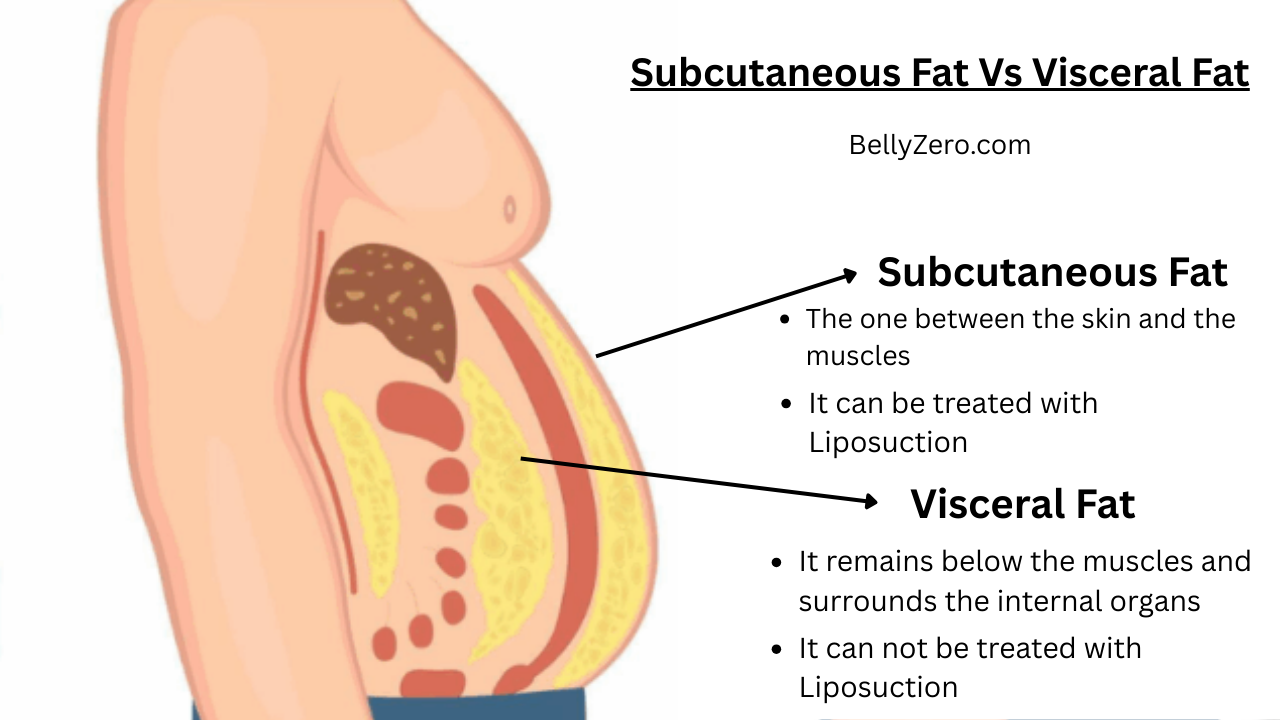
Fat does not behave the same way throughout your body. The soft layer you can pinch on your arms, thighs, or hips sits just beneath the skin. Doctors call this subcutaneous fat. It responds to diet and exercise over time and carries a relatively modest health impact on its own.
The more dangerous type is called visceral fat. It sits deep inside the abdominal cavity, packed tightly around your liver, pancreas, kidneys, and intestines. You cannot see or feel it from the outside, and it does not always show up obviously on a scale.
What makes visceral fat genuinely risky is that it behaves like an active organ. It releases fatty acids, stress hormones, and inflammatory chemicals directly into the bloodstream. This constant release disrupts insulin signaling, raises blood pressure, and triggers low-grade inflammation throughout the body.
Two people can weigh the same amount and carry completely different health risks depending on how much visceral fat each one carries. This is exactly why your lifestyle habits and waist measurement tell a more useful story than the number on your scale.
How the Belly Fat Risk Score Is Calculated
The calculator uses a weighted lifestyle scoring model. Each factor you enter carries a different maximum point value based on how strongly research connects it to visceral fat buildup. The factors with the clearest evidence carry the highest weights.
Your total score runs from 0 to 100 percent. A higher score means more lifestyle risk factors are currently working against your metabolic health at the same time. The four risk categories look like this:
This tool provides an educational lifestyle estimate, not a medical diagnosis. It reflects the risk suggested by your self-reported habits and gives you a useful, personalized starting point for making changes that matter.
The Lifestyle Habits That Quietly Lead to Belly Fat
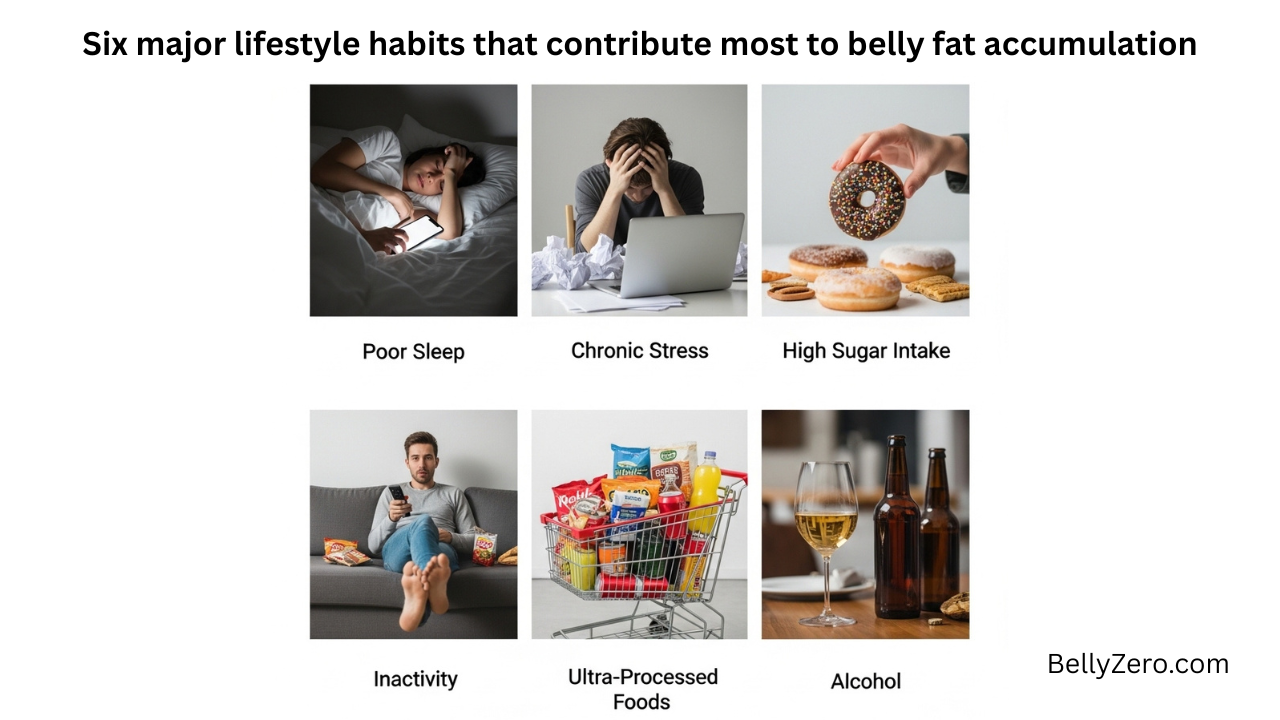
Poor sleep raises your fat storage hormones every night
When you consistently sleep fewer than seven hours, your cortisol rises and your ghrelin spikes. Cortisol tells your body to store fat around the abdomen. Ghrelin increases your appetite and drives you toward high-calorie food choices the next day. Even a few nights of disrupted sleep can meaningfully affect how your body handles blood sugar and fat metabolism.
Chronic stress keeps a fat storage signal running in the background
Short bursts of stress are normal and harmless. But when stress stays elevated day after day, cortisol continuously signals your body to store visceral fat specifically around the belly. It also disrupts sleep and triggers emotional eating, creating a cycle that is hard to break without addressing the stress directly.
Daily sugar adds up in ways most people do not track
Flavored yogurts, sauces, cereals, fruit juices, and packaged snacks all carry more added sugar than most people realise. When the liver receives more fructose than it can process, it converts the excess directly into fat. This fat accumulates preferentially as visceral abdominal fat rather than subcutaneous fat.
Sitting for most of the day slows fat metabolism significantly
Long periods of sitting reduce the activity of lipoprotein lipase, the enzyme your body uses to burn fat. Your muscles become less responsive to insulin and your overall calorie burn drops noticeably. People who exercise regularly but still sit for eight or more hours per day carry meaningful metabolic risk from that inactivity alone.
Ultra-processed foods override your natural hunger signals
These foods are specifically engineered to make you eat more than you need. Low in fiber and protein but high in refined carbohydrates and additives, they make overeating easy while leaving you unsatisfied. Regular consumption is one of the strongest dietary predictors of higher visceral fat levels in research studies.
Regular alcohol consumption promotes central fat gain specifically
Alcohol delivers seven calories per gram with no nutritional value. While your liver processes alcohol, fat burning pauses completely. Regular drinking also disrupts sleep quality and increases appetite, making it a multi-pathway contributor to the specific pattern of abdominal fat gain that doctors look for during metabolic risk screening.
Why Doctors Pay Close Attention to Abdominal Fat
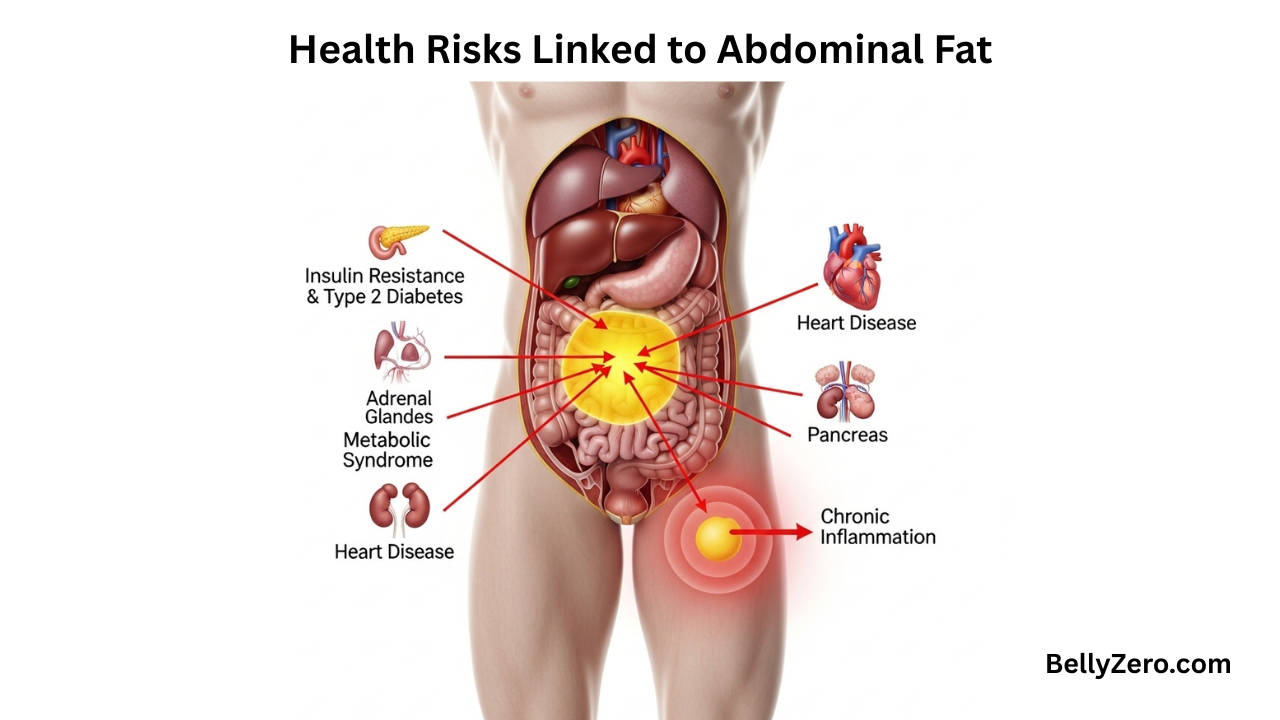
Visceral fat is not passive tissue. It actively secretes fatty acids, hormones, and inflammatory proteins directly into your portal bloodstream, which feeds straight into your liver and affects your entire metabolism. This biological activity links high abdominal fat directly to several serious health conditions.
- Insulin resistance: Visceral fat releases fatty acids that interfere with how cells respond to insulin, causing blood sugar levels to stay elevated over time.
- Type 2 diabetes: Persistent insulin resistance is one of the primary pathways toward developing type 2 diabetes. High visceral fat significantly accelerates this process.
- Heart disease: High visceral fat raises LDL cholesterol, elevates triglycerides, and increases blood pressure, all of which are independent risk factors for cardiovascular disease.
- Metabolic syndrome: A cluster of conditions including high blood sugar, elevated blood pressure, and abnormal cholesterol that together raise the risk of heart attack and stroke significantly.
- Hormonal imbalance: Excess visceral fat disrupts estrogen and testosterone balance in both men and women, contributing to fatigue, mood changes, and further fat accumulation.
- Chronic inflammation: Visceral fat produces pro-inflammatory cytokines that create persistent low-grade inflammation throughout the body, connected to a wide range of long-term health conditions.
Waist circumference has become a standard clinical screening tool precisely because it reflects visceral fat levels more accurately than body weight or BMI alone.
How To Measure Belly Fat at Home
You do not need a clinic visit or a body scan to get a useful indication of your abdominal fat level. Three simple methods give you meaningful data you can track over time.
Waist circumference measurement
Stand relaxed and measure around your waist just above your hip bones, roughly at navel level. Research-based risk thresholds suggest concern above 94 cm (37 inches) for men and 80 cm (31.5 inches) for women. Measurements above 102 cm for men and 88 cm for women indicate high metabolic risk. The calculator uses this measurement directly in your risk score.
Waist-to-height ratio
Divide your waist measurement by your height using the same unit. A ratio below 0.5 generally indicates lower abdominal fat risk. Many researchers consider this ratio a more reliable predictor of metabolic health than BMI because it directly accounts for central fat distribution rather than overall body size.
Visual and physical indicators
A prominent abdomen that feels firm or resistant rather than soft often suggests visceral fat rather than surface fat. Clothes fitting tighter around the waist despite a stable body weight can also signal visceral fat changes over time. These observations work well alongside measurement data when you track changes month by month.
Simple Habits That Help Reduce Belly Fat
You do not need an extreme program. Research consistently points to a focused set of sustainable daily habits that produce real results on visceral fat when applied consistently over weeks and months.
- Walk every day. Reaching 7,000 to 10,000 steps improves insulin sensitivity, lowers cortisol, and directly targets abdominal fat without any equipment or gym membership.
- Add strength training. Resistance exercise two to four times per week builds lean muscle, raises your resting metabolic rate, and significantly improves body composition over time.
- Prioritize sleep quality. Going to bed and waking at consistent times, and sleeping seven to eight hours, reduces cortisol and creates the hormonal environment your body needs to burn fat effectively.
- Manage stress daily. Even ten minutes of daily breathwork, meditation, or a walk outside measurably lowers cortisol over time. This is not optional if stress shows up as a high-risk factor in your scorecard.
- Cut sugary drinks first. Removing sodas, fruit juices, and energy drinks from your daily routine eliminates a large hidden source of visceral fat-promoting fructose with minimal disruption to your overall diet.
- Eat enough protein at every meal. Including a quality protein source with each meal keeps hunger well managed, reduces overall caloric intake naturally, and preserves lean muscle during fat loss.
- Replace processed foods gradually. Swapping ultra-processed snacks and ready meals for whole foods like vegetables, legumes, eggs, and fish consistently reduces the caloric density of your diet without strict restriction.
How Long Belly Fat Usually Takes to Reduce
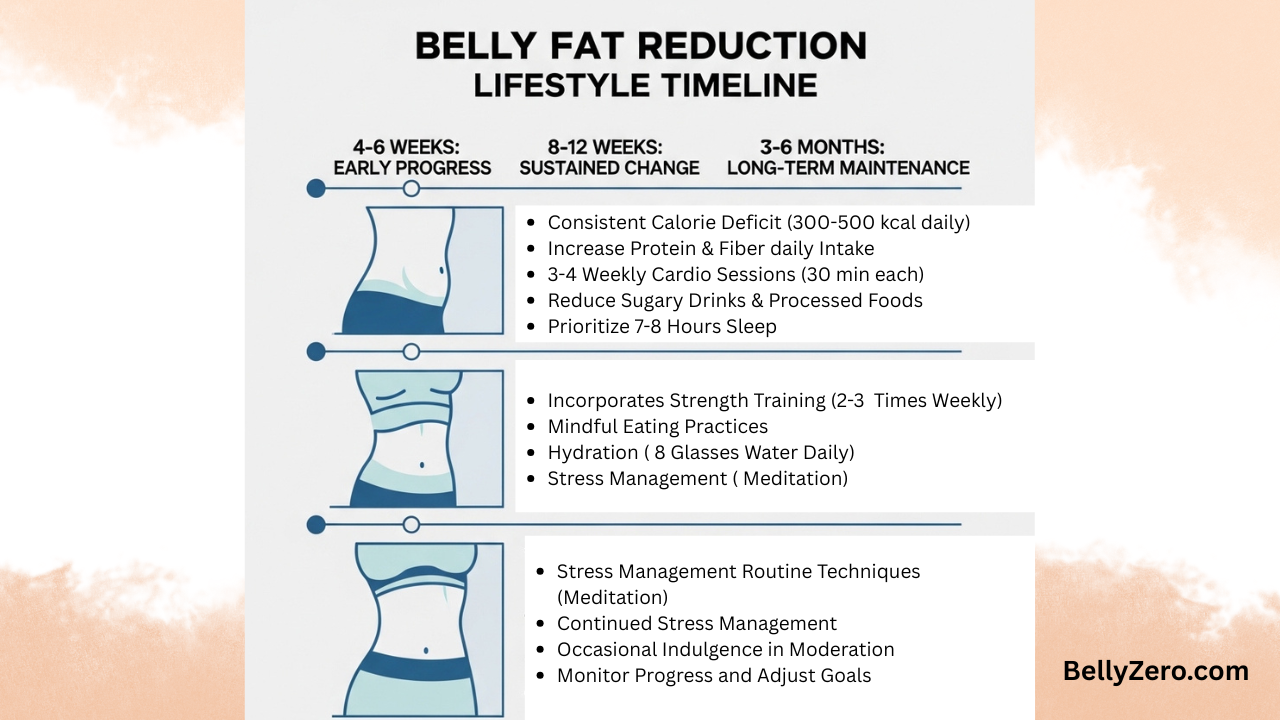
One of the most common questions people ask when they start making lifestyle changes is how long it will take to see results. Here is an honest, research-grounded answer.
Consistency always outperforms intensity. Moderate changes maintained over months produce far better results than aggressive short-term efforts that you cannot sustain. The Personal Fat Loss Plan inside the calculator gives you a structured week-by-week guide matched to your specific risk profile.
Frequently Asked Questions
Belly fat builds up through a combination of lifestyle habits including poor sleep, chronic stress, high sugar intake, physical inactivity, regular alcohol consumption, and frequent ultra-processed food consumption. These factors raise cortisol, disrupt insulin sensitivity, and promote visceral fat storage, often working together over months before the effects become visible.
This calculator provides a lifestyle risk estimate based on self-reported habits, not a clinical measurement. The more honestly and completely you fill in the inputs, the more useful your results become. Use it as a starting point for self-awareness and habit improvement. For a precise clinical assessment, speak with your doctor or a registered dietitian.
Yes, directly. Chronic stress keeps cortisol elevated, and cortisol specifically promotes fat storage in the abdominal area. It also drives cravings for calorie-dense food and disrupts sleep, creating multiple pathways to belly fat gain at the same time. Managing stress is one of the most overlooked tools for reducing abdominal fat.
Yes. Sleeping fewer than seven hours raises cortisol and ghrelin while lowering leptin, your fullness hormone. This hormonal shift promotes fat storage and increases appetite simultaneously. Improving sleep quality consistently ranks among the most impactful single changes a person can make specifically for abdominal fat reduction.
Visceral belly fat carries genuine medical risk. It releases inflammatory compounds and fatty acids directly into the bloodstream and contributes to insulin resistance, type 2 diabetes, heart disease, and metabolic syndrome. Research consistently shows that waist circumference predicts metabolic disease risk more accurately than body weight or BMI alone.
Most people notice early changes within four to six weeks of consistent improvements. Meaningful waist reductions typically appear by eight to twelve weeks. People who address multiple lifestyle factors simultaneously and maintain consistency over three to six months can achieve significant and lasting reductions in visceral fat alongside measurable metabolic health improvements.
Walking is one of the most effective and accessible tools for reducing visceral fat. Reaching 7,000 to 10,000 daily steps improves insulin sensitivity, lowers cortisol, and burns a meaningful number of calories without intense effort. Even increasing from 3,000 to 5,000 steps per day produces measurable metabolic improvements over several weeks.
Visceral fat sits inside the abdominal cavity around your internal organs. Unlike subcutaneous fat under the skin, visceral fat actively releases hormones and inflammatory chemicals that affect organ function, blood sugar regulation, and cardiovascular health. It is metabolically active in ways that make it significantly more dangerous than surface fat.
Regular alcohol consumption promotes a specific pattern of central abdominal fat gain. The liver prioritizes processing alcohol over burning fat, which stalls fat metabolism and promotes abdominal storage. Alcohol also provides empty calories, increases appetite, and disrupts sleep quality, making it a multi-pathway contributor to belly fat accumulation.
No extreme diet is necessary. Sustainable, moderate improvements to diet quality produce better long-term results than restrictive approaches. Reducing sugar and processed foods, increasing protein, and eating more whole foods creates the hormonal conditions needed for visceral fat reduction. Consistency over months matters more than perfection over weeks.
Important Health Disclaimer
The Belly Fat Risk Analyzer Calculator provides general educational information based on self-reported lifestyle inputs. It does not function as a medical device, clinical diagnostic test, or substitute for professional medical advice, diagnosis, or treatment of any kind.
The risk scores and recommendations this tool generates are estimates intended to support personal awareness and encourage healthy lifestyle decision-making. Individual results will always vary based on factors this tool does not and cannot measure.
Always consult a qualified healthcare professional, doctor, or registered dietitian before making significant changes to your diet, exercise routine, or health management approach, especially if you currently manage an existing health condition. If you have concerns about your metabolic health or abdominal fat levels, please book a consultation with your healthcare provider for a proper clinical assessment.